
Follow the Festivals

Chinese New Year Parade and Festival

Chinese New Year Parade and Festival

San Francisco, United States

2027-03-13 - 2027-03-20

The Story

Festival Overview

Few cities celebrate Chinese New Year quite like San Francisco. Long before the first float appears or the Golden Dragon winds through Chinatown, the neighborhood begins to change. Red lanterns stretch above Grant Avenue, shop windows fill with symbols of prosperity, the scent of roasted duck and fresh pastries drifts onto crowded sidewalks, and generations of families prepare for one of the city’s most beloved traditions.
Visitors often come for the famous parade, but the celebration reveals itself long before the first drumbeat echoes through the streets. Spend time wandering Chinatown in the days leading up to Lunar New Year and you’ll discover that the festival belongs as much to neighborhood life as it does to the parade itself. Markets bustle with last-minute preparations, lion dancers visit local businesses, temples welcome worshippers offering prayers for the year ahead, and familiar greetings pass between people who have celebrated here for decades.
By the time the parade begins, it no longer feels like a performance staged for visitors. It feels like a city proudly celebrating one of the communities that helped shape its identity.

Why This Festival Is Special

San Francisco’s Chinese New Year Parade is often described as one of the largest Lunar New Year celebrations outside Asia. While that distinction is impressive, it doesn’t fully explain why the festival has endured for more than a century.
What makes the celebration remarkable is the relationship between Chinatown and the city that surrounds it. The festival is proudly Chinese in its traditions, unmistakably San Franciscan in its setting, and deeply woven into the identity of both. Residents return year after year because these streets hold family memories as much as public celebrations, while first-time visitors quickly discover that Chinatown is not simply hosting the festival—it is living it.
That sense of authenticity gives the celebration a warmth that extends far beyond the parade itself.

Festival Experience

What to Expect

Chinese New Year in San Francisco unfolds over several days, with the city’s historic Chinatown serving as the heart of the celebration. Preparations begin well before the parade as streets are decorated with lanterns, flowers, banners, and festive displays while neighborhood shops and restaurants prepare for one of their busiest times of the year.
As Lunar New Year arrives, visitors encounter a celebration that balances spectacular public events with quieter community traditions. Lion dances weave through neighborhood streets bringing blessings to local businesses, cultural performances celebrate Chinese heritage, and families gather for reunion meals before joining thousands of spectators along the parade route.
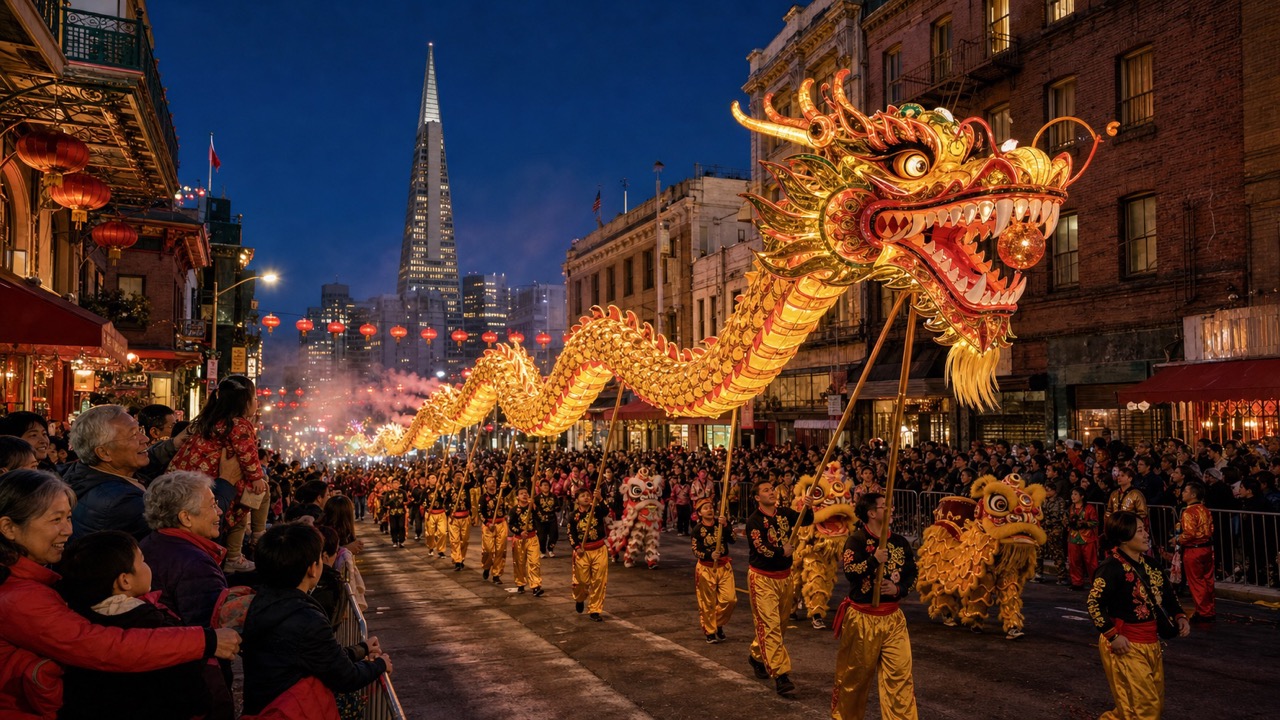
The internationally renowned Chinese New Year Parade transforms downtown San Francisco into a moving celebration of music, martial arts, illuminated floats, traditional costumes, marching bands, and the famous Golden Dragon. Yet some of the festival’s most memorable moments often happen away from the grandstands—in crowded bakeries, neighborhood markets, family restaurants, and side streets where the celebration feels wonderfully local.

Festival Highlights

  • The Chinese New Year Parade filling downtown San Francisco with illuminated floats, martial arts groups, marching bands, school organizations, traditional costumes, and the famous Golden Dragon.
  • Chinatown’s Flower Market bringing blossoms, kumquat trees, orchids, and symbolic decorations into the neighborhood before the parade crowds arrive.
  • Lion dances moving from storefront to storefront through narrow streets, blessing local businesses with drums, cymbals, and close-range neighborhood energy.
  • Reunion meals, family restaurants, bakeries, tea shops, temples, and markets revealing the celebration’s community life beyond the parade route.
  • The quieter hours before and after the main event, when lanterns glow above Grant Avenue and Chinatown’s everyday rhythm becomes part of the festival experience.

Getting There & Around

Where It Happens

The celebration centers on San Francisco’s historic Chinatown, one of North America’s oldest and most influential Chinese communities.
Grant Avenue, Portsmouth Square, neighborhood temples, Stockton Street, and surrounding blocks become the backdrop for celebrations throughout the Lunar New Year period, while the parade travels through downtown before arriving near Chinatown.
Although the parade attracts international attention, the neighborhood itself remains the true heart of the festival.

Getting Around

Public transportation is strongly recommended during the festival, particularly on parade day when road closures and heavy crowds make driving impractical.
San Francisco’s Muni system, historic streetcars, BART connections, and cable cars all provide convenient access to Chinatown. Walking remains the best way to experience the neighborhood, allowing visitors to discover decorated streets, family businesses, cultural landmarks, and spontaneous lion dance performances throughout the day.

Visitor Guide

Festival Food & Drink

Chinese New Year is celebrated around the table as much as it is in the streets, making San Francisco’s Chinatown one of the country’s finest places to experience the holiday through its food.
Restaurants prepare reunion dinners featuring dishes chosen as much for their symbolism as their flavor. Fish represents abundance, longevity noodles wish for a long life, dumplings symbolize prosperity, while sweet desserts celebrate happiness and togetherness in the year ahead.
Between meals, neighborhood bakeries, tea shops, and long-established family restaurants invite visitors to experience traditions that have become part of San Francisco’s culinary landscape for generations.

Must Try

• Whole Fish — Served to symbolize abundance and the hope that prosperity will continue into the coming year.
• Longevity Noodles — Long noodles associated with wishes for health and a long life.
• Dumplings — Their shape recalls traditional ingots and connects the reunion table with prosperity.
• Turnip Cake — Savory pan-fried cake enjoyed throughout Lunar New Year in Cantonese communities.
• Festive Pastries — Sweet and savory bakery specialties shared with family, friends, and visitors throughout the holiday.

Budget & Costs

Many festival experiences—including exploring Chinatown, watching lion dances, enjoying decorations, and visiting neighborhood markets—are free.
Reserved parade seating, popular restaurants, and nearby accommodations may require advance planning, particularly during the busiest weekend, but visitors can enjoy the heart of the celebration across a wide range of budgets.

Tips for First-Time Visitors

Give yourself time beyond the parade.
Walk Chinatown without a schedule, browse neighborhood markets, visit temples respectfully, stop for tea or pastries, and enjoy a leisurely meal rather than rushing between attractions. Many visitors discover that the celebration’s most memorable moments happen unexpectedly.
Learning a little about Lunar New Year traditions before arriving also adds deeper meaning to the decorations, foods, performances, and customs you’ll encounter throughout the neighborhood.

Safety

Large crowds are expected throughout the festival, particularly during the parade. Arriving early, remaining aware of personal belongings, and using public transportation will help create a more enjoyable experience.
Comfortable walking shoes and layers are recommended, as San Francisco evenings can become cool even during festive celebrations.

Cultural Significance

Chinese New Year has been celebrated in San Francisco since the nineteenth century and remains one of the city’s most important cultural traditions.
The festival honors family, prosperity, good fortune, and the arrival of spring while celebrating the enduring contributions of Chinese Americans to the history of San Francisco. For many local families, the holiday is both a deeply personal celebration and an opportunity to share traditions with the wider community.
Visitors experience more than a festival. They experience one of the defining traditions of one of America’s most distinctive neighborhoods.

Plan Your Journey

When to Go

For the fullest experience, arrive at least one or two days before the parade. The neighborhood is alive with preparations, allowing visitors to experience Chinatown before the largest crowds gather.
The parade itself deserves an entire evening, with early arrival recommended for good viewing locations. Earlier in the day, walking Grant Avenue, Stockton Street, and nearby neighborhoods offers opportunities to explore markets, traditional bakeries, temples, tea shops, and family-owned businesses at a slower pace.
If time allows, remain after the parade as well. Once the crowds begin to thin, Chinatown gradually returns to its everyday rhythm while the festive atmosphere continues throughout the holiday period.

Where to Stay

Hotels near Union Square, the Financial District, Nob Hill, or Chinatown place visitors within easy walking distance of parade festivities while offering convenient access to many of San Francisco’s best-known attractions.
Staying nearby allows travelers to experience Chinatown early in the morning before crowds arrive and again in the evening after many day visitors have left. That extra time often reveals a quieter side of the neighborhood that many visitors miss.
Because the festival attracts large crowds, accommodations should be reserved well in advance.

Bottom Line & Key Days

Bottom Line

The parade may be what brings visitors to San Francisco, but Chinatown is what stays with them.
Some remember the Golden Dragon stretching through the streets. Others remember the sound of drums echoing between historic buildings, families gathering for reunion dinners, or lanterns glowing above Grant Avenue after the crowds have begun to leave.
Those moments share something in common. They belong to a neighborhood that has welcomed Lunar New Year for generations and continues to celebrate it with the same pride, energy, and sense of community today.
Long after the final float has passed, visitors often discover that the parade was only the introduction. The real celebration has been happening in Chinatown all along.

Key Days

• Festival Preparations — Chinatown fills with decorations, flowers, markets, and neighborhood celebrations.
• Community Traditions — Lion dances, temple visits, reunion dinners, and cultural performances bring the holiday to life.
• Chinese New Year Parade — Floats, performers, marching bands, martial arts groups, and the Golden Dragon create one of America’s signature cultural celebrations.
• Neighborhood Celebration — Chinatown continues welcoming visitors long after the parade ends through restaurants, markets, shops, and community gatherings.

Ready to Experience Chinese New Year Parade and Festival?

You've explored what makes this festival special. Now it's time to plan your trip. Compare flights, book your hotel, arrange transportation, and take care of your travel essentials—all in one place.

✈ Find Flights

Loading booking widget...

Booking is completed on Expedia in a new tab.

🏨 Find Hotels

Search places to stay

Powered by Booking.com

Booking is completed on Booking.com in a new tab.

Rail & Bus Travel

Compare train and coach routes for the journey.

Compare Routes

Things to Do

Discover tours and attractions before or after the festival.

Explore Experiences

eSIM Mobile Data

Stay connected abroad without traditional roaming charges.

Get an Airalo eSIM

Travel bookings are provided by our trusted partners. We may earn a commission when you book through these links, at no additional cost to you.

Independent Editorial Standards

Every Follow the Festivals guide is independently researched and regularly reviewed using official festival information, destination resources, and trusted travel references. We also welcome verified updates from festival organizers, destination marketing organizations, tourism partners, and local experts to help keep our guides accurate, current, and useful for travelers.

Represent this festival or have a verified update to share? We'd love to hear from you through our contact page.