
Follow the Festivals

Festival Internacional Teatro a Mil

Festival Internacional Teatro a Mil

Santiago, Chile

2027-01-03 - 2027-01-24

The Story

Festival Overview

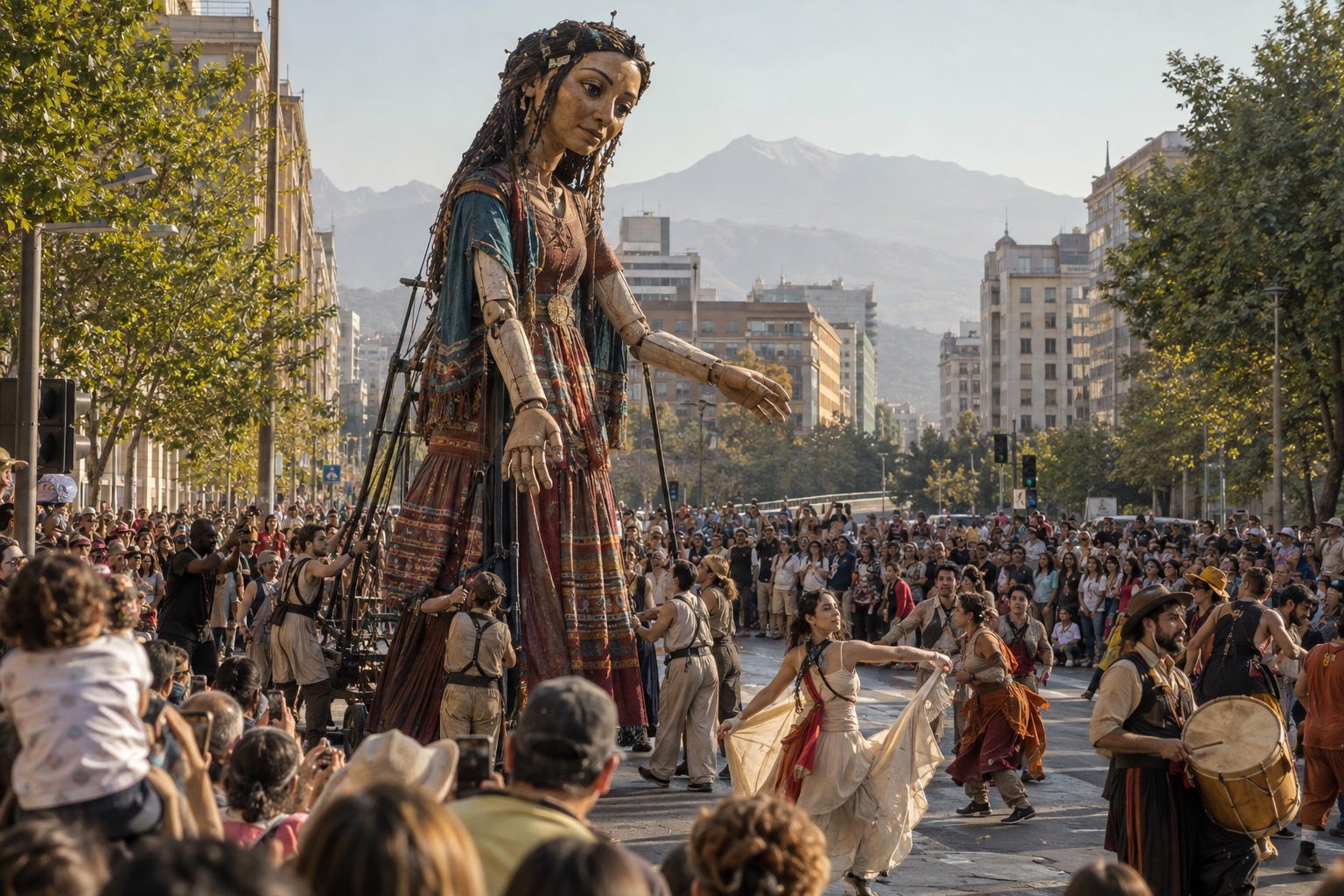
A theater door closes, Santiago’s summer heat remains outside, and an audience of strangers agrees to be silent together. Elsewhere, a procession turns an avenue into a stage and residents who never bought a ticket become part of the scene. Festival Internacional Teatro a Mil lives in that movement between room and street, concentration and surprise.

The festival spreads theater, dance, circus, music and hybrid performance across established venues, cultural centers and public spaces in Santiago, with activity extending to other Chilean cities. Its program is too broad for simple completion. The traveler builds a personal festival through a sequence of works whose locations, languages and physical demands can differ radically.

Begin with one artistic question, not a list of famous names. A Chilean work, an international production and a free public performance can form a richer arc than several prestigious bookings chosen without connection. The city becomes the interval through which those works speak to one another.

Why This Festival Is Special

Teatro a Mil does not ask one building to contain a festival. It lets the performing arts redraw Santiago, linking formal stages, recovered cultural centers, plazas and neighborhood streets. The audience experiences the city as a sequence of thresholds, each opening onto a different idea of presence. The artistic range gives that geography purpose. A politically charged Chilean play may be followed by international direction, intimate dance or a public procession that gathers people who never planned to attend. No single form is allowed to define what theater can be. Every venue changes the answer.

Its deepest distinction is faith in live attention. Performers and spectators share time that cannot be paused, optimized or replayed. In a month when the city might otherwise slow, the festival makes presence feel urgent and public, proving that gathering around an uncertain human act still has civic force.

Festival Experience

What to Expect

Expect different audience contracts from one work to the next. A conventional play may require sustained attention to spoken Spanish or surtitles. Contemporary performance can use movement, sound and visual form with little narrative guidance. Street theater invites a mobile, vocal public and may ask spectators to stand, follow or yield space. Programs mix Chilean productions with artists from Latin America and other regions, often addressing memory, violence, family, democracy, the body and social change. Not every work will be comfortable or immediately legible. The festival becomes valuable when disagreement sharpens attention instead of triggering an automatic search for consensus.

Operational details deserve equal seriousness. Arrive before the published time, because late seating may be impossible. Read duration and content guidance, carry water for outdoor events, and leave mental space after demanding work. A rushed dinner and instant transfer can erase the conversation a performance has just begun.

Festival Highlights

  • A Chilean Jury Selection – Locally selected work introduces artists speaking from the country’s current theatrical conditions. Attend before assuming international prestige marks the festival’s creative center.
  • A Major International Production – Visiting directors and companies bring forms rarely seen in Chile. Read only enough background to enter prepared, leaving the performance room to surprise you.
  • Street Theater – Free work in public space changes who becomes an audience member. Reach the route early, stand where movement remains possible and watch the surrounding city respond.
  • Contemporary Dance – Choreography can cross language barriers while demanding close visual attention. Select a seat or standing position that preserves the full body and stage picture.
  • Circus and Physical Performance – Risk, scale and direct audience contact make these works especially powerful for mixed-age groups. Confirm outdoor conditions and viewing requirements.
  • Post-Show Conversation – Artist talks and informal lobby exchanges can reveal production choices without dictating interpretation. Ask one precise question and listen to how local viewers answer.
  • The Journey Between Venues – A metro ride from one artistic district to another lets Santiago enter the festival. Leave enough time to notice the city that each work is addressing.

Getting There & Around

Where It Happens

The festival is a network. Major works appear at venues such as GAM, Matucana Cien, Teatro Nescafé de las Artes and other partner stages, while public performances transform plazas, avenues and neighborhood spaces. Programming may also reach cities beyond Santiago, so every listing requires attention to the exact commune and venue.

Each location changes the work. GAM sits within a dense cultural and political corridor; Matucana Cien carries a postindustrial arts-campus character; a street production must negotiate architecture, residents and uncontrolled light. Traveling between them is not dead time. The city edits the audience’s mood before the next curtain.

Save every address in advance and confirm whether similar venue names refer to separate rooms. Check accessibility, assigned seating, language support and late-entry policy for each work. The festival has a center of identity, but it has no single gate through which the traveler can understand the whole event.

Getting Around

Santiago’s metro is the most useful tool for a festival spread across many venues. Load a transit card, save the current system map and check the final train time before booking a late work. Stations can be several blocks from the theater, and summer heat makes those walks slower than they appear.

Buses fill gaps between metro corridors, while licensed taxis and ride-hailing services help after late performances or at venues with awkward connections. Allow for event traffic and public-space closures. A driver may not be able to reach the entrance named on the ticket, so identify a visible pickup landmark nearby.

Group performances geographically whenever possible. A central afternoon work followed by an eastern-evening venue may be reasonable; crossing the city twice is not. For festival activity outside Santiago, treat the excursion as its own day unless official transport proves otherwise. Geography is part of curation because it decides how much attention survives the journey.

Visitor Guide

Festival Food & Drink

The festival has no single food zone, which is an advantage if the schedule leaves room to use it. Eat by neighborhood and let venue geography introduce Santiago’s cafés, markets and late restaurants. The operational rule is simple: never place a full meal inside the narrow gap between two fixed curtain times.

Before a long or intense performance, choose something substantial but not heavy and arrive with water already handled. Afterward, a bar or café can extend the work through conversation. Confirm late kitchen hours because summer schedules vary and some districts empty quickly after the final audience leaves.

**Must Try**
• Completo – A Chilean hot dog loaded with tomato, avocado and mayonnaise, useful as a quick post-show meal.
• Empanada de pino – Baked pastry filled with seasoned beef, onion, egg and olive; eat carefully because the filling stays hot.
• Pastel de choclo – Sweet corn topping over savory meat and chicken, best reserved for an unhurried lunch.
• Chorrillana – Fries covered with meat, onion and egg, designed for sharing after an evening performance.
• Mote con huesillos – A chilled drink-dessert of wheat and dried peach that suits Santiago’s summer heat.
• Chilean wine – Sample by the glass with food so the next performance receives a clear, attentive audience member.

Budget & Costs

Costs vary from free public spectacles to premium international productions, with discounts, presales or passes sometimes offered under current rules. Build the program from artistic priorities first, then compare whether a pass genuinely matches the number and type of works available. A discount has no value when it encourages unnecessary bookings.

Transport, meals and the occasional late ride become the second budget layer. Grouping venues by district reduces both cost and fatigue. Reserve money for at least one spontaneous recommendation, because early word of mouth may identify the work that eventually defines the trip.

Santiago accommodation in summer can offer useful value, though major events and desirable neighborhoods still affect rates. Include any regional excursion as a separate travel expense. A balanced festival budget buys fewer well-planned tickets, enough time between them and the freedom to stay for a conversation after the lights rise.

Tips for First-Time Visitors

Create a small program with contrast: one Chilean work, one international production and one free public event. Add a fourth only after mapping venues and durations. Save tickets offline, verify the authorized seller and read the language, surtitling, age, content and late-entry information attached to each performance.

Reach ticketed venues early enough to find the correct room without stress. At street works, bring sun protection, water and shoes that tolerate standing or movement. Do not block residents, doorways or the performance route in pursuit of a photograph; public space remains shared even when art occupies it.

Keep a brief note after each work: one image, one question and one connection to Santiago. This prevents a dense schedule from flattening into titles. If a performance disappoints, discuss why before dismissing it. Festivals are unusually valuable places to test taste because another artistic language is waiting the next evening.

Safety

Santiago’s summer heat requires water, sunscreen and shade during outdoor programming. Large street events can create compression near barriers, corners and performance routes; stand where an exit remains visible and follow staff instructions when the crowd is asked to move. Children need a meeting plan that does not rely solely on phone service.

In theaters, safety is quieter but still practical. Know the late-entry policy, keep aisles clear and disclose mobility needs before arrival. Emotionally intense productions may include violence, strobe effects, loud sound or other content that changes suitability. Read official guidance without assuming a theater label guarantees comfort.

Use ordinary city awareness between venues. Keep phones controlled near busy streets and metro doors, wait for rides in lit places and avoid an isolated walking shortcut after a late performance. Save the accommodation address offline. The festival can make Santiago feel intimate, but its venues remain distributed across a major capital.

Cultural Significance

Teatro a Mil began during Chile’s cultural reopening after dictatorship, when artists and audiences were rebuilding public space, institutional trust and opportunities for contemporary performance. What started in central Santiago grew into a major platform for Chilean work, international exchange and access across neighborhoods and regions.

Its commitment to street programming is not decorative outreach. Placing performance in civic space changes who can encounter art and restores collective attention to streets that usually organize commerce, protest or transit. Indoor programming performs a parallel task by giving Chilean artists sustained visibility beside influential international companies.

The festival’s history therefore tracks changes in the country: democratic memory, social conflict, new artistic forms and debates about who receives culture. Every January, it asks whether the performing arts can remain both excellent and public. The answer is never final; it must be staged again.

Plan Your Journey

When to Go

Teatro a Mil takes place during January, when Santiago is hot, dry and quieter in some business districts as residents leave for summer holidays. The multiweek span allows a focused cultural weekend or a slower sequence of performances. Wait for the full program if artistic range matters, but book limited-capacity international works promptly once priorities are clear.

Opening periods carry premieres and strong anticipation, while later weeks can offer word of mouth from local audiences. Free street events may gather enormous crowds and require early positioning. Indoor works demand a different rhythm: exact arrival, ticket collection and enough travel margin to reach a venue in an unfamiliar commune.

Schedule no more than the transport allows. Two performances can fit one day when venues share a district and the first has predictable duration. A third booking often turns Santiago into an obstacle. Leave one evening open for a recommendation gathered after a show; theater communities reveal their real program through conversation.

Where to Stay

Lastarria and Bellas Artes place visitors near museums, restaurants, metro service and several central cultural venues. They suit a first-time traveler who wants Santiago itself to remain present between performances. Street noise and higher prices are the trade-offs, especially in properties close to nightlife. Providencia offers broad lodging choice, dependable metro connections and an easier daily rhythm. It works well when the itinerary includes Teatro Nescafé de las Artes or venues along the central-eastern corridor. Barrio Italia adds dining and neighborhood atmosphere but may require a walk or bus connection beyond the nearest metro.

No single base is close to the entire festival. Map the three most important ticketed venues before reserving a room, then count transfers, not kilometers. A pleasant property on one metro line can outperform a nominally central address that makes every evening a cross-city journey. Keep late returns in mind when selecting the final performance of the day.

Bottom Line & Key Days

Bottom Line

After the applause, an audience emerges into Santiago with its senses slightly rearranged. The pavement is still warm, metro trains continue beneath the city and another performance is beginning somewhere else. Teatro a Mil succeeds when that abundance does not produce hurry. It produces attention.

The festival rewards a traveler who curates with restraint. Three connected works can reveal more than a week of frantic booking: a Chilean voice establishes the ground, an international production changes the scale, and a street performance returns the argument to the public. Santiago supplies the passage between them.

Leave one question unresolved. Carry it from the theater into a café, from the café onto the metro and from Santiago into the next destination. The festival’s final gift is not agreement about what was seen. It is the renewed ability to remain present while another person makes meaning in real time.

Key Days

• Opening Period – Premieres and public anticipation give the first week unusual energy. Keep one schedule gap for works that earn strong local response.
• Chilean Program Day – National productions anchor the festival in the country’s current artistic concerns. Pair one with a nearby conversation or cultural venue.
• International Premiere – Limited-capacity visiting work may require early booking and exact arrival. Read language and duration details before committing.
• Street Performance Day – A free public event changes the audience and the city around it. Reach the route early with water and a mobile viewing plan.
• Cross-City Festival Day – Two works in different districts reveal Santiago through transit. Attempt this only with generous time between venues.
• Closing Period – Final performances carry accumulated conversation and demand. Select the work that completes the personal festival, not the one that merely fills the last night.

Ready to Experience Festival Internacional Teatro a Mil?

You've explored what makes this festival special. Now it's time to plan your trip. Compare flights, book your hotel, arrange transportation, and take care of your travel essentials—all in one place.

✈ Find Flights

Loading booking widget...

Booking is completed on Expedia in a new tab.

🏨 Find Hotels

Search places to stay

Powered by Booking.com

Booking is completed on Booking.com in a new tab.

Rail & Bus Travel

Compare train and coach routes for the journey.

Compare Routes

Things to Do

Discover tours and attractions before or after the festival.

Explore Experiences

eSIM Mobile Data

Stay connected abroad without traditional roaming charges.

Get an Airalo eSIM

Travel bookings are provided by our trusted partners. We may earn a commission when you book through these links, at no additional cost to you.

Independent Editorial Standards

Every Follow the Festivals guide is independently researched and regularly reviewed using official festival information, destination resources, and trusted travel references. We also welcome verified updates from festival organizers, destination marketing organizations, tourism partners, and local experts to help keep our guides accurate, current, and useful for travelers.

Represent this festival or have a verified update to share? We'd love to hear from you through our contact page.