
Follow the Festivals

French Quarter Festival

French Quarter Festival

New Orleans, United States

2027-04-08 - 2027-04-11

The Story

Festival Overview

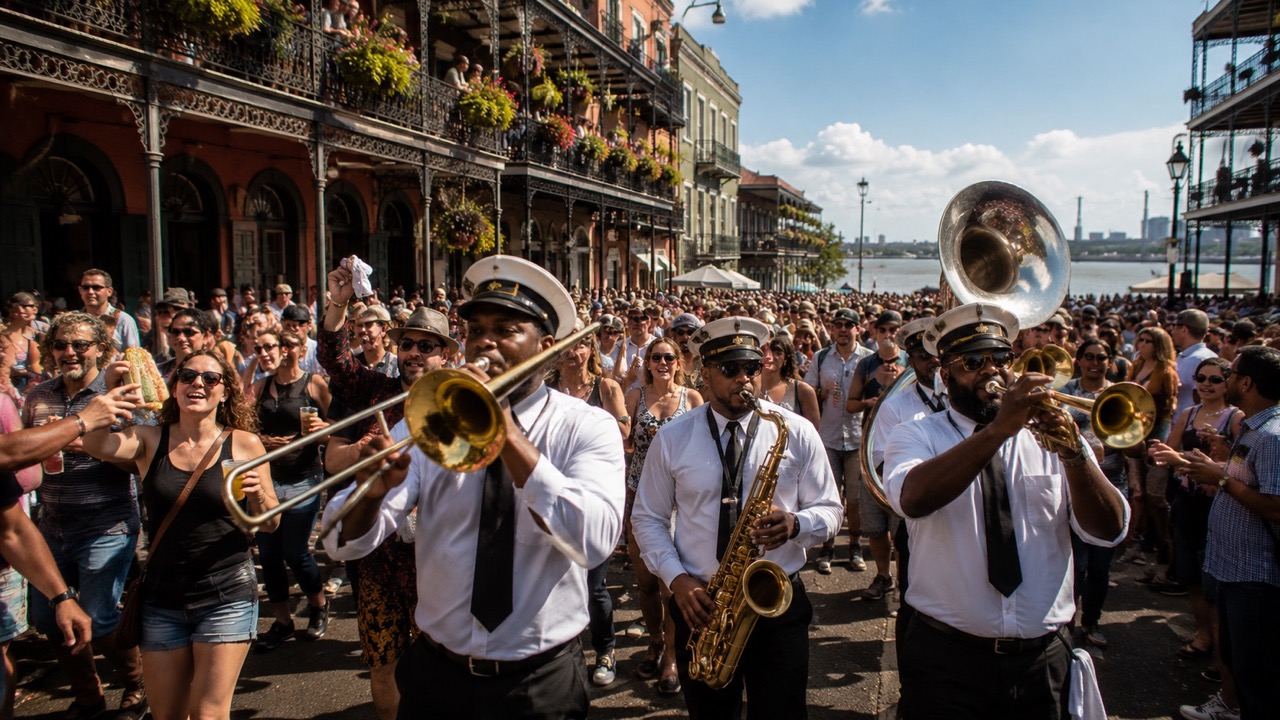
New Orleans turns its oldest neighborhood and Mississippi River edge into an enormous free showcase of Louisiana music during French Quarter Festival. Stages appear in Jackson Square, Woldenberg Park, courtyards, streets, and waterfront spaces, carrying jazz, brass bands, rhythm and blues, funk, gospel, zydeco, Cajun music, Latin sounds, and other traditions rooted in the region. Food booths operated by local restaurants make eating part of the programming rather than a separate fairground necessity. The architecture matters: iron balconies, Creole townhouses, cathedral towers, levee views, and the broad river place every set inside a layered port city. The event’s greatest pleasure is movement—hearing one rhythm around a corner, stopping for a dish, and following another toward the water—yet its cultural depth comes from the local musicians and cooks whose work sustains the destination year-round.

Why This Festival Is Special

Other urban music festivals could imitate multiple stages and restaurant booths, but they cannot reproduce this relationship among Louisiana sound, Creole food, French Quarter architecture, and the Mississippi River. The free format encourages discovery across traditions rather than loyalty to one ticketed headliner. Travelers choose it to hear the city explain itself publicly through musicians and cooks whose work already defines the destination.

Festival Experience

What to Expect

Late morning starts with the first sets and food booths opening, when the Quarter still feels loose enough to wander between stages without much waiting. By afternoon, Jackson Square, the Woldenberg Park riverfront, and nearby streets fill in as multiple acts run at once and people settle into a pattern of listening, eating, then drifting to the next stage. Early evening brings the thickest crowds around better-known performers and along the Mississippi River waterfront, with more standing-room viewing and slower walks between blocks. After the final outdoor sets, the energy does not vanish all at once; it shifts into nearby bars and music rooms around the French Quarter.

Festival Highlights

  • Louisiana Music Stages — Jazz, brass, funk, gospel, zydeco, Cajun, and rhythm and blues reveal regional range.
  • Jackson Square — Live performance gains historic scale beneath cathedral towers and surrounding balconies.
  • Mississippi Riverfront — Woldenberg Park stages pair local music with ships, levees, and open water.
  • Restaurant Food Booths — Local kitchens turn festival eating into a survey of New Orleans flavor.
  • Quarter Discovery — Courtyards, side stages, and sound drifting around corners reward unplanned walking.

Getting There & Around

Where It Happens

Most of the action sits in the stretch between Jackson Square and Woldenberg Park, with the Mississippi River waterfront acting as the festival’s open edge and the French Quarter streets tying everything together block by block. You might listen in the square, cut a few minutes toward the river for another stage, then drift back through Quarter corners where food lines, passing brass, and pedestrian traffic keep the whole area feeling connected rather than split into separate venues. Once the outdoor sets finish, the route naturally extends into nearby bars and music rooms in and around the French Quarter.

Getting Around

Walk within the Quarter and riverfront, using streetcars or buses only to reach the edge. Driving into the core creates parking, closure, and exit problems. Comfortable shoes must handle stone, pavement, spills, and long standing. Riverfront stages can be farther apart than they appear. Choose a daily zone, use permanent landmarks for meetings, and know which streets remain calm enough for the hotel return after the final set.

Visitor Guide

Festival Food & Drink

The festival menu functions as a compressed map of Louisiana cooking. Crawfish étouffée places shellfish in a seasoned, roux-thickened sauce over rice. Cochon de lait po’boys fill French bread with slow-roasted pork, slaw, and sauce, while jambalaya cooks rice with sausage, chicken, seafood, vegetables, and spice. Crawfish bread combines cheese, crawfish, seasoning, and loaf into rich portable food. Praline is a Creole confection of sugar, cream, butter, and pecans. Choose dishes from local restaurants you may visit later, share rich portions, and drink water between cocktails. Food is not background here; cooks express the same regional history musicians carry onstage.

Must Try
• Crawfish étouffée — Crawfish in a seasoned roux-based sauce served over rice.
• Cochon de lait po’boy — Slow-roasted pork in French bread with slaw and sauce.
• Jambalaya — Rice cooked with sausage, chicken or seafood, vegetables, and Creole seasoning.
• Crawfish bread — Bread loaded with seasoned crawfish, cheese, and aromatics.
• Praline — Creamy Louisiana candy made with sugar, butter, cream, and pecans.

Budget & Costs

The festival itself is often easier on the wallet than a ticketed music event, but spending adds up fast once you start eating and drinking your way between Jackson Square and the Woldenberg Park riverfront. Budget for multiple food stops, a few beers, and higher room rates if you stay inside or right next to the French Quarter. Sleeping a little farther out and taking a ride in before the street closures tighten can save money, though staying close lets you duck back on foot after the last set.

Tips for First-Time Visitors

Select artists by Louisiana tradition, not only familiarity: pair a brass band with Cajun or zydeco, gospel, piano, or Mardi Gras Indian music. Begin at Jackson Square or the riverfront, then follow sound rather than attempting every stage. Food booths represent actual local kitchens, so note which dish deserves a later restaurant visit. Keep one reusable meeting landmark away from Bourbon Street and never block residents’ doors while stopping for music or photographs.

Safety

The biggest issues here are heat, slow-moving crowds, and tired feet. The riverfront and park stretches can feel hot in spring sun, so drink water early rather than waiting until you feel worn down. In the densest pedestrian corridors in the French Quarter, keep your phone and wallet secure and expect a slower shuffle near popular sets. Watch the uneven sidewalks and curbs, especially after dark when you are moving between stages, bars, and food lines.

Cultural Significance

The festival gives local musicians and restaurants a vast public platform while keeping admission broadly accessible. Its range demonstrates that New Orleans music is not one style frozen in the jazz past, but an ecosystem shaped by Black, Creole, Cajun, Indigenous, Caribbean, Latin, and European histories. Public stages support cultural labor, though visibility must translate into year-round patronage. The event matters because residents’ music and food occupy the city’s most recognizable spaces on their own terms.

Plan Your Journey

When to Go

Begin on the first morning for open walking, shorter food lines, and time to understand the stage geography. Weekday hours feel more breathable than peak weekend afternoons, while evening brings cooler air and dense headline crowds. Attend more than one day if possible and divide the Quarter from the riverfront rather than crossing constantly. Spring sun, humidity, storms, and sudden cool river wind all deserve preparation. Preserve one non-festival morning for the neighborhood before amplification begins.

Where to Stay

The French Quarter offers unmatched proximity but also noise, crowds, and premium rates. The Central Business District and Warehouse District provide walkable access with a clearer retreat, while Marigny connects the trip to additional live-music culture. Choose a hotel route that avoids the densest Bourbon Street movement and supports a midday reset. Late reception and working air conditioning matter. A streetcar-connected outer room can save money only if the final service matches evening plans.

Bottom Line & Key Days

Bottom Line

A brass rhythm turns a corner, crawfish and roux perfume the next block, and a ship moves behind a riverfront stage while cathedral bells mark another hour. French Quarter Festival matters because none of these elements feels added for effect. Music, food, architecture, and the Mississippi belong to the same living city. The lasting reason to travel is the freedom to follow that relationship on foot until New Orleans stops feeling like scenery and begins sounding like a complete cultural system.

Key Days

Arrival

Settle within walking distance, learn the Quarter-to-riverfront route, and hear one neighborhood venue before the festival.

Opening Morning

Begin with uncrowded stages, survey restaurant booths, and choose a permanent meeting place.

Traditions Day

Pair brass, jazz, gospel, Cajun, zydeco, or Mardi Gras Indian music across one compact zone.

Riverfront Evening

Eat before the longest lines, carry water, and let Mississippi light frame the final sets.

Closing

Return to one discovered artist or restaurant and carry festival support into the year-round city.

Ready to Experience French Quarter Festival?

You've explored what makes this festival special. Now it's time to plan your trip. Compare flights, book your hotel, arrange transportation, and take care of your travel essentials—all in one place.

✈ Find Flights

Loading booking widget...

Booking is completed on Expedia in a new tab.

🏨 Find Hotels

Search places to stay

Powered by Booking.com

Booking is completed on Booking.com in a new tab.

Rail & Bus Travel

Compare train and coach routes for the journey.

Compare Routes

Things to Do

Discover tours and attractions before or after the festival.

Explore Experiences

eSIM Mobile Data

Stay connected abroad without traditional roaming charges.

Get an Airalo eSIM

Travel bookings are provided by our trusted partners. We may earn a commission when you book through these links, at no additional cost to you.

Independent Editorial Standards

Every Follow the Festivals guide is independently researched and regularly reviewed using official festival information, destination resources, and trusted travel references. We also welcome verified updates from festival organizers, destination marketing organizations, tourism partners, and local experts to help keep our guides accurate, current, and useful for travelers.

Represent this festival or have a verified update to share? We'd love to hear from you through our contact page.