
Follow the Festivals

Goa Carnival

Goa Carnival

Panaji and other Goa cities, India

2027-02-06 - 2027-02-09

The Story

Festival Overview

In Goa, Carnival doesn’t seem to begin with the parade.

It begins much earlier.

A café opens its shutters onto a quiet street. Someone decorates a balcony across the road. Music drifts faintly through the morning air, still too distant to tell where it’s coming from. Shopkeepers greet familiar faces, children already wear costumes they refuse to take off, and nobody appears especially concerned about exactly when the celebration officially starts.

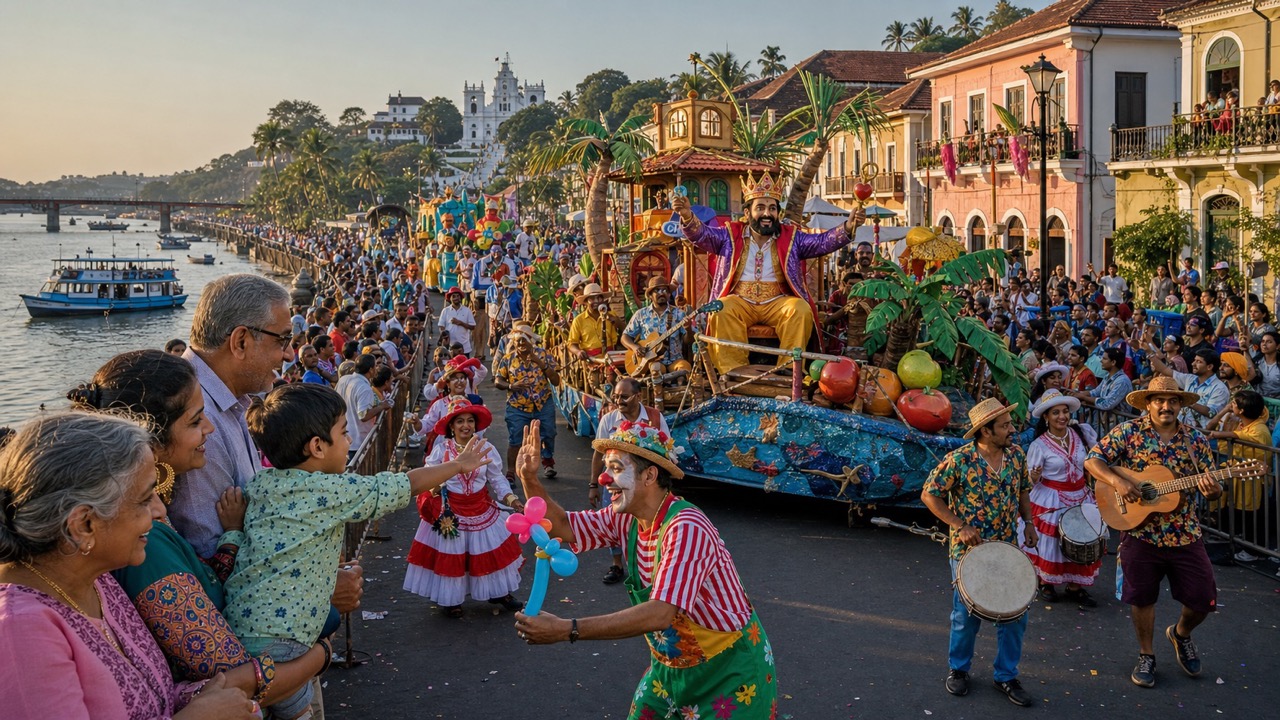
By afternoon, the streets of Panaji are filled with floats, musicians, dancers, laughter, and crowds that seem to gather almost by instinct. The parade winds comfortably through colorful Portuguese neighborhoods before disappearing around another corner, yet the city never feels as though it is waiting for the next attraction. Restaurants remain full, conversations continue beneath shaded verandas, music appears from another nearby street, and the celebration simply keeps unfolding.

Visitors often arrive expecting a parade.

They leave remembering a day they somehow wished would never end.

Why This Festival Is Special

Many carnivals ask visitors to keep up with them.

Goa asks them to slow down.

The celebration certainly brings music, color, dancing, and spectacular parades, but none of those feel separated from the places where they happen. The Portuguese-era streets, neighborhood cafés, churches, riverside promenades, and shaded squares remain just as important as the floats themselves.

Visitors quickly discover that Carnival does not replace the city.

It simply allows the city’s natural warmth, hospitality, and easy rhythm to become impossible to miss.

That is why the celebration feels so welcoming.

Nothing about it seems forced.

Festival Experience

What to Expect

Goa Carnival unfolds over several days across Panaji, Margao, Vasco da Gama, Mapusa, and other communities, each adding its own personality to the celebration while sharing the same unmistakable Goan spirit.

The mornings remain surprisingly relaxed. Markets open, cafés begin serving breakfast, residents decorate storefronts and balconies, and streets slowly fill with anticipation rather than urgency. There is never a feeling that the festival is rushing toward its headline moment.

When the parades arrive, music, dancers, elaborate floats, and costumed performers transform historic streets into moving celebrations that invite applause as naturally as conversation. Children wave from sidewalks, visitors drift alongside the procession, and familiar faces seem to appear at every corner.

When the parade passes, the city simply keeps celebrating. Music continues from cafés, friends gather around long lunches, evening conversations stretch comfortably into the night, and Carnival quietly settles back into everyday Goan life without ever feeling like it has ended.

Festival Highlights

  • The opening parade in Panaji bringing together floats, musicians, dancers, costumes, and King Momo’s traditional call to celebrate.
  • Carnival processions continuing through Margao, Vasco da Gama, Mapusa, and other Goa communities, each with its own local character.
  • Brass bands, spontaneous dancing, and neighborhood performances that continue after the main parade has passed.
  • Fontainhas, riverside promenades, shaded squares, and Portuguese-era streets becoming part of the celebration rather than merely its backdrop.
  • Long lunches, café conversations, and evening gatherings that reveal Goa Carnival’s relaxed rhythm beyond the official schedule.

Getting There & Around

Where It Happens

Carnival belongs to all of Goa, but Panaji remains its most recognizable stage.

Historic Portuguese streets, colorful façades, leafy avenues, churches, riverside promenades, and neighborhood squares all become part of the celebration without ever losing their everyday character.

The further visitors explore beyond the parade route, the more naturally Carnival seems to blend into the city itself.

Eventually it becomes difficult to separate one from the other.

Getting Around

Walking remains the most rewarding way to experience Carnival in Panaji.

The city’s compact historic center encourages wandering between cafés, plazas, churches, waterfronts, and neighborhood streets where unexpected moments often become the most memorable part of the day.

Travel between towns is straightforward by taxi or local transportation, allowing visitors to experience different celebrations throughout the festival.

Allow extra time.

Goa rarely rewards those who are in a hurry.

Visitor Guide

Festival Food & Drink

Carnival and food are rarely separated for very long in Goa.

Family restaurants, neighborhood cafés, riverside dining rooms, bakeries, and local taverns all become natural extensions of the celebration. Fresh seafood, vindaloo, xacuti, cafreal, sorpotel, bebinca, and countless regional specialties appear alongside conversations that often last much longer than anyone originally intended.

Meals are rarely hurried.

One course becomes another.

Another conversation begins.

Someone notices music outside.

Nobody seems especially interested in checking the time.

Must Try

• Goan Fish Curry Rice — A foundational local meal combining coconut, spice, and fresh coastal fish.
• Chicken Cafreal — Herb-rich Goan chicken with coriander, green chili, garlic, and Portuguese influence.
• Pork Vindaloo — Tangy, deeply spiced pork dish with roots in Goa’s Portuguese culinary history.
• Sorpotel — Rich festive pork preparation traditionally associated with celebrations and family gatherings.
• Bebinca — Layered coconut dessert baked slowly and served as one of Goa’s most recognizable sweets.

Budget & Costs

Many of Carnival’s most enjoyable experiences cost very little. Watching parades, wandering historic neighborhoods, enjoying public performances, and exploring Panaji on foot allow visitors to experience the festival across a wide range of budgets.

Accommodation prices often rise during Carnival, making early reservations worthwhile, particularly within the historic center.

Tips for First-Time Visitors

Don’t spend the entire day following the parade.

Let the parade find you instead.

Walk through Fontainhas before the crowds arrive. Stop whenever a café feels inviting. Follow music when it drifts from another nearby street instead of worrying whether it appears on the program.

Goa Carnival rarely punishes curiosity.

It usually rewards it.

Safety

Goa Carnival remains welcoming and family-friendly despite the larger crowds along parade routes.

Stay aware of personal belongings, remain hydrated during warm afternoons, and allow yourself enough time to move comfortably through the city without feeling rushed.

Carnival becomes far more enjoyable when experienced at the same pace as Goa itself.

Cultural Significance

Goa Carnival reflects centuries of Portuguese influence woven naturally into Goan traditions, creating a celebration unlike any other in India.

Although its historical origins remain important, today’s Carnival belongs just as much to the communities that continue celebrating it every year. Families, musicians, artists, restaurants, neighborhoods, and local traditions all contribute to an atmosphere that feels both historic and unmistakably contemporary.

The celebration remains joyful because it has never stopped belonging to the people who live there.

Plan Your Journey

When to Go

Arrive at least one day before the opening parade.

The hours before Carnival officially begins often reveal as much about Goa as the celebrations themselves. Decorations appear gradually, cafés become gathering places for neighbors, musicians begin rehearsing, and the city settles into an atmosphere of quiet anticipation.

Each day offers something slightly different as Carnival moves through multiple towns across Goa. Spending time beyond Panaji allows visitors to experience the local character each community brings to the festival.

Leave room for evenings as well.

Some of Goa’s best Carnival memories begin after the parade has already disappeared.

Where to Stay

Panaji provides the ideal base for experiencing Carnival, placing visitors within easy walking distance of parade routes, historic neighborhoods, riverside promenades, cafés, and evening celebrations.

Staying near Fontainhas or the Mandovi waterfront allows the festival to be experienced naturally on foot while also revealing quieter streets where Carnival feels less like an event and more like part of daily life.

Reserve accommodations well in advance, as Carnival remains one of Goa’s most popular travel periods.

Bottom Line & Key Days

Bottom Line

People often remember Goa Carnival for its colorful floats, lively music, and joyful parades.

They remember Goa for something quieter.

An afternoon that somehow became evening without anyone noticing.

Another conversation that lasted longer than expected.

Music appearing from one more nearby street.

A final walk beneath old balconies before heading back.

Some festivals ask visitors to make the most of every minute.

Goa simply reminds them that some of the best days are the ones nobody was in a hurry to finish.

Key Days

• Carnival Preparations — Decorations appear, cafés fill, music begins rehearsing, and anticipation quietly spreads through the city.
• Parade Days — Floats, dancers, musicians, and performers move through Panaji and neighboring towns while the celebrations naturally spill into surrounding streets.
• The City Keeps Celebrating — Restaurants, cafés, waterfronts, and neighborhoods continue the festival long after the official parades have ended.
• Carnival Farewell — The music gradually grows quieter, but the warmth, hospitality, and easy rhythm that define Goa remain exactly where they have always been.

Ready to Experience Goa Carnival?

You've explored what makes this festival special. Now it's time to plan your trip. Compare flights, book your hotel, arrange transportation, and take care of your travel essentials—all in one place.

✈ Find Flights

Loading booking widget...

Booking is completed on Expedia in a new tab.

🏨 Find Hotels

Search places to stay

Powered by Booking.com

Booking is completed on Booking.com in a new tab.

Rail & Bus Travel

Compare train and coach routes for the journey.

Compare Routes

Things to Do

Discover tours and attractions before or after the festival.

Explore Experiences

eSIM Mobile Data

Stay connected abroad without traditional roaming charges.

Get an Airalo eSIM

Travel bookings are provided by our trusted partners. We may earn a commission when you book through these links, at no additional cost to you.

Independent Editorial Standards

Every Follow the Festivals guide is independently researched and regularly reviewed using official festival information, destination resources, and trusted travel references. We also welcome verified updates from festival organizers, destination marketing organizations, tourism partners, and local experts to help keep our guides accurate, current, and useful for travelers.

Represent this festival or have a verified update to share? We'd love to hear from you through our contact page.

Photo Credits