
Follow the Festivals

Hong Kong Wine & Dine Festival

Hong Kong Wine & Dine Festival

Hong Kong, China

2026-10-29 - 2026-11-01

The Story

Festival Overview

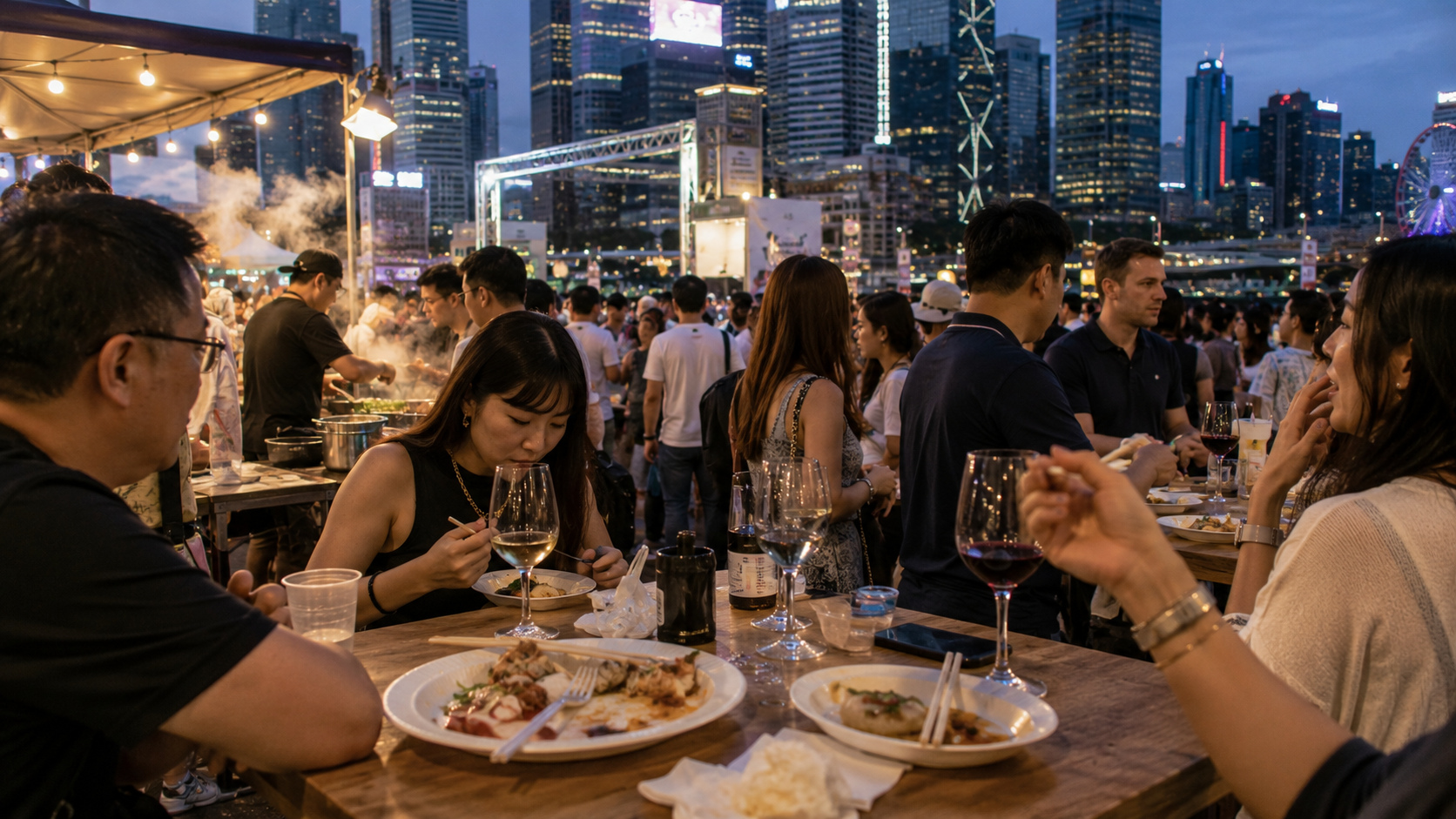
A tasting glass catches the towers upside down while ferries continue their ordinary crossings behind it. On the Central Harbourfront, the Hong Kong Wine & Dine Festival gathers international wine, local and global food, live performance, workshops and family activities into a public culinary event presented by the Hong Kong Tourism Board.

The harbour is not scenery added after the menu. It is the reason the menu makes sense. Hong Kong has long received ingredients, techniques and appetites through trade, migration and travel, then folded them into a food culture with its own speed and judgment. The festival offers a concentrated introduction, provided visitors remember that the city’s fullest table continues beyond the gates.

Why This Festival Is Special

Many cities can assemble international bottles and chefs. Hong Kong can place them beside a working harbour that explains how outside tastes become local life. A French wine, a Chinese pour and a Cantonese bite do not need to collapse into one story; their proximity reveals a city practiced at keeping several culinary languages in motion.

That exchange is clearest when the festival becomes a doorway rather than a verdict. A tasting can lead to a neighborhood dai pai dong, a tea house, a wet market or a contemporary bar. The distinctive pleasure is not abundance alone. It is the speed with which the harbourfront table opens onto the rest of Hong Kong.

Festival Experience

What to Expect

Expect a busy outdoor tasting ground rather than a seated banquet. Booths invite small pours and portions, stages add music, and scheduled demonstrations or workshops create pockets of focused attention. The atmosphere shifts with the clock: daylight favors unhurried browsing; darkness brings the skyline forward and can thicken the crowd around popular counters.

Admission, tasting credit and workshop arrangements can change, so learn the current system before arrival. Start with a short reconnaissance lap, choose a few purposeful tastings and leave pauses between them. The festival becomes coherent when a visitor follows a question—Chinese wine, regional spirits, Cantonese flavors or food-and-wine pairing—instead of collecting unrelated samples.

Festival Highlights

  • The first circuit should follow the harbour edge. It gives the site a shape and lets the skyline orient the rest of the visit before wine and crowds blur direction. Return after dark to see how the same path changes when the towers begin reflecting in every glass.
  • A focused wine comparison turns abundance into understanding. Taste the same grape across regions, compare established European appellations with emerging Chinese producers, or ask how low-alcohol and natural wines are being interpreted. A short sequence teaches more than a long tally.
  • Local food counters offer the essential correction to an international tasting fair. Look for preparations that reveal Hong Kong’s affection for roast meats, seafood, pastry, wok heat or tea rather than chasing a vendor solely because its queue is longest. The roster changes; the city’s culinary grammar remains.
  • Chef and sommelier programs slow the event down. A demonstration or guided tasting can supply the vocabulary needed to understand what the surrounding booths are pouring. Reserve current ticketed sessions early, but do not build an evergreen trip around a personality who may not return.
  • The live stage changes the harbourfront from market to night gathering. Let music occupy one part of the evening without forcing every tasting to compete with it. Families should use the current program to identify genuinely child-suitable periods and activities.
  • The most revealing highlight may occur after departure. Cross toward Sheung Wan, Central or Wan Chai for one modest dish or tea, and test the festival’s compressed portrait against a neighborhood operating at its normal scale.

Getting There & Around

Where It Happens

The Central Harbourfront event space occupies reclaimed waterfront between Hong Kong Island’s commercial core and Victoria Harbour. Towers, ferry routes and the ridgeline behind them remain visible across the open ground, giving a temporary festival a remarkably legible address.

Do not confuse the event space with a permanent indoor venue. Entrances, stages, booth zones, workshop areas and accessible routes can be redrawn each year. Consult the current map, note which side faces your onward transport and choose a fixed meeting point. The promenade and nearby public spaces may remain busy even outside the ticketed footprint.

Getting Around

MTR and ferry travel suit the setting better than a private car. Central and Hong Kong stations connect the district to much of the territory, while the Star Ferry turns a stay in Tsim Sha Tsui into a memorable approach across Victoria Harbour. Walking routes through Central can include elevated passages and large roads, so follow the current event directions rather than relying on a straight map line.

Inside, movement is on foot across an exposed, crowded site. Complete a reconnaissance lap before drinking, and identify exits and toilets while orientation is easy. At closing, walk one station or ferry pier away if the nearest route is compressed, but confirm final service times before adopting that plan.

Visitor Guide

Festival Food & Drink

Hong Kong introduces this festival through contrast: crisp pastry beside slow broth, roast meat lacquered in a window, delicate tea following a loud wok. The harbourfront can sample that range, but small portions and alcohol can distort appetite. Eat before serious tasting, alternate wine with food and water, and save enough hunger to continue into the city.

Use the festival to make connections. A pour of Chinese wine might sit beside roast goose; a classic Bordeaux can sharpen the richness of char siu; tea can reset the palate without ending the exploration. Temporary booths will change, so pursue flavors and techniques rather than promised vendors.

**Must Try**

• Char siu or roast goose, ideally with rice

• Har gow and siu mai during a separate dim sum meal

• Egg tart with a tender, warm custard center

• Wonton noodles with a clear, savory broth

• Hong Kong-style milk tea between richer tastings

• A thoughtful Chinese wine or baijiu tasting when offered with explanation

Budget & Costs

Plan for admission or entry products, tasting credits, food portions, paid workshops and transport. Small transactions accumulate quickly because the format encourages sampling, and premium pours can change the scale of the evening. Decide whether the festival is replacing dinner or preceding it; paying for both without a plan is the easiest budget leak.

Hong Kong lodging will usually outweigh festival spending. Staying one or two MTR stops away can protect the travel budget without sacrificing access. Set aside a separate neighborhood dining allowance, because the trip loses much of its value if every food dollar is spent inside a temporary enclosure. Current prices belong with the active occurrence.

Tips for First-Time Visitors

Choose a tasting theme and a maximum number of alcoholic pours before entry. Share food portions, take notes on discoveries worth revisiting and refuse samples that do not serve the plan. The goal is judgment, not coverage.

Check the current rules for admission, tasting credits, age verification, bag size and workshop reservations. Carry a payment method accepted by the event and a separate transit option. Harbor wind can make spills and loose papers troublesome; comfortable shoes and light weather protection matter more than formal tasting attire. Families should identify non-alcohol activities in advance rather than expecting every zone to hold a child’s attention.

Safety

Alcohol, crowd density and an exposed waterfront interact here. Pace tastings, eat throughout the visit and switch deliberately to water or tea. Do not stand near the harbor edge or negotiate crowded transport while impaired, and never assume a small tasting cup contains a negligible amount of alcohol.

Late October can still bring heat, heavy rain, strong wind or tropical-cyclone disruption. Follow the organizer and Hong Kong Observatory when weather threatens; outdoor operations and transport may change quickly. Keep children close in dense areas, agree on a meeting point and use public transport rather than driving after drinking. Anyone with food allergies should ask vendors directly about ingredients and cross-contact.

Cultural Significance

The festival is a tourism-board production, not an ancient culinary observance. Its cultural value lies in what it makes visible: Hong Kong’s role as a place where Cantonese practice, international commerce and restless experimentation meet over food and drink. Global variety belongs here because exchange has shaped the city for generations.

That framing should not flatten Hong Kong cuisine into an accessory for imported wine. Local cooks, diners, tea traditions, markets and neighborhood restaurants carry authority that a branded weekend cannot replace. Visitors honor the relationship by using the event as an introduction, then spending time and money with the city’s everyday food communities.

Plan Your Journey

When to Go

The festival is associated with late October, when Hong Kong is usually moving away from summer’s heaviest humidity but remains warm. Its annual dates and operating hours vary, so use the structured occurrence record and the current organizer map when planning.

Choose an early session for easier conversation with exhibitors and a steadier pace. Choose evening for harbour lights, live performance and a more social crowd. A weekend visit may suit families and travelers with broad interests, while committed tasters often gain more from a less crowded opening period. Keep a weather alternative: exposed waterfront conditions can change faster than a restaurant reservation.

Where to Stay

Central and Admiralty place visitors close to the harbourfront and make a late return simple, but command high room rates. Sheung Wan offers older streets, dried-seafood shops and independent dining within easy transit reach. Wan Chai adds a lively restaurant and bar scene east of the venue, while Tsim Sha Tsui turns the daily approach into a harbour crossing.

Choose the neighborhood for the Hong Kong trip, not solely for the festival. The transport network makes several districts practical, and the event occupies only part of a rewarding food itinerary. A room near an MTR station or dependable ferry connection is usually more valuable than one that appears slightly closer in a straight line but is awkward on foot.

Bottom Line & Key Days

Bottom Line

Outside the gates, the glass is empty but the appetite is newly specific. A ferry cuts through the reflected towers, and somewhere beyond the waterfront a kitchen is still working at full speed. Follow that light into the streets; Hong Kong has only begun to set the table.

Key Days

The opening period usually rewards purposeful tasting: the site is newly arranged, exhibitors have time to explain and the harborfront’s logic is easier to learn before peak crowds.

Evening sessions bring the strongest skyline atmosphere and live-performance energy. The main weekend period broadens toward social groups and family activities, while the closing period can invite a final comparison or purchase but should not be treated as a guarantee of stock.

Exact hours, workshops and entertainment change annually. Use the current program to choose a session, then keep the editorial journey anchored in the recurring movement from daylight tasting to harbor night.

Ready to Experience Hong Kong Wine & Dine Festival?

You've explored what makes this festival special. Now it's time to plan your trip. Compare flights, book your hotel, arrange transportation, and take care of your travel essentials—all in one place.

✈ Find Flights

Loading booking widget...

Booking is completed on Expedia in a new tab.

🏨 Find Hotels

Search places to stay

Powered by Booking.com

Booking is completed on Booking.com in a new tab.

Rail & Bus Travel

Compare train and coach routes for the journey.

Compare Routes

Things to Do

Discover tours and attractions before or after the festival.

Explore Experiences

eSIM Mobile Data

Stay connected abroad without traditional roaming charges.

Get an Airalo eSIM

Travel bookings are provided by our trusted partners. We may earn a commission when you book through these links, at no additional cost to you.

Independent Editorial Standards

Every Follow the Festivals guide is independently researched and regularly reviewed using official festival information, destination resources, and trusted travel references. We also welcome verified updates from festival organizers, destination marketing organizations, tourism partners, and local experts to help keep our guides accurate, current, and useful for travelers.

Represent this festival or have a verified update to share? We'd love to hear from you through our contact page.

Photo Credits