
Follow the Festivals

Hornbill Festival

Hornbill Festival

Kohima, India

2026-12-01 - 2026-12-10

The Story

Festival Overview

Morning arrives quietly in the hills outside Kohima.

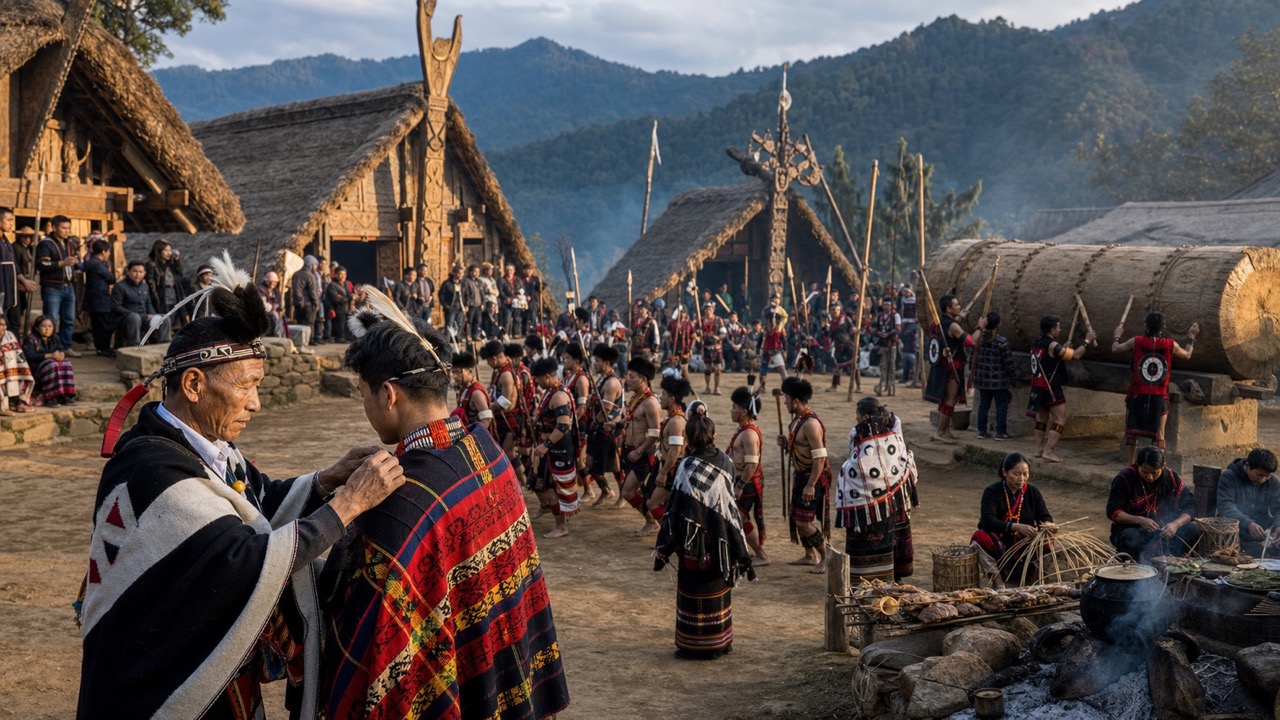
Smoke rises from cooking fires before the first performances begin. Somewhere beyond the trees, the deep sound of a log drum rolls across the valley while another fire is already surrounded by people sharing tea. Carvers continue shaping wood that many visitors will never notice, traditional clothing hangs ready for the day ahead, and Kisama Heritage Village slowly awakens one welcome at a time.

As the morning unfolds, the paths begin leading from one traditional village house to another. Known as morungs, these beautifully crafted buildings represent Nagaland’s different tribal communities, each welcoming visitors through its own architecture, food, music, craftsmanship, stories, and traditions. Every few steps the atmosphere changes again—not because the festival is trying to surprise you, but because every community quietly remains itself.

Visitors often arrive expecting one festival.

They leave remembering many welcomes.

Why This Festival Is Special

Many cultural festivals present traditions from a stage.

Hornbill welcomes visitors into the places where those traditions naturally belong.

Every morung represents a different Naga community while remaining unmistakably itself. One welcomes visitors through music. Another through food. Another through intricate weaving, woodcarving, storytelling, or conversation beside a fire. Rather than blending these identities together, the festival allows each one to speak with its own voice.

Visitors gradually discover that understanding Hornbill has very little to do with seeing everything.

It comes from spending enough time in one place for a welcome to become a conversation.

Festival Experience

What to Expect

The Hornbill Festival unfolds across Kisama Heritage Village, where traditional morungs stand side by side beneath the forested hills outside Kohima.

Each morning begins gently. Artisans continue carving wood, musicians rehearse beside open fires, cooks prepare traditional meals, and performers gather long before the first demonstrations begin. The village slowly fills with visitors moving naturally from one morung to another, discovering that each community introduces itself in a different way.

As the day continues, traditional dances, indigenous games, music, storytelling, weaving, blacksmithing, woodcarving, and ceremonial performances appear throughout the grounds. Between scheduled events, conversations continue over tea, food is shared generously, and visitors find themselves lingering much longer than expected inside one morung before wandering toward the next.

The festival rarely asks anyone to hurry.

Every path quietly invites another conversation.

Festival Highlights

  • Every morung becomes its own destination.
  • Traditional dances, log drum performances, storytelling, indigenous games, woodcarving, weaving, blacksmithing, music, and regional cuisine all reveal different parts of Nagaland’s remarkable cultural diversity without ever feeling repetitive.
  • Throughout the village, fires continue burning beside gathering places where visitors are welcomed into conversations that feel every bit as memorable as the performances themselves.
  • Many people arrive expecting one spectacular cultural show.
  • Instead, they find dozens of smaller experiences that quietly stay with them long after the festival has ended.

Getting There & Around

Where It Happens

The Hornbill Festival takes place in Kisama Heritage Village, located among the forested hills a short drive from Kohima.

Purpose-built traditional morungs representing Nagaland’s tribal communities are arranged throughout the village, connected by pathways that encourage visitors to explore gradually rather than follow a fixed route.

Surrounded by pine-covered hills, the village feels less like a festival ground than a place where many different communities have gathered to welcome visitors together.

Getting Around

Walking is the only meaningful way to experience Hornbill.

The village has been designed for exploration, with pathways naturally leading from one morung to another through wooded hillsides, open gathering spaces, and quiet corners where unexpected conversations often begin.

Allow far more time than your itinerary suggests.

Hornbill rewards those who are willing to stop whenever another welcome appears.

Visitor Guide

Festival Food & Drink

Hornbill introduces visitors to Nagaland one meal at a time.

Every morung presents dishes that reflect the traditions of its own community, allowing visitors to experience smoked meats, bamboo shoots, local vegetables, rice preparations, indigenous herbs, and recipes that have been shared across generations.

Meals rarely interrupt the festival.

Instead, they become another invitation to stay a little longer.

Someone recommends another dish.

Another community offers something different.

Before long, the journey through the village continues naturally through its kitchens as much as through its performances.

Budget & Costs

Hornbill can be experienced across a range of budgets, from comfortable hotels and guesthouses in Kohima to locally operated homestays that provide a deeper introduction to Naga hospitality.

Food, cultural performances, and many festival experiences remain accessible, while booking accommodation early offers the greatest flexibility during one of Nagaland’s busiest travel periods.

Tips for First-Time Visitors

Begin with one morung.

Sit down.

Accept a cup of tea if it is offered.

Listen before reaching for your camera.

Then continue to another.

The festival becomes richer with every conversation because each community introduces itself differently. Trying to experience everything quickly usually means missing the moments people remember most.

Safety

The festival is known for its welcoming atmosphere and excellent organization.

Comfortable walking shoes are recommended for exploring the village’s gently sloping pathways, while layered clothing helps accommodate cool mornings and warmer afternoons in the hills.

Allow yourself enough time to move comfortably between morungs.

The village has its own rhythm.

Following it usually leads to the most memorable experiences.

Cultural Significance

The Hornbill Festival celebrates the remarkable cultural diversity of Nagaland while creating opportunities for communities to preserve, share, and continue traditions that remain central to their identities.

Music, architecture, craftsmanship, ceremonies, storytelling, food, and hospitality all remain deeply connected to everyday community life rather than existing only for visitors.

The festival succeeds because every community remains confidently itself while choosing to gather alongside the others.

Plan Your Journey

When to Go

Arrive early each morning.

The quieter hours before larger crowds gather reveal a side of the festival many visitors miss. Fires are still burning from breakfast, musicians rehearse without audiences, artisans continue working, and the village settles naturally into another day before performances officially begin.

Midday and afternoon bring the largest demonstrations, cultural programs, traditional sports, music, and dance throughout Kisama Heritage Village.

Remain through late afternoon as well.

As performances begin winding down, the pace becomes gentler again and conversations often continue long after the official program has ended.

Where to Stay

Kohima provides the ideal base for experiencing the Hornbill Festival while offering opportunities to explore local markets, cafés, churches, museums, and viewpoints beyond the festival grounds.

Hotels, guesthouses, and homestays throughout the city allow visitors to experience both the energy of Kisama Heritage Village during the day and the quieter atmosphere of Kohima each evening.

Reservations should be made well in advance, as Hornbill remains Nagaland’s busiest annual celebration.

Bottom Line & Key Days

Bottom Line

Visitors often arrive expecting to learn about the tribes of Nagaland.

They do.

Just never all at once.

One conversation begins beside a cooking fire.

Another inside a beautifully carved morung.

Another while watching an artisan continue working long after the performance has ended.

One welcome quietly leads to the next until the village itself begins introducing people rather than displays.

Long after the music has grown quiet in the hills outside Kohima, many visitors remember something surprisingly simple.

Not one performance.

Not one photograph.

Just another doorway…

…and another invitation to come inside.

Key Days

Morning in the Village — Fires are lit, artisans begin working, musicians prepare, and Kisama slowly awakens.

Cultural Performances — Traditional dance, music, storytelling, indigenous sports, and ceremonies continue across the morungs throughout the day.

Life Between the Performances — Food, conversation, craftsmanship, and hospitality quietly become as memorable as the scheduled events themselves.

Festival Farewell — Visitors leave carrying many different stories, each gathered from another welcome somewhere along the paths of Kisama Heritage Village.

Ready to Experience Hornbill Festival?

You've explored what makes this festival special. Now it's time to plan your trip. Compare flights, book your hotel, arrange transportation, and take care of your travel essentials—all in one place.

✈ Find Flights

Loading booking widget...

Booking is completed on Expedia in a new tab.

🏨 Find Hotels

Search places to stay

Powered by Booking.com

Booking is completed on Booking.com in a new tab.

Rail & Bus Travel

Compare train and coach routes for the journey.

Compare Routes

Things to Do

Discover tours and attractions before or after the festival.

Explore Experiences

eSIM Mobile Data

Stay connected abroad without traditional roaming charges.

Get an Airalo eSIM

Travel bookings are provided by our trusted partners. We may earn a commission when you book through these links, at no additional cost to you.

Independent Editorial Standards

Every Follow the Festivals guide is independently researched and regularly reviewed using official festival information, destination resources, and trusted travel references. We also welcome verified updates from festival organizers, destination marketing organizations, tourism partners, and local experts to help keep our guides accurate, current, and useful for travelers.

Represent this festival or have a verified update to share? We'd love to hear from you through our contact page.