
Follow the Festivals

Keukenhof Tulip Festival

Keukenhof Tulip Festival

Lisse, Netherlands

2027-03-18 - 2027-05-09

The Story

Festival Overview

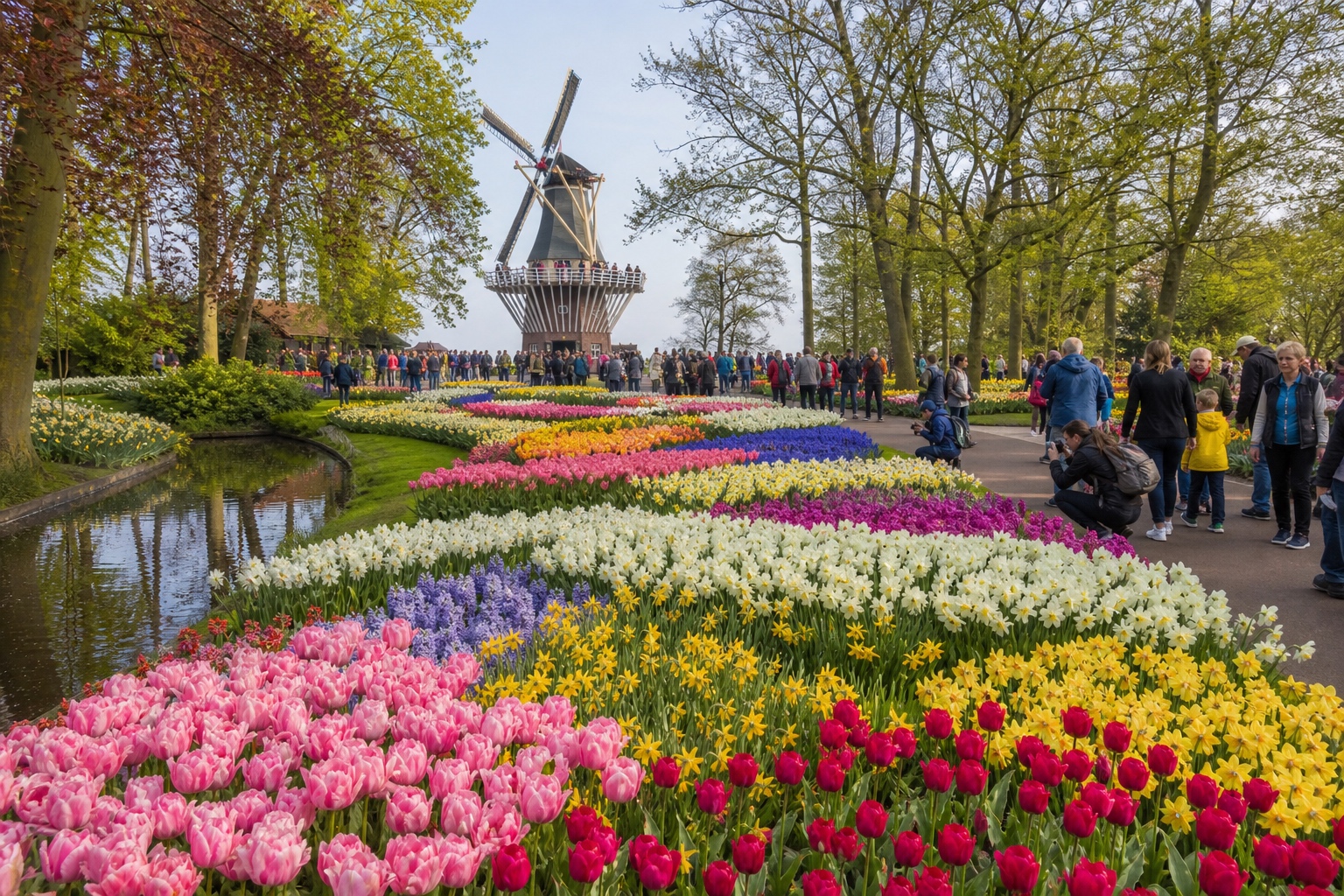
Keukenhof is an eight-week spring exhibition where Dutch bulb growers turn an English-landscape estate near Lisse into a living catalogue. Millions of bulbs create waves of tulips, narcissi, hyacinths, and other spring flowers, while indoor shows reveal cut-flower and pot-plant expertise beyond the outdoor beds.

The narrative is abundance engineered through time. The apparent simultaneity of color depends on autumn planting, layered bulbs, cultivar selection, soil work, weather, and constant maintenance. What looks effortless is an exact collaboration between horticulture and season.

The park is also a gateway to the Bollenstreek, where commercial fields, villages, auction systems, research, and export networks place the famous flowers inside a working region.

Photography drives much of the public behavior, yet the park becomes more memorable when scent, temperature, plant scale, and the sound of wind through mature trees re-enter the visit.

Why This Festival Is Special

Keukenhof makes timing visible on an immense scale. Every bed is an attempt to conduct biology, weather, design, and commerce into a brief public performance.

The beauty deepens when the park is read as a living catalogue connected to growers and fields. Color then carries evidence of expertise, risk, and an industry shaped by spring.

The estate’s mature trees and curved paths prevent the display from becoming a flat field of stripes. Historic landscape design supplies shadow, reflection, enclosure, and surprise, giving commercial varieties a more complex stage.

Festival Experience

What to Expect

Expect intense color, coach groups, photography, family activity, indoor shows, food kiosks, boat or bicycle excursions, and crowded signature viewpoints. The park is large, yet the most famous installations can bottleneck.

Plant labels turn spectacle into learning. Compare height, form, flowering time, color behavior, and combinations across beds.

The display changes continuously. Faded flowers, newly opened varieties, and greenhouse peaks all belong to a managed seasonal sequence.

Scent is easy to overlook amid the color. Hyacinths and indoor flower shows can create powerful sensory zones, while windy outdoor beds make the plants move as designed masses over static bands.

Maintenance continues around the audience. Gardeners replace, deadhead, monitor, and protect displays, providing glimpses of the work required to hold a temporary exhibition at international scale.

Festival Highlights

  • An opening-hour walk before the central beds fill
  • Layered bulb planting revealing successive waves of bloom
  • A pavilion flower show focused on one specialist group
  • The historic landscape structure visible beneath the color
  • A respectful cycle through the working Bollenstreek
  • Grower labels turning a beautiful cultivar into horticultural knowledge

Getting There & Around

Where It Happens

Keukenhof lies on a historic estate at the edge of Lisse. Curving paths, ponds, mature trees, lawns, themed beds, a windmill, and pavilions organize the park into changing scales of horticultural display.

The indoor pavilions are not bad-weather substitutes. Rotating flower shows reveal breeding, exhibition standards, floristry, and greenhouse skill that the outdoor beds cannot convey.

Beyond the gates, bulb fields are commercial crops on private land. View them from public roads and paths, never enter rows without permission, and remember that cut flowers may be removed to strengthen bulbs.

Lisse is not simply a name on the park address. The town sits within a cultivated bulb landscape whose seasonal traffic, employment, commerce, and identity are affected by the short opening window.

Getting Around

Seasonal buses connect major transport hubs with the park, while cycling routes cross the bulb region. Driving requires timed planning and brings peak congestion.

Inside, begin beyond the first beds to escape the entrance concentration, then loop back later. Use pavilion visits during rain or midday crowd pressure.

Cyclists should stay on legal routes, yield carefully, and protect commercial fields.

Visitor Guide

Festival Food & Drink

The park’s food is most useful when it supports long garden walks, but the surrounding region adds dairy, baking, herring, cheese, and seasonal café culture. A meal in Lisse or Leiden can restore local texture after the international attraction.

Eat outside peak lunch, carry water, and avoid sacrificing the best light to a queue. Choose one Dutch snack in the park and one unhurried regional meal after the visit.

#### Must Try

• **Poffertjes:** Small yeasted pancakes provide a warm, shareable pause during cool spring weather.

• **Stroopwafel:** Caramel syrup between thin waffles offers a compact Dutch market sweet.

• **Herring preparation:** The North Sea staple connects the flower trip with a wider national food tradition.

• **Farmhouse cheese:** A regional tasting introduces milk, pasture, aging, and Dutch trading culture.

• **Apple pie with coffee:** A café slice creates a restorative bridge between gardens and an evening in town.

Budget & Costs

Budget: Use advance admission, seasonal public transport, packed water, and a focused park day.

Mid-Range: Add regional lodging, bicycle hire, café dining, and a field route.

Higher Spend: Private horticultural guidance and flexible transfers add context; no premium can control bloom timing.

Tips for First-Time Visitors

Choose a horticultural question before arrival: succession, color pairing, bulb layering, breeding, or exhibition standards. It turns visual overload into an intelligible visit.

Photograph labels, vary viewpoints, and step away from the most copied installations. Never cross ropes or enter agricultural rows.

Include one indoor show and one regional extension; both prevent the day from becoming only tulip photography.

If the weather turns wet, resist treating the day as lost. Droplets alter petals, clouds soften color for photography, and the indoor collections become more attractive at exactly the right moment.

Safety

Crowds, bicycles, wet paths, pollen, wind, and traffic on rural roads require care. Wear stable shoes and follow route separation.

Respect water edges, barriers, private land, and flower crops. Monitor weather and keep children close in congested areas.

Cultural Significance

Keukenhof began in 1949 as a showcase created by leading bulb growers and exporters. It remains a public face of a Dutch floricultural system built from cultivation, breeding, logistics, auctions, marketing, and global trade.

The estate landscape predates the spring park, while the exhibition overlays it with a temporary commercial and artistic display. Those histories meet in a place that is garden, catalogue, national image, and tourism machine.

Its significance is strongest when beauty leads to questions about labor, land, plant health, sustainability, and the economics behind abundance.

Tourism has also reshaped how the bulb region is seen. Responsible travel keeps roads passable, protects fields, and distinguishes a crop from a public garden, allowing admiration to coexist with agricultural reality.

Plan Your Journey

When to Go

The park opens for a limited spring season. Early weeks favor crocuses, narcissi, hyacinths, and early tulips; midseason often offers the broadest outdoor balance; later weeks bring mature tulips and indoor displays even as weather changes the fields.

No date guarantees every variety. Follow official flowering updates, arrive at opening or late in the day, and choose a weekday when possible.

Cold, sun, wind, and rain transform color and crowd behavior. A flexible visit notices succession over chasing one imagined peak.

Where to Stay

Leiden and Haarlem combine rail access, restaurants, and historic centers; Amsterdam simplifies a broader city trip but creates the busiest transfer; Lisse and nearby villages provide quiet proximity with limited inventory.

Choose lodging by the full itinerary. A regional base suits cycling and fields, while an urban base suits museums and evening life. Reserve early during spring weekends.

Bottom Line & Key Days

Bottom Line

Keukenhof is not one perfect tulip moment but an orchestrated season of horticultural succession.

Study labels, enter the pavilions, and connect the park with the working bulb region; abundance becomes knowledge.

Key Days

Opening weeks — Early bulbs and indoor shows lead the seasonal sequence.

Midseason — Broad outdoor variety often reaches its fullest balance.

Flower-parade period — Regional celebration adds exceptional transport pressure.

Closing weeks — Late tulips and pavilion displays carry the season toward its end.

Ready to Experience Keukenhof Tulip Festival?

You've explored what makes this festival special. Now it's time to plan your trip. Compare flights, book your hotel, arrange transportation, and take care of your travel essentials—all in one place.

✈ Find Flights

Loading booking widget...

Booking is completed on Expedia in a new tab.

🏨 Find Hotels

Search places to stay

Powered by Booking.com

Booking is completed on Booking.com in a new tab.

Rail & Bus Travel

Compare train and coach routes for the journey.

Compare Routes

Things to Do

Discover tours and attractions before or after the festival.

Explore Experiences

eSIM Mobile Data

Stay connected abroad without traditional roaming charges.

Get an Airalo eSIM

Travel bookings are provided by our trusted partners. We may earn a commission when you book through these links, at no additional cost to you.

Independent Editorial Standards

Every Follow the Festivals guide is independently researched and regularly reviewed using official festival information, destination resources, and trusted travel references. We also welcome verified updates from festival organizers, destination marketing organizations, tourism partners, and local experts to help keep our guides accurate, current, and useful for travelers.

Represent this festival or have a verified update to share? We'd love to hear from you through our contact page.