
Festival Overview
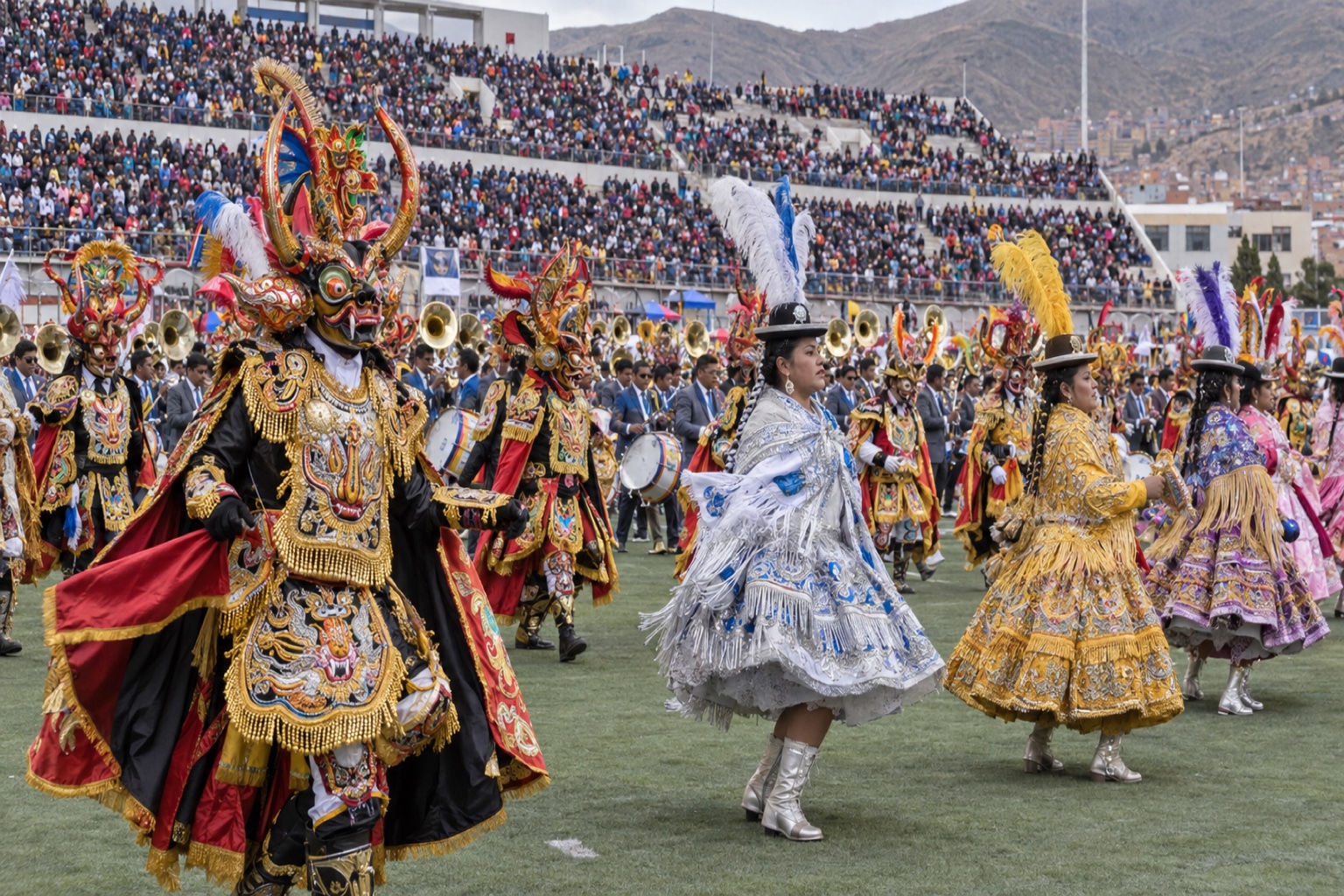
Puno Candelaria Festival is devotion expressed through physical scale. Brass bands, embroidered costumes, masked characters and immense dance ensembles fill a high-altitude city beside Lake Titicaca, yet spectacle is only the visible surface. The celebration joins Catholic observance with Quechua and Aymara understandings of community, land and sacred obligation.
The traveler encounters several festivals inside one. Religious ceremonies focus attention on the Virgin. Traditional dance competitions bring rural and urban communities into formal performance. Later parades and contests of elaborate costumes produce the images most visitors recognize.
My advice is to stop treating the biggest parade as the whole event. Attend one devotional moment, one traditional dance gathering and one large costume spectacle. Their differences explain Puno more clearly than a sequence of photographs ever could.
Altitude changes the pace. Walking, cold nights and long viewing days demand restraint. Puno rewards the visitor who arrives early, acclimatizes and stays long enough to recognize that dancers are carrying family, neighborhood and regional identity as well as costume.