
Follow the Festivals

Sugar Mas

Sugar Mas

Basseterre, Saint Kitts and Nevis

2026-12-11 - 2026-12-11

The Story

Festival Overview

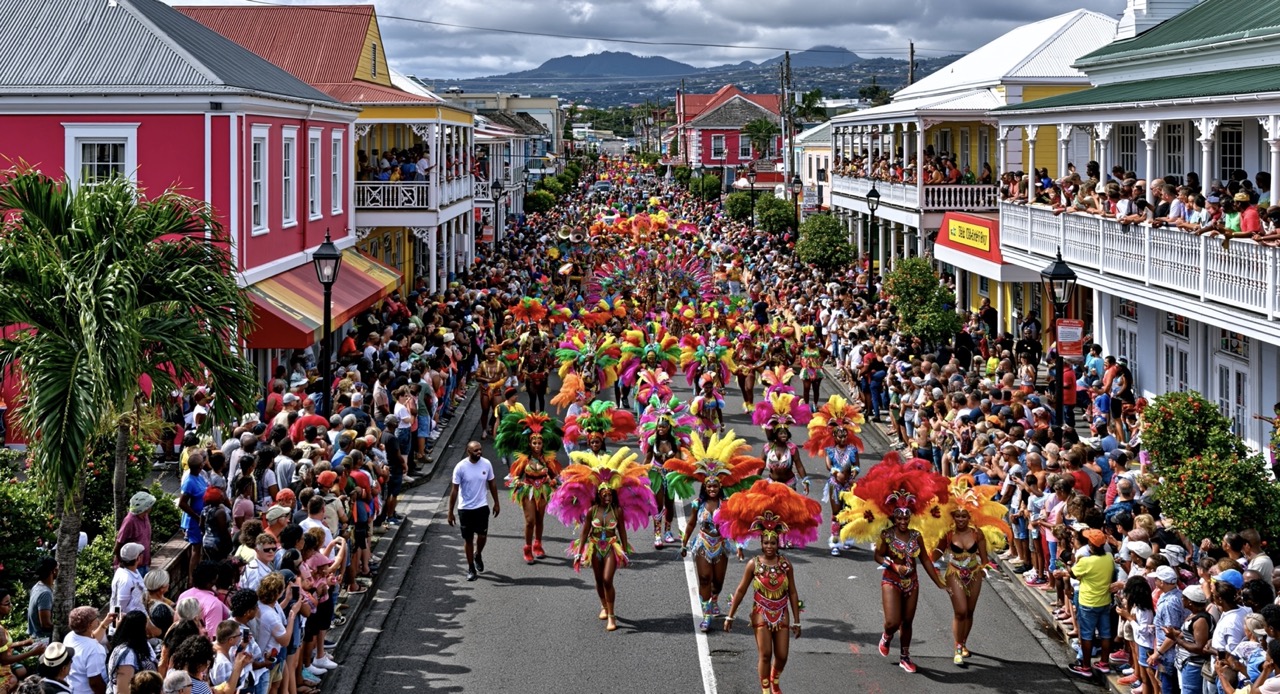
Basseterre enters Sugar Mas through sound. Calypso sharpens its commentary, soca tracks gather momentum, costume bands finish their sections, and folklore performers prepare characters whose movements carry Kittitian memory. Christmas-season streets become the setting for pageants, competitions, J’Ouvert, grand parade presentation, and Last Lap, giving Saint Kitts a carnival rhythm distinct from the pre-Lenten calendar used elsewhere in the Caribbean.

The island’s history gives the celebration weight. Sugar transformed Saint Kitts through plantation wealth, enslavement, labor, and lasting social consequence; Carnival turns that inheritance into music, satire, beauty, and public authorship without making the past uncomplicated. Visitors understand Sugar Mas most fully when they hear the competition songs before taking to the road and recognize masquerade, steelpan, folklore, and costume work as connected forms of cultural knowledge.

Why This Festival Is Special

The festival’s deepest achievement is that it makes history dance without pretending history was light. Sugar produced colonial fortunes and generations of coercion; mas converts the word into a celebration controlled by descendants and citizens of the island. The result is not a simple reversal, but a public act of authorship. Basseterre becomes a place where critique, pleasure, ancestral form, and contemporary soca can occupy the same road.

At its cultural center, the advertised centerpiece gives the event scale, but a rehearsal, early aisle, installation detail, food counter, or conversation after the crowd moves on explains how it is made. Sugar Mas becomes memorable when the visitor connects that quiet evidence to the public moment. At its cultural center, the transformation is temporary; the knowledge and relationships behind it remain.

At its cultural center, that connection between visible celebration and invisible preparation is the editorial heart of the story. At its cultural center, it gives the traveler something more durable than scale: a specific understanding of why this event could not simply be moved elsewhere without becoming a different experience.

Festival Experience

What to Expect

A visitor should experience the season in layers. Evening calypso or soca competitions teach the songs and personalities before the road events. J’Ouvert begins in darkness, with bands, trucks, mud, paint, powder, and a crowd that grows with sunrise; hydration and a fixed meeting point matter before the first drink. Daytime after J’Ouvert is for washing, food, and sleep. Grand parade events bring more formal costume presentation and family spectators, while Last Lap releases the remaining energy in a looser final circuit through Basseterre.

Across that progression, prepare for tropical sun, predawn fatigue, loud sound systems, alcohol, paint or powder, dense road crowds, blocked streets, and limited late transport. As the road events build, eat before fatigue becomes hunger, carry water, and take one deliberate pause away from the loudest or most concentrated setting. As the road events build, immersion does not require constant movement; staying with one performance, artwork, competition, or street position often reveals more than completing a route.

As the road events build, plan dispersal as carefully as arrival. As the road events build, crowds leave in waves, roads and venues reopen on different schedules, and a working phone cannot be assumed. As the road events build, set a meeting point, keep the lodging address offline, and finish near dependable transport.

As the road events build, allow the experience to change the plan. As the road events build, a conversation, delayed start, difficult artwork, close competition, or unexpectedly strong performance may deserve more time than the next scheduled stop. As the road events build, the day gains narrative shape when it can build toward a meaningful center and release gradually, rather than becoming a sequence of arrivals and exits.

Festival Highlights

  • Hearing calypso competition turn current affairs into melody and wit
  • Meeting traditional folklore characters as living forms, not parade props
  • Experiencing J’Ouvert from darkness into morning with a careful safety plan
  • Watching formal costume presentation reveal months of design work
  • Following Last Lap as the season’s public release and farewell

Getting There & Around

Where It Happens

The event uses Basseterre’s streets, the Carnival Village, performance venues, parade assembly areas, and public routes through the capital. Across the carnival spaces, each space has its own purpose: a gallery, barn, parade assembly point, theater, or historic façade should not be treated as interchangeable public territory.

Across the carnival spaces, use event map and exact entrances. Across the carnival spaces, group activities geographically, remain outside working areas, and keep resident, participant, animal, service, and emergency routes clear.

Getting Around

Use hotel-dispatched or authorized taxis, walking within a known central zone, and prearranged pickup after J’Ouvert or parade nights. Around central Basseterre, confirm the entrance and return point against the event map, then save both offline.

Allow for tropical sun, predawn fatigue, loud sound systems, alcohol, paint or powder, dense road crowds, blocked streets, and limited late transport. Around central Basseterre, prebook late transport, use authorized vehicles and pickup areas, and move with the crowd rather than stopping in its path.

Around central Basseterre, before leaving each location, identify the next leg and its fallback. Around central Basseterre, this small pause prevents the schedule from dictating unsafe or exhausting movement.

Visitor Guide

Festival Food & Drink

During the long carnival rhythm, food should support the event’s rhythm and explain the destination. During the long carnival rhythm, begin with a dependable meal before the busiest program, then use one or two smaller items for energy rather than grazing without context. During the long carnival rhythm, choose established kitchens or high-turnover vendors with clear handling of meat, dairy, seafood, or ice.

During the long carnival rhythm, make room for one seated break away from the principal crowd, where staff can identify a local ingredient, producer, or seasonal tradition. During the long carnival rhythm, carry safe water even when alcohol, sweet drinks, or cold weather makes thirst less obvious. During the long carnival rhythm, share oversized portions, ask about allergens, and avoid treating regional food as a stunt.

Must Try

• Goat water — A peppery goat stew associated with Saint Kitts and neighboring islands, suited to recovery after a long event.
• Saltfish and johnny cakes — A savory breakfast pairing useful after J’Ouvert.
• Cook-up rice — Rice cooked with peas, meat, or vegetables for a filling carnival meal.
• Sorrel drink — A spiced hibiscus drink strongly associated with the Christmas season; ask whether rum has been added.

During the long carnival rhythm, the best food choice should restore attention as well as satisfy appetite, leaving the traveler ready for the next part of the experience.

Budget & Costs

In a holiday-season budget, budget separately for lodging, local transport, admission, premium events, food, and disruption. In a holiday-season budget, a free public program can still create high costs through scarce rooms, late rides, parking, or extra nights.

In a holiday-season budget, use official ticket channels and support local producers, kitchens, artists, and recognized cultural groups where possible.

Tips for First-Time Visitors

For a first Sugar Mas, choose fewer priorities than the schedule appears to allow. For a first Sugar Mas, carry stable footwear, water, phone power, weather protection, medication, and hearing protection where appropriate.

For a first Sugar Mas, ask before close photography or recording. For a first Sugar Mas, do not touch art, costumes, animals, instruments, sacred objects, or working equipment, and never enter preparation areas without permission.

Safety

Prepare for tropical sun, predawn fatigue, loud sound systems, alcohol, paint or powder, dense road crowds, blocked streets, and limited late transport. During dense road events, hydrate, eat, protect skin and hearing, and identify first aid, shelter, and an exit before peak crowding. During dense road events, keep valuables close.

During dense road events, follow staff and emergency directions. During dense road events, never cross barriers, obstruct participants, touch animals or installations, imitate dangerous acts, or let a photograph override another person’s safety and dignity.

Cultural Significance

Saint Kitts and Nevis National Carnival brings African-Caribbean masquerade, calypso commentary, soca, steelpan, pageantry, Christmas-season custom, and older folklore into the public life of the federation. Figures such as Moko Jumbies, clowns, masquerades, and other traditional performers carry knowledge through movement, costume, rhythm, and oral explanation. Sugar Mas also confronts the island’s plantation history indirectly through its name and calendar.

Within Kittitian carnival life, the visible program rests on months or years of teaching, rehearsal, husbandry, design, curation, fundraising, and maintenance. Within Kittitian carnival life, children and newcomers learn by working alongside experienced participants, which makes transmission as important as spectacle.

Within Kittitian carnival life, visitors should notice who organizes, who receives credit, who absorbs disruption, and where spending goes. Within Kittitian carnival life, celebration can create pride and income while also producing congestion, waste, pressure on sacred space, or unequal access. Within Kittitian carnival life, responsible travel writing keeps those truths together.

The event also reads Basseterre, Saint Kitts beyond familiar branding. Within Kittitian carnival life, its choices about space, tradition, artistic authority, competition, and public access reveal what the destination values—and what it is still debating.

Plan Your Journey

When to Go

Sugar Mas belongs to the Christmas and New Year season, with early programs building through calypso, soca, folklore, pageantry, and costume presentation before the largest road events. The opening portion suits travelers who want cultural context and manageable crowds; the holiday peak brings predawn energy, formal mas, and the heaviest demand for transport and lodging.

Plan rest around J’Ouvert rather than treating it as an ordinary late night. Arrive before the crowd thickens, recover through the hottest part of the day, and return for evening programs only when sleep, food, and transport are secure.

Where to Stay

The most useful base is Basseterre or Frigate Bay with a trusted taxi plan for predawn and late-night events. For a Basseterre base, judge it by the return after the final program, not by distance in ordinary daytime traffic. For a Basseterre base, confirm late entry, accessibility, climate control, and secure storage.

For a Basseterre base, book early with flexible terms. For a Basseterre base, a lower rate can become poor value if it requires uncertain transport after midnight or repeated cross-city travel. For a Basseterre base, save the address offline and make sure every traveler can identify it independently.

Bottom Line & Key Days

Bottom Line

Sugar Mas speaks most strongly to travelers who value Caribbean music, masquerade, folklore, and history carried through public celebration. Its pleasure is real, but so is the labor behind every song, costume, character, and road march. Listen before joining, learn the names of the forms being presented, and Basseterre will reveal a carnival that transforms the language of sugar into an island-controlled declaration of memory and life.

Key Days

Competition Period

Use calypso, soca, pageants, and folklore programs to learn the season’s voices before the road events.

J’Ouvert Morning

Begin rested with minimal valuables, water, hearing protection, and a fixed meeting and pickup point.

Last Lap

Follow the final release through Basseterre while preserving enough energy and time for a safe return.

Ready to Experience Sugar Mas?

You've explored what makes this festival special. Now it's time to plan your trip. Compare flights, book your hotel, arrange transportation, and take care of your travel essentials—all in one place.

✈ Find Flights

Loading booking widget...

Booking is completed on Expedia in a new tab.

🏨 Find Hotels

Search places to stay

Powered by Booking.com

Booking is completed on Booking.com in a new tab.

Rail & Bus Travel

Compare train and coach routes for the journey.

Compare Routes

Things to Do

Discover tours and attractions before or after the festival.

Explore Experiences

eSIM Mobile Data

Stay connected abroad without traditional roaming charges.

Get an Airalo eSIM

Travel bookings are provided by our trusted partners. We may earn a commission when you book through these links, at no additional cost to you.

Independent Editorial Standards

Every Follow the Festivals guide is independently researched and regularly reviewed using official festival information, destination resources, and trusted travel references. We also welcome verified updates from festival organizers, destination marketing organizations, tourism partners, and local experts to help keep our guides accurate, current, and useful for travelers.

Represent this festival or have a verified update to share? We'd love to hear from you through our contact page.