
Follow the Festivals

Pchum Ben

Pchum Ben

Phnom Penh, Cambodia

2026-10-10 - 2026-10-12

The Story

Festival Overview

Phnom Penh meets the Mekong, Tonlé Sap, and Bassac rivers in a low, humid capital of markets, monasteries, boulevards, apartment blocks, and rapid change. Pchum Ben, the Festival of Ancestors, moves the city’s attention toward Buddhist temples and family obligations across a fifteen-day period culminating in public holidays.

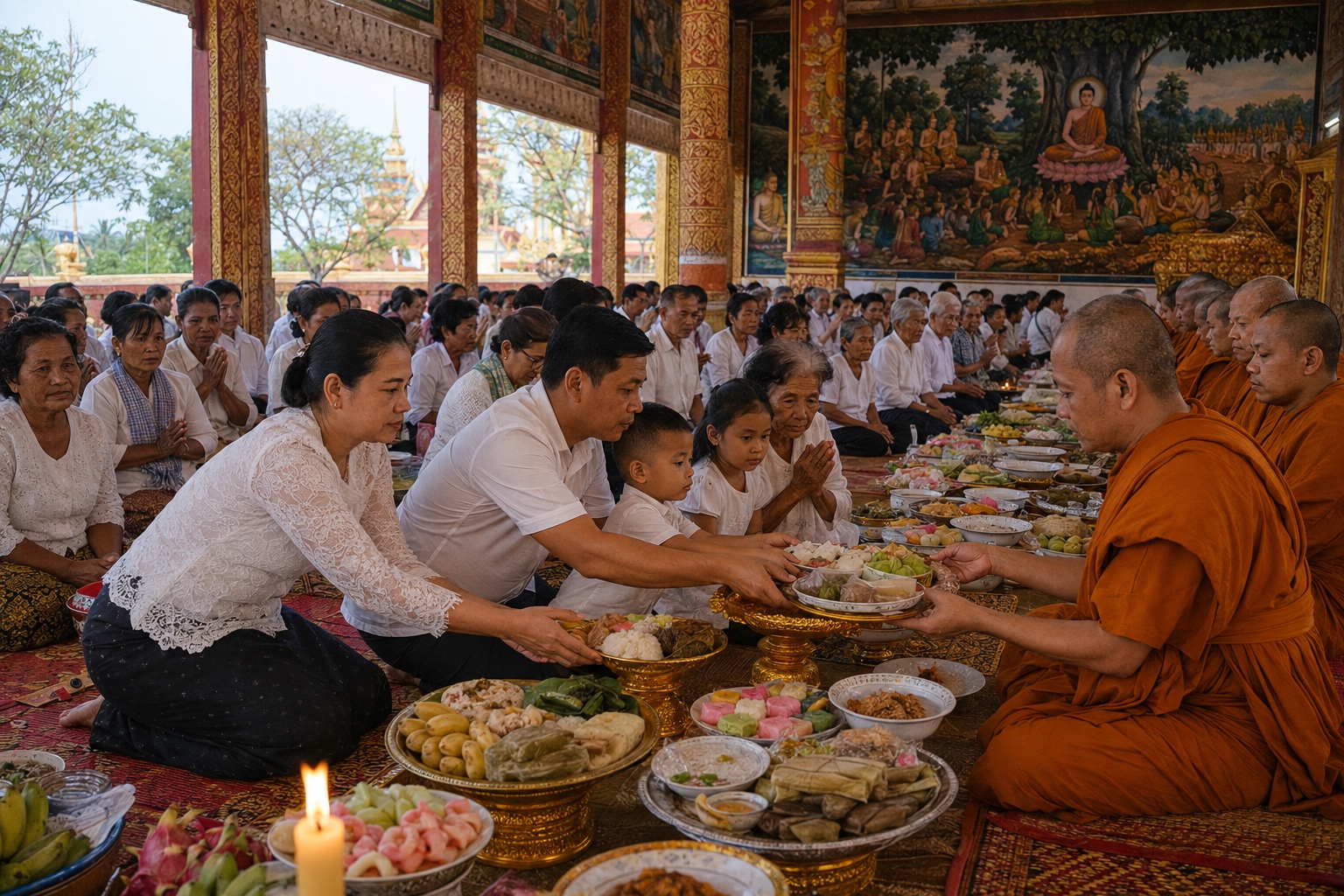
People bring food to monks, make merit for deceased relatives, travel to home provinces, and gather before dawn for rituals whose meaning is spiritual rather than performative. The capital can feel quieter as residents leave, while pagodas become more active.

A traveler should approach the period through respectful observation, conservative dress, and an understanding that family and religious practice take priority over tourism.

Why This Festival Is Special

Ancestor festivals appear across Asia, but Pchum Ben expresses a particularly Khmer relationship among food, monks, merit, family, and the unseen dead. The fifteen-day structure and provincial return give remembrance both spiritual and geographic depth.

Phnom Penh offers access to major pagodas and the altered rhythm of an emptied capital, yet the experience remains meaningful only when travelers accept that the most important moments belong to families. One chooses to learn from it for insight into Cambodian obligations across generations, not for spectacle or unrestricted ceremony access.

Festival Experience

What to Expect

Before dawn, worshippers may arrive with rice or food, candles, incense, and offerings, moving quietly through temple grounds while monks chant. Later mornings bring prepared dishes for the sangha and gatherings of extended family.

Markets become busy before closures, then city streets may thin as people leave for provinces. Ritual details vary, and not every action is open to outsiders or photography.

Expect bare feet inside sacred areas, rain, incense smoke, food carried with care, and conversations shaped by memory. The atmosphere is often solemn and generous rather than carnivalesque.

Festival Highlights

  • Dawn chanting and offerings revealing the quiet devotional heart of the observance
  • Families preparing food for monks and deceased relatives across generations
  • Phnom Penh pagodas becoming centers of merit-making rather than tourist monuments
  • White clothing and conservative dress expressing respect during temple visits
  • Provincial travel reconnecting urban residents with home communities and ancestral places
  • Khmer Buddhist teaching giving the period moral meaning beyond its public-holiday status

Getting There & Around

Where It Happens

Pchum Ben unfolds at Buddhist pagodas, family homes, markets, and ancestral communities across Phnom Penh and Cambodia. Wat Phnom, Wat Botum, and other urban temples offer visible religious context, while many residents travel to provincial home pagodas. There is no single public festival ground. The true geography follows family relationships, monastic communities, and places where ancestors are remembered.

Getting Around

Use hotel-arranged tuk-tuks or recognized ride applications, especially for predawn temple visits when streets are dark and service is limited. Traffic around pagodas and markets can slow abruptly, while rain may flood low roads.

Choose one temple and remain there rather than touring sacred sites as a rapid checklist. Save addresses in Khmer and English, keep the hotel card, and confirm the return pickup before entering.

Intercity buses and roads become crowded near the final holiday days, so provincial travel requires early booking and generous delay margin. Never photograph military or sensitive government sites during transfers.

Visitor Guide

Festival Food & Drink

Food is an offering before it is a travel experience. Families prepare rice, curries, fruit, sweets, and other dishes for monks and ancestors, and the labor itself carries merit and memory. Num ansom—sticky rice cakes wrapped in banana leaves—are strongly associated with major Cambodian festivals and may be filled with banana or savory ingredients. Travelers should accept food only when invited, avoid touching ceremonial arrangements, and never treat temple offerings as a buffet. Beyond ritual settings, eat Khmer dishes from clean busy kitchens and drink sealed or treated water. A market breakfast can provide context without intruding on family practice.

Must Try

• Num ansom chek — Sticky rice and banana wrapped in banana leaf and steamed as a festival sweet.
• Num ansom chrouk — Savory sticky-rice cake with pork and mung bean wrapped and steamed.
• Fish amok — Fish cooked with coconut, kroeung spice paste, and egg into a fragrant custard-like dish.
• Nom banh chok — Rice noodles with fish gravy, herbs, vegetables, and regional variations.
• Bai sach chrouk — Grilled marinated pork with rice, pickles, and broth for a classic breakfast.

Budget & Costs

Temple access and everyday food may be inexpensive, while central lodging, trusted transport, guides, and holiday travel create the real cost.

Reserve hotel and intercity seats before the final days, and carry small clean bills for appropriate donations without displaying large amounts. A knowledgeable local guide is worth more than a generic sightseeing circuit when religious meaning is the priority.

Budget for rain protection, sealed water, and flexible days around closures. Never purchase privileged access to a private ceremony from an unverified intermediary.

Tips for First-Time Visitors

Wear clothing that covers shoulders and knees, remove shoes where required, and sit with feet directed away from monks or sacred images. Women should not touch monks or hand items directly when local custom requires placement through an intermediary.

Ask before photographing people, ceremonies, or food offerings, and silence the camera during chanting. Attend through a trusted guide or host when possible so the ritual sequence is understood.

Avoid repeating spiritual gestures without knowing their meaning. The respectful role is often to stand back, observe quietly, and leave before the community must manage your presence.

Safety

Traffic, flooding, heat, theft, food hygiene, and predawn movement are the principal concerns. Arrange transport through a trusted source, wear a helmet on motorcycles, and remain alert while crossing even quiet-looking streets.

Secure phones and bags at markets and temple entrances. Drink safe water, choose food with visible turnover, and seek care for persistent gastrointestinal illness or heat symptoms.

Avoid isolated streets before dawn and do not display political curiosity around sensitive sites. Temple floors and steps become slippery in rain.

Cultural Significance

Within Cambodia, this is one of the most important religious and family observances, linking Buddhist merit-making with remembrance of ancestors and obligations across generations. Food offered to monks becomes part of a moral economy through which blessings may reach the dead.

The period also reconnects urban residents with provincial families and home pagodas. Its significance is intensified by Cambodia’s history of mass loss, though the festival should not be reduced solely to national trauma; it belongs to a much longer Khmer spiritual and kinship tradition.

Plan Your Journey

When to Go

The final days carry the greatest public importance, busiest pagodas, strongest provincial travel demand, and broadest business closures. Arrive earlier in the observance period for calmer temple visits and time to learn etiquette before the holiday peak.

Dawn is significant at many pagodas, while later morning brings food offerings and merit-making. September or October remains hot, humid, and rainy, with flooded streets and slippery temple grounds possible.

Three days allow one early pagoda visit, a museum or historical day, and a quiet holiday morning. Avoid scheduling intercity transport at the last minute when families are traveling home.

Where to Stay

Daun Penh offers access to major temples, museums, riverfront streets, and a broad range of hotels, with traffic and nightlife noise as tradeoffs.

BKK1 provides restaurants, established lodging, and a more modern neighborhood base, requiring tuk-tuk travel to many sacred sites. Tonlé Bassac combines dining and central access but varies block by block after dark.

Choose a professionally managed property with reliable transport, flood-aware access, and staff able to explain holiday closures. A river view is less useful than a safe entrance, functioning air-conditioning, and a trusted early-morning driver.

Bottom Line & Key Days

Bottom Line

Pchum Ben asks the traveler to become quieter. Before dawn, rice is carried toward a pagoda, chanting holds the dark, and family memory takes material form through food and merit.

Phnom Penh may offer the setting, but the observance is not staged for an audience. Dress carefully, use a trusted guide, keep the camera lowered, and let one temple visit teach more than a rushed circuit.

The lasting impression should be humility: a capital turning toward its dead, its monks, and its home provinces through acts of care repeated across generations.

Key Days

Cultural Orientation
Meet a trusted guide, learn temple etiquette, and arrange predawn transport before the holiday peak.

Market Preparation
Observe food and flower purchases respectfully without obstructing families preparing offerings.

Pagoda Dawn
Attend one temple quietly, follow local direction, and keep photography secondary to worship.

Family Holiday
Allow closures and provincial travel to reshape the city rather than searching for public spectacle.

Phnom Penh Reflection
Use a museum, river walk, or Khmer meal to place the observance within the capital’s wider history.

Ready to Experience Pchum Ben?

You've explored what makes this festival special. Now it's time to plan your trip. Compare flights, book your hotel, arrange transportation, and take care of your travel essentials—all in one place.

✈ Find Flights

Loading booking widget...

Booking is completed on Expedia in a new tab.

🏨 Find Hotels

Search places to stay

Powered by Booking.com

Booking is completed on Booking.com in a new tab.

Rail & Bus Travel

Compare train and coach routes for the journey.

Compare Routes

Things to Do

Discover tours and attractions before or after the festival.

Explore Experiences

eSIM Mobile Data

Stay connected abroad without traditional roaming charges.

Get an Airalo eSIM

Travel bookings are provided by our trusted partners. We may earn a commission when you book through these links, at no additional cost to you.

Independent Editorial Standards

Every Follow the Festivals guide is independently researched and regularly reviewed using official festival information, destination resources, and trusted travel references. We also welcome verified updates from festival organizers, destination marketing organizations, tourism partners, and local experts to help keep our guides accurate, current, and useful for travelers.

Represent this festival or have a verified update to share? We'd love to hear from you through our contact page.

Photo Credits