
Follow the Festivals

Parintins Folklore Festival

Parintins Folklore Festival

Parintins, Brazil

2027-06-25 - 2027-06-27

The Story

Festival Overview

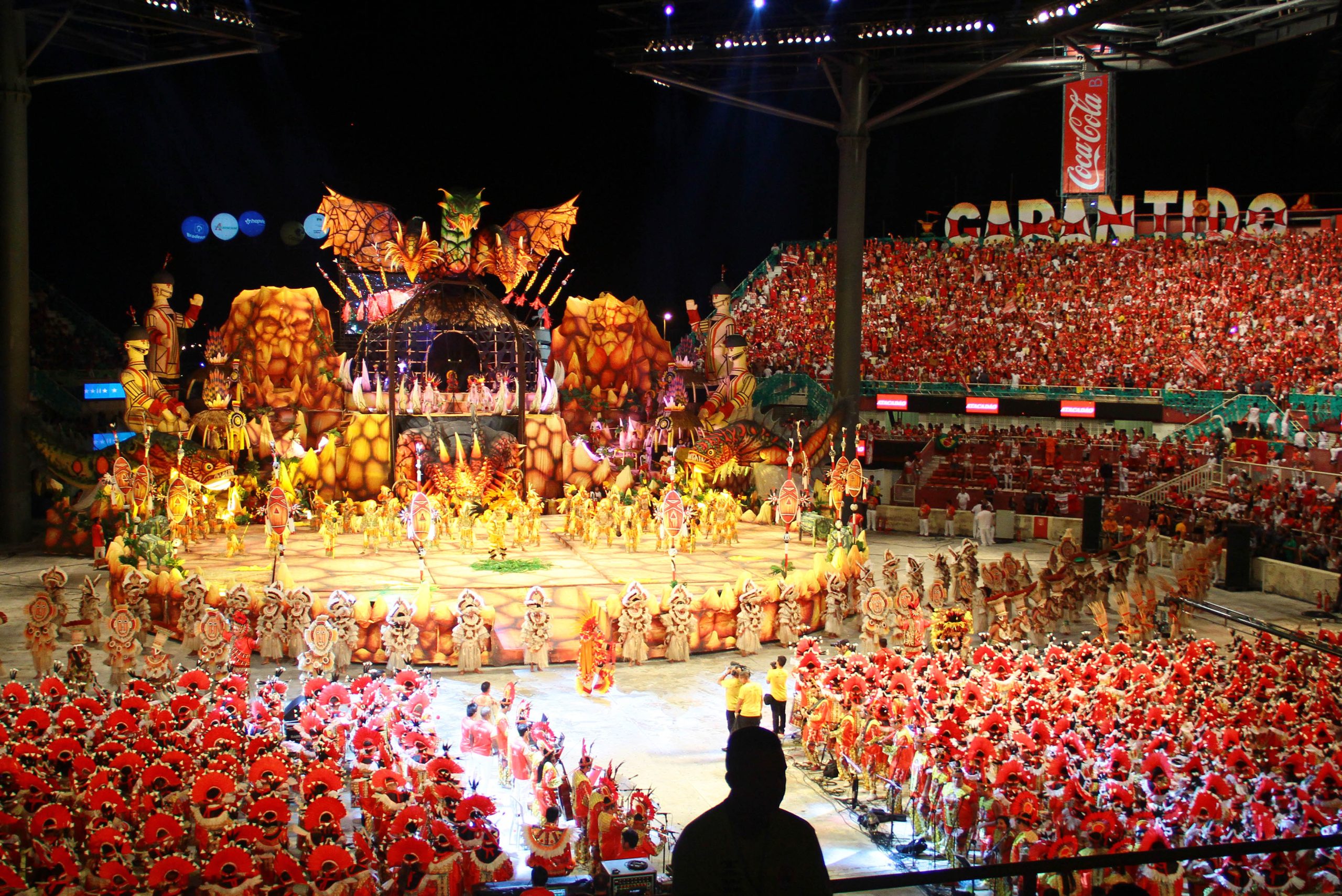
Parintins turns into a two-color city for these June nights, with Boi Garantido red on one side, Boi Caprichoso blue on the other, and the rivalry spilling from the waterfront into the streets and finally into the Bumbódromo. This is not a parade you watch once and leave behind; it is a full-town buildup toward the arena presentations, with fan groups, music, costumes, and neighborhood loyalty shaping the mood long before the first night spectacle begins.

Everything turns on a rivalry large enough to organize an island: Garantido in red, Caprichoso in blue, each building an Amazonian world through music, allegory, dance, costume, and fiercely held community labor. The Bumbódromo is the climax, but the island rehearses the contest in streets, workshops, boats, and households.

Why This Festival Is Special

The arena’s scale is astonishing, but the essential force comes from an island making rivalry into collective authorship. Garantido and Caprichoso mobilize composers, singers, dancers, builders, costume makers, choreographers, neighborhood supporters, and generations of families. Red and blue are not branding laid over the destination. They are social languages that divide, tease, motivate, and ultimately bind the community through months of work.

Each presentation attempts more than visual excess. Toada songs, giant allegories, ritual figures, Indigenous themes, Amazonian animals, and the cunhã-poranga or pajé enter a scored dramatic argument. Understanding the categories changes the spectacle from a blur of color into a sequence of choices. It also creates responsibility: Indigenous imagery must be considered alongside living peoples’ authority, contemporary lives, and the risks of turning identity into arena shorthand.

The river completes the meaning. Everything required for the contest reaches an island city through water or air, and the audience itself participates in that difficult geography. Boats become transport, accommodation, and social space; the port becomes an emotional threshold. By the final night, monumental theater and ordinary island labor can no longer be separated. The festival is special because an apparently impossible production remains unmistakably the work of its place.

Festival Experience

What to Expect

Afternoon starts with the city warming up around the port, bars, and central streets streets and squares as more fans appear in red and blue, vendors get busy, and the talk turns to that night’s contest. By evening, the pull shifts hard toward the Bumbódromo, where the Boi Garantido presentations and Boi Caprichoso presentations take over in a huge staged rivalry of music, dance, allegorical sets, and crowd response.

After dark, the Bumbódromo night spectacles carry the festival’s biggest emotional peaks, and when the arena program lets out, the energy does not vanish; it moves back into the streets, with late meals, packed bars, and slow returns toward lodgings and pickup points.

Festival Highlights

  • Enter the Bumbódromo before the first allegory changes the arena
  • Learn the toadas that supporters sing as active participants
  • Visit public rehearsal or cultural spaces linked to both bois
  • Travel the river route with safety and sleep arrangements understood
  • Watch artisanship in costume and allegorical construction
  • Experience the final night without reducing the rivalry to a tourist game

Getting There & Around

Where It Happens

The Bumbódromo is the contest arena, divided between red Garantido and blue Caprichoso supporters. Its monumental presentations are only one layer: the port, central squares, rehearsal spaces, markets, and neighborhood gatherings carry the rivalry through the island.

Arena entry depends on the ticket category and assigned side. Approach routes close early, queues grow in tropical heat, and the same street may change function between afternoon gathering and post-performance release.

Getting Around

Most travelers arrive from Manaus by boat or limited flight. Festival vessels range from practical transport to multi-day social experiences, so inspect sleeping arrangements and safety standards. Once ashore, walking and moto-taxis dominate; road closures and intense demand make tight connections unrealistic.

Visitor Guide

Festival Food & Drink

Festival eating in Parintins leans Amazonian and practical: hot bowls and grilled fish before the arena, quick tapioca snacks between street gatherings, and cold guaraná or açaí when the heat and the long night start to catch up with you. Around the central streets and on the way back from the Bumbódromo, the food feels tied to the place rather than detached from the show.

Must Try:
• tacacá
• tapioca
• grilled tambaqui
• pirarucu dishes
• guaraná

Budget & Costs

Budget: reserve basic lodging early, use scheduled boats, eat locally, and choose authorized arena access.

Mid-Range: add air-conditioned accommodation, faster transport, and guided cultural context.

Higher Spend: secure premium packages, flights where available, private transfers, and extra Amazon travel days.

Tips for First-Time Visitors

Pick your boi before you arrive, because the red-versus-blue split is part of the experience and people wear it openly. Leave extra time for the walk from the waterfront or central streets to the Bumbódromo on performance nights, since the approach gets slow as the crowd thickens.

Keep one offline map screenshot and one fixed meeting spot for after the show, especially if your group separates inside or outside the arena. If you are arriving by boat or heading back through the port area, sort out the next step before the late-night rush rather than after it.

Safety

The tightest spots are the Bumbódromo access routes before and after the shows, the Parintins waterfront and port area during arrival and departure peaks, and late-night pickup points where waits get long and prices jump. Carry only what you need for the night, keep your phone and wallet zipped away in the crowd, and agree on a clear reunion point that is not right outside the arena gates.

If you are leaving after the performances, expect a slow exit and do not count on finding instant transport at the first roadside stop.

Cultural Significance

The celebration reflects the history, identity, and public traditions that residents of Parintins continue to carry forward.

The contest grew from the Amazonian boi-bumbá tradition and became a monumental expression of caboclo identity, Indigenous imagery, Catholic festival practice, regional music, and contemporary spectacle. Indigenous representation deserves critical attention: artistic homage does not replace living peoples’ authority over their own cultures.

Plan Your Journey

When to Go

The 2027 competition is scheduled for June 25–27, with island activity building well before the first arena presentation. Confirm ticket collection, boat arrivals, and rehearsal access through authorized channels.

Arrive at least one day early to recover from the river journey and learn the red-and-blue geography. Remaining after the result allows the island’s release—and the practical departure crush—to unfold without forcing an immediate connection.

Where to Stay

Rooms on the island are scarce and often arranged through pousadas, private homes, or packages months ahead. Central lodging favors walking to the Bumbódromo; outer neighborhoods offer quieter nights but difficult festival transport. Confirm water, air-conditioning, payment terms, and exact location directly with the host.

Bottom Line & Key Days

Bottom Line

Learn the scoring categories, choose a side with humility, and watch the three nights as a developing argument rather than a succession of giant images. The spectacle carries more weight when the songs, builders, dancers, neighborhoods, river journeys, and Indigenous questions behind it remain visible.

After the result, red and blue return to island streets and thousands of people begin dismantling what they spent months creating. Parintins endures beyond the Bumbódromo. That continuity—rivalry transformed into collective authorship—is the experience worth carrying away.

Key Days

Thursday Arrival — Learn the island, colors, and Bumbódromo approaches.

Friday First Night — Watch how each boi establishes its artistic argument.

Saturday Development — Notice how music and allegory answer the previous performances.

Sunday Decision — Enter rested for the final presentations and islandwide release.

Ready to Experience Parintins Folklore Festival?

You've explored what makes this festival special. Now it's time to plan your trip. Compare flights, book your hotel, arrange transportation, and take care of your travel essentials—all in one place.

✈ Find Flights

Loading booking widget...

Booking is completed on Expedia in a new tab.

🏨 Find Hotels

Search places to stay

Powered by Booking.com

Booking is completed on Booking.com in a new tab.

Rail & Bus Travel

Compare train and coach routes for the journey.

Compare Routes

Things to Do

Discover tours and attractions before or after the festival.

Explore Experiences

eSIM Mobile Data

Stay connected abroad without traditional roaming charges.

Get an Airalo eSIM

Travel bookings are provided by our trusted partners. We may earn a commission when you book through these links, at no additional cost to you.

Independent Editorial Standards

Every Follow the Festivals guide is independently researched and regularly reviewed using official festival information, destination resources, and trusted travel references. We also welcome verified updates from festival organizers, destination marketing organizations, tourism partners, and local experts to help keep our guides accurate, current, and useful for travelers.

Represent this festival or have a verified update to share? We'd love to hear from you through our contact page.

Photo Credits