
Festival Overview
A wooden wheel waits beside a Kyoto street.
Nearby, beams have been arranged on the ground. Rope passes around their intersections in dense, deliberate patterns. No nails hold the larger structure together. The knowledge lies in the bindings: where each length crosses, how tightly it must be drawn and which part will eventually carry several tons through the city.
Over the following days, a float rises.
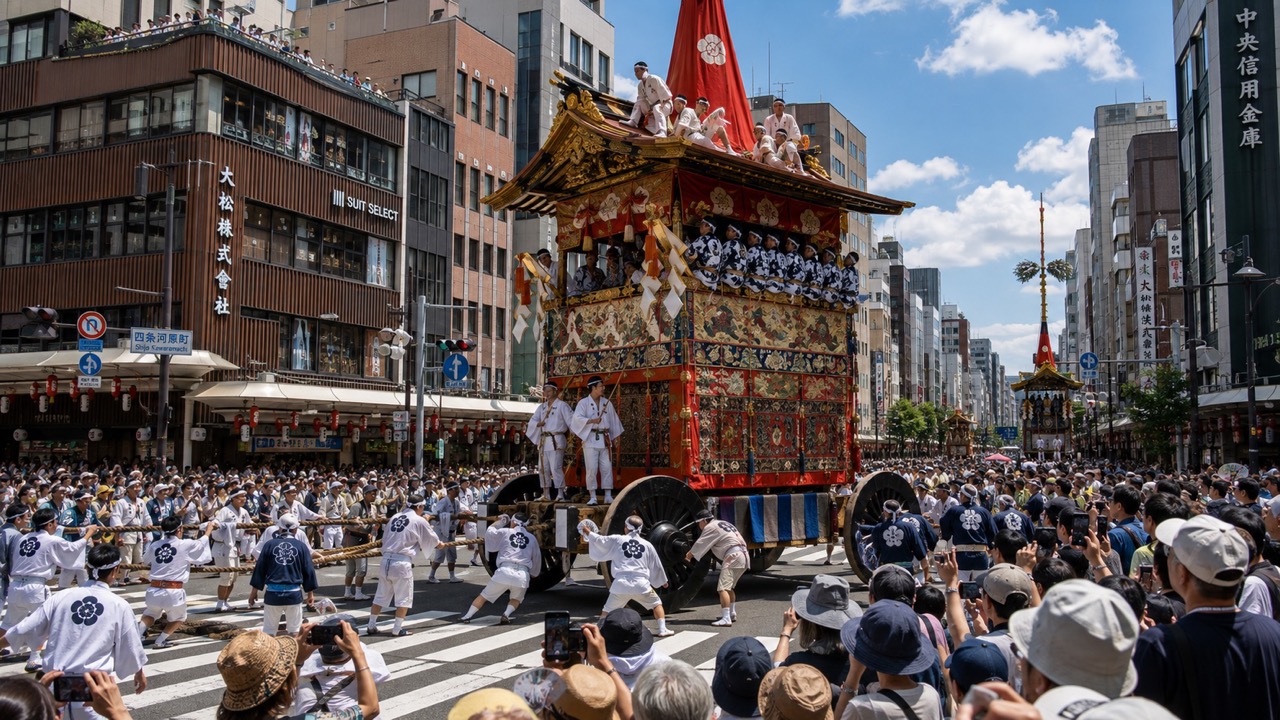
Gion Matsuri is the monthlong religious festival of Yasaka Jinja, created from rites intended to confront epidemic disease and destructive spirits. Its famous yamahoko float processions move through central Kyoto in two separate festival cycles, while mikoshi carry the shrine’s deities through the city during sacred journeys of departure and return.
The floats are among the most magnificent moving structures in Japan, but they are not the whole festival. Before they can enter the procession, neighborhood communities must assemble them, prepare their sacred figures, hang textiles, rehearse music and open spaces normally hidden behind the façades of central Kyoto. After the floats pass, the deities of Yasaka Jinja travel through the streets the festival exists to protect.
This order matters.
The towering hoko, smaller yama, lantern-lit evenings and crowded avenues can make Gion Matsuri appear to be a celebration of spectacle. Its deeper identity lies in preparation. Each neighborhood accepts a particular responsibility. Each structure must be rebuilt. Each procession must clear a path. Each sacred journey must be completed before the visible city can return to ordinary life.
Kyoto does not wait passively for protection.
It remembers how to prepare the way.