
Follow the Festivals

Naadam Festival

Naadam Festival

Ulaanbaatar, Mongolia

2027-07-11 - 2027-07-13

The Story

Festival Overview

Naadam joins national ceremony to three disciplines shaped by Mongolia’s pastoral history: wrestling, archery, and long-distance horse racing. In Ulaanbaatar, stadium banners, deels, music, and state ritual create a concentrated public image; beyond the center, racing unfolds across open ground under dust, sun, and immense sky.

The contrast is essential. Wrestling carries rank and embodied memory, archery rewards calm precision, and child jockeys guide horses bred for endurance. Naadam is both modern national holiday and living inheritance from mobile life on the steppe.

Dress is another language of the holiday. Contemporary and inherited deel styles appear beside sports uniforms and city fashion, showing national culture through personal choice as well as official ceremony.

Why This Festival Is Special

Naadam compresses Mongolia’s scale into a sequence of human tests. A wrestler fills a stadium; an archer quiets it; a horse race stretches attention back across the land.

The capital and steppe remain in productive tension. Together they show a nation claiming continuity without pretending its life has stopped changing.

Few festivals demand such different ways of looking in one day: close reading of ritual gesture, patient attention to a distant finish, and awareness of a landscape that makes the city’s ceremony possible.

Festival Experience

What to Expect

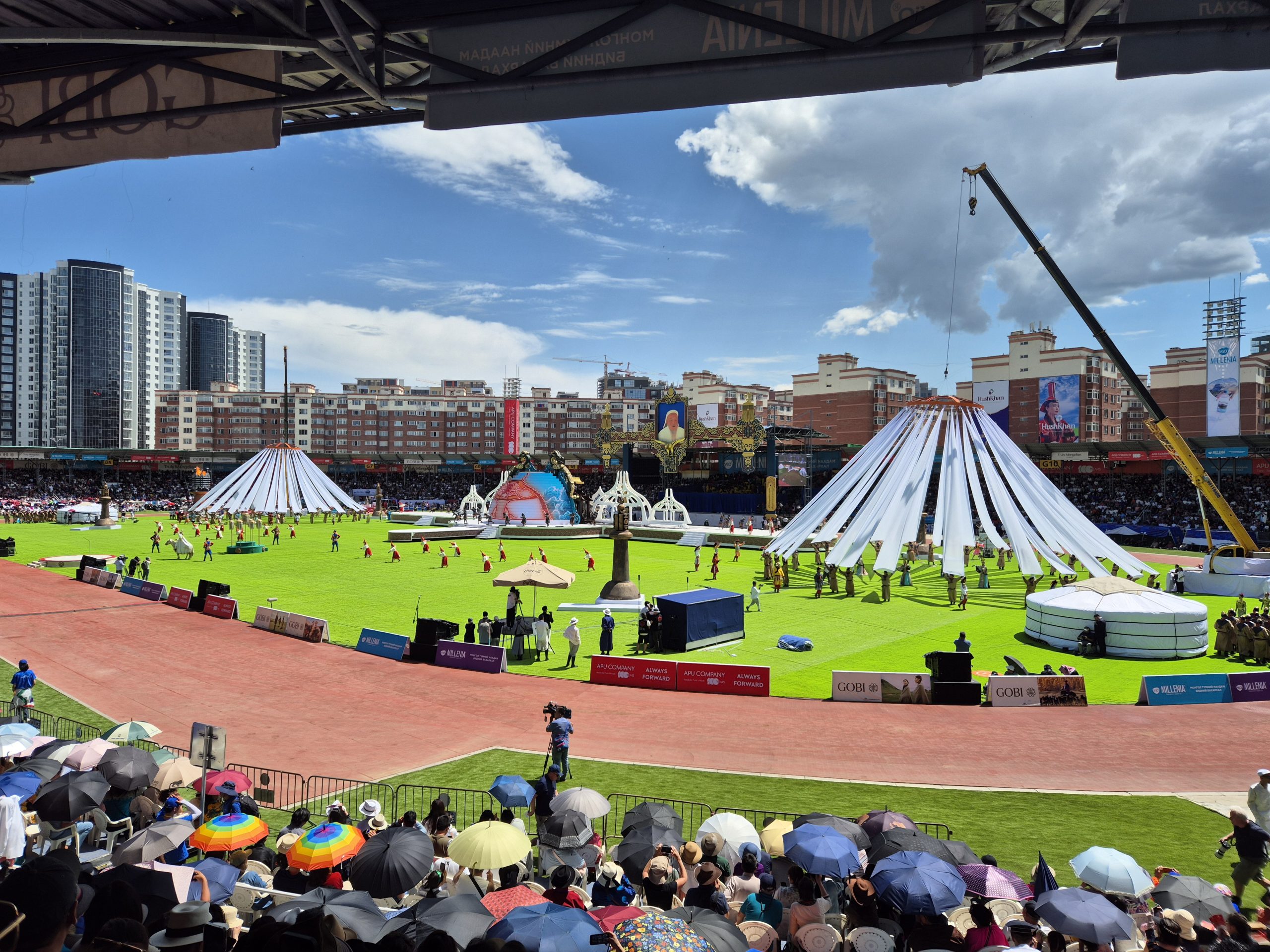
Expect patriotic ceremony, crowded stadium entries, wrestlers performing eagle dances, archers in deels, concentrated knucklebone teams, and families treating the holiday as reunion. Commentary may not be in English, so preparation improves the sport.

Horse-race days are physically rougher: dust, distant sightlines, moving animals, vehicles, and changeable weather. Child jockey participation also raises ethical questions that should be acknowledged.

Naadam is not a staged summary of nomadic culture. It is a competitive institution with rules, rankings, state symbolism, pride, and ongoing debate.

The competitions also reward forms of attention unfamiliar to many visitors. A wrestling bout may be brief after a long approach; an archery result is confirmed through calls; a race is understood through breeding, distance, age class, and the condition of horses after the finish.

Festival Highlights

  • The opening ceremony’s fusion of state ritual, music, dress, and mounted imagery
  • A wrestler’s eagle dance before and after a bout
  • Archers releasing arrows with ritual calls and measured composure
  • Knucklebone shooting teams creating intense focus at a small scale
  • The horse-race finish across open steppe ground
  • Families in deels moving between sport, food, and national celebration

Getting There & Around

Where It Happens

The National Sports Stadium holds the opening and wrestling. Archery and knucklebone venues occupy nearby grounds, while horse races take place outside the dense center on open steppe courses.

Sükhbaatar Square and central streets carry public dress and ceremony. The race field is a distinct excursion with dust, exposed weather, limited shade, and slow exits.

Getting Around

Use a prearranged driver or official transport for the stadium and race grounds. Road closures and holiday traffic defeat casual taxi assumptions.

Walk only within compact venue areas, keep locations offline, and agree on a fixed pickup landmark. The steppe return can take hours after a major race.

Visitor Guide

Festival Food & Drink

Naadam food is built for appetite and outdoor movement. Khuushuur—fried meat pastries—become inseparable from the holiday, while buuz, grilled meat, milk tea, and airag connect urban celebration to pastoral ingredients and preservation.

Eat before the stadium queue and carry extra water to the race grounds. Try airag in a modest amount; fermented mare’s milk is culturally important and unfamiliar stomachs may need restraint. Choose busy vendors with hot food turnover.

#### Must Try

• **Khuushuur:** The crisp meat pastry is the national festival food, portable and sustaining between competitions.

• **Buuz:** Steamed mutton dumplings bring household celebration food into an urban Naadam meal.

• **Airag:** Fermented mare’s milk links the holiday directly to pastoral herding and summer abundance.

• **Suutei tsai:** Salted milk tea offers warmth, hydration, and a daily taste of Mongolian hospitality.

• **Boortsog:** Fried dough travels well and belongs to tea tables and festive family sharing.

Budget & Costs

Budget: Stay centrally, use official transit where available, choose standard stadium seating, and eat festival staples.

Mid-Range: Add a guide, private race-ground transfer, and several days to separate events.

Higher Spend: Premium tickets, dedicated driver, and a steppe camp extension create context and comfort. No tier eliminates dust or traffic.

Tips for First-Time Visitors

Learn basic wrestling progression and race categories before arrival. Bring a hat, sunscreen, dust protection, water, layers, and binoculars.

Do not approach horses, block competitors, or photograph children intrusively. Ask a Mongolian guide to explain both pride and current debate around the sports.

Safety

Sun, dehydration, dust, crowds, vehicles, and horses are the main hazards. Stay behind barriers, protect eyes and lungs in blowing dust, and carry more water than expected.

Keep valuables secure and avoid improvised transport from remote race fields. Follow local emergency directions and watch footing around animal areas.

Cultural Significance

Naadam links contemporary statehood to skills associated with mobility, defense, herding, and communal competition. Its symbolism has been reshaped across imperial, socialist, and democratic eras.

The festival is therefore neither timeless nor invented anew. It is a national institution through which Mongolians negotiate history, rural heritage, gender, sport, and modern identity.

Women now compete prominently in archery and knucklebone shooting, while wrestling remains a powerful male institution. These patterns reveal how tradition changes unevenly and why Naadam is a forum for contemporary Mongolia, not a historical reenactment.

Plan Your Journey

When to Go

The national celebration centers on fixed July dates, with opening ceremony, early wrestling rounds, archery, knucklebone shooting, and horse races arranged across several days.

Secure official stadium tickets and a separate race-ground transport plan. Arrive early enough to acclimate to dry summer conditions and understand the venues. Provincial Naadams may offer smaller-scale experiences but require their own confirmed calendars.

Where to Stay

Central Ulaanbaatar near Sükhbaatar Square gives access to ceremonies, restaurants, and museums. Hotels south of the center may shorten the stadium trip, while ger camps outside the city suit a separate steppe extension.

Traffic is severe during the holiday. Choose a hotel with a driver who understands closures and race-ground logistics, not merely one that appears close on a map.

Bottom Line & Key Days

Bottom Line

Naadam is national ceremony, serious sport, and pastoral memory held in the same summer frame.

Plan the stadium and race grounds as separate journeys, learn the rules, and let the landscape explain the distance between them.

The earned close is physical: dust on clothing, the sound of stadium calls, and a clearer sense that national identity is being competed, watched, and revised in public.

Key Days

Opening ceremony — State ritual and performance establish the national frame.

Early competitions — Wrestling, archery, and knucklebone shooting reveal their distinct disciplines.

Horse-race program — Open-steppe finishes supply Naadam’s most elemental setting.

Wrestling final — Rank, ritual, and stadium attention converge in the closing bouts.

Ready to Experience Naadam Festival?

You've explored what makes this festival special. Now it's time to plan your trip. Compare flights, book your hotel, arrange transportation, and take care of your travel essentials—all in one place.

✈ Find Flights

Loading booking widget...

Booking is completed on Expedia in a new tab.

🏨 Find Hotels

Search places to stay

Powered by Booking.com

Booking is completed on Booking.com in a new tab.

Rail & Bus Travel

Compare train and coach routes for the journey.

Compare Routes

Things to Do

Discover tours and attractions before or after the festival.

Explore Experiences

eSIM Mobile Data

Stay connected abroad without traditional roaming charges.

Get an Airalo eSIM

Travel bookings are provided by our trusted partners. We may earn a commission when you book through these links, at no additional cost to you.

Independent Editorial Standards

Every Follow the Festivals guide is independently researched and regularly reviewed using official festival information, destination resources, and trusted travel references. We also welcome verified updates from festival organizers, destination marketing organizations, tourism partners, and local experts to help keep our guides accurate, current, and useful for travelers.

Represent this festival or have a verified update to share? We'd love to hear from you through our contact page.

Photo Credits