
Follow the Festivals

Nagasaki Lantern Festival

Nagasaki Lantern Festival

Nagasaki, Japan

2027-02-05 - 2027-02-21

The Story

Festival Overview

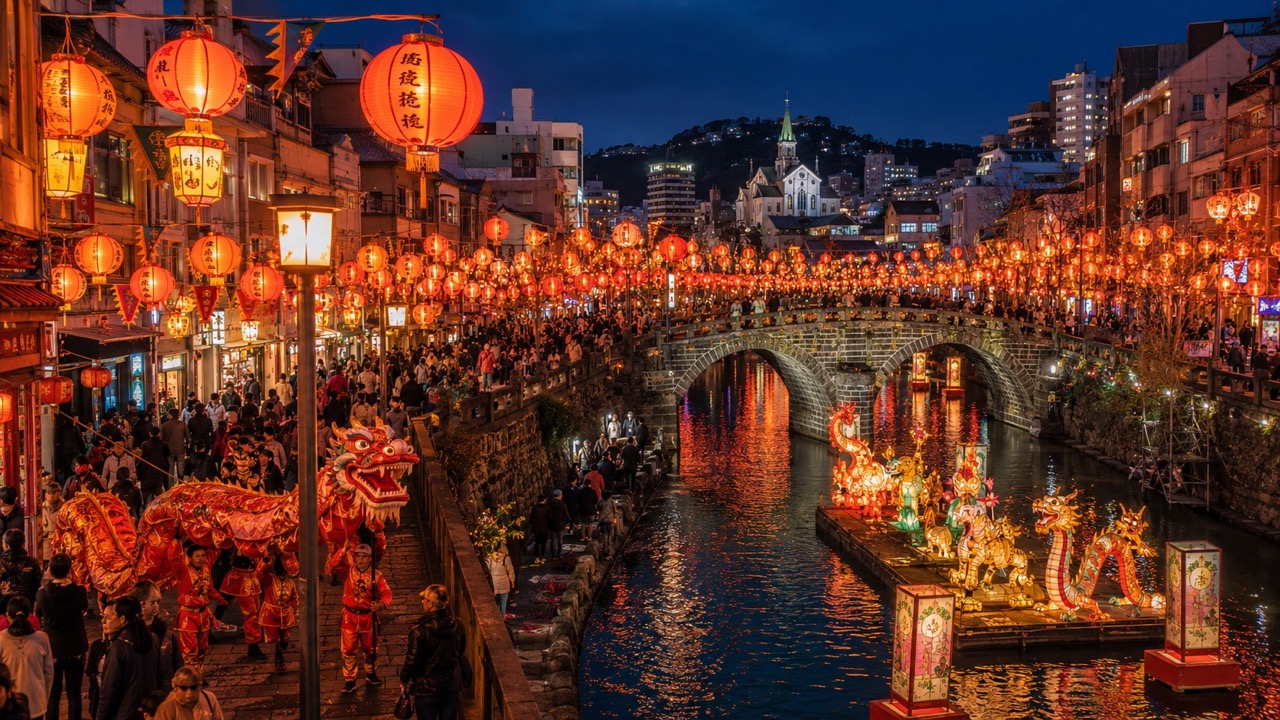
Nagasaki Lantern Festival transforms Japan’s oldest Chinatown and the surrounding city center into a glowing display of more than 15,000 Chinese lanterns, celebrating Lunar New Year with spectacular illuminations, traditional performances, and centuries of cultural heritage. Originally established by Nagasaki’s Chinese community, the festival has grown into one of Japan’s most celebrated winter events, filling streets, parks, temples, and historic districts with colorful lanterns, dragon dances, Chinese acrobatics, and festive markets. The combination of illuminated streets, maritime history, and the unique fusion of Japanese and Chinese traditions gives the festival an atmosphere unlike any other winter celebration in Japan.

Why This Festival Is Special

Few festivals combine cultural heritage and visual beauty as gracefully as Nagasaki Lantern Festival. Rather than relying on large-scale entertainment alone, it transforms an entire historic city into a living work of art through thousands of handcrafted lanterns, traditional performances, and centuries-old customs. The result is an experience that feels intimate, authentic, and unmistakably tied to Nagasaki’s unique place in Japanese history.

Festival Experience

What to Expect

During the day, Nagasaki feels welcoming and relaxed as visitors wander between lantern displays, historic neighborhoods, temples, museums, and waterfront attractions. Food stalls begin serving regional specialties while cultural performances gradually build excitement for the evening.

As dusk approaches, thousands of lanterns illuminate simultaneously, transforming streets, bridges, plazas, and parks into a sea of warm red and gold light. Traditional dragon dances, Chinese lion dances, acrobatic performances, and cultural demonstrations take place throughout the festival, creating a lively yet family-friendly atmosphere.

Evenings are the highlight of the celebration as visitors stroll between illuminated districts, stopping to enjoy performances, local cuisine, and countless photo opportunities before returning through lantern-filled streets long after dark.

Festival Highlights

  • More than 15,000 illuminated Chinese lanterns
  • Shinchi Chinatown decorated for Lunar New Year
  • Dragon and lion dance performances
  • Giant zodiac lantern displays
  • Megane Bridge illuminated at night
  • Traditional Chinese cultural performances
  • Minato Park’s spectacular lantern installations
  • One of Japan’s most beautiful winter festivals

Getting There & Around

Where It Happens

The festival is centered around Shinchi Chinatown but extends throughout central Nagasaki. Major venues include Minato Park, Hamamachi Arcade, Chuo Park, Megane Bridge, Kofukuji Temple, and several streets connecting the city’s historic districts.

Rather than taking place in a single venue, the lantern displays encourage visitors to walk between neighborhoods, discovering different artistic installations, performances, and cultural experiences along the way.

Getting Around

Nagasaki’s historic tram network is the easiest way to reach the festival and travel between major attractions. Most festival venues are within comfortable walking distance of one another, making it easy to explore the illuminated city center without a car.

Evening crowds are steady but generally manageable, allowing visitors to enjoy leisurely walks between lantern displays while stopping frequently for performances and photographs.

Visitor Guide

Festival Food & Drink

The festival celebrates Nagasaki’s unique culinary heritage, influenced by centuries of international trade and Chinese immigration. Street food vendors and Chinatown restaurants serve regional specialties alongside traditional Lunar New Year dishes throughout the celebration.

Must Try:

  • Nagasaki Champon
  • Sara Udon
  • Kakuni Manju
  • Gyoza
  • Sesame balls
  • Castella cake

Budget & Costs

The lantern displays and most festival attractions are free to enjoy, making the celebration accessible for travelers of all budgets. Visitors should primarily budget for accommodation, meals, transportation, and optional admissions to nearby museums and historic sites.

Winter is generally a quieter travel season in Nagasaki outside the festival period, making accommodations more affordable than during many of Japan’s spring and autumn tourism peaks.

Tips for First-Time Visitors

Plan to arrive before sunset so you can experience both the daytime atmosphere and the dramatic transition as the lanterns illuminate the city. Wear comfortable walking shoes, as the festival is best explored on foot, and bring a camera capable of low-light photography to capture the evening displays.

Allow enough time to wander beyond Shinchi Chinatown, as some of the festival’s most beautiful lantern installations can be found along quieter streets, bridges, and public parks throughout central Nagasaki.

Safety

Nagasaki Lantern Festival is family-friendly and well organized, with most activities taking place in pedestrian-friendly streets and public spaces. Evening crowds increase around the most popular lantern displays, particularly in Shinchi Chinatown and Minato Park, but the atmosphere remains relaxed.

Stay aware of uneven stone pathways near historic areas, dress warmly for cool winter evenings, and allow extra time for tram travel during peak festival hours.Few festivals combine cultural heritage and visual beauty as gracefully as Nagasaki Lantern Festival. Rather than relying on large-scale entertainment alone, it transforms an entire historic city into a living work of art through thousands of handcrafted lanterns, traditional performances, and centuries-old customs. The result is an experience that feels intimate, authentic, and unmistakably tied to Nagasaki’s unique place in Japanese history.

Cultural Significance

Nagasaki Lantern Festival celebrates the city’s unique multicultural heritage, reflecting centuries of exchange between Japan and China through the historic trading port of Nagasaki. What began as a Lunar New Year celebration within the Chinese community has evolved into one of Japan’s best-known winter festivals while preserving the traditions, performances, and artistic expressions that connect both cultures. Today, the festival serves as a symbol of Nagasaki’s identity as Japan’s historic international gateway and its enduring spirit of cultural exchange.

Plan Your Journey

When to Go

The festival is enjoyable throughout its duration, but arriving in the late afternoon offers the best experience. Visitors can explore Nagasaki’s historic streets in daylight before watching thousands of lanterns illuminate the city as evening falls.

After sunset, the festival reaches its most magical atmosphere. Lanterns glow throughout Shinchi Chinatown, Minato Park, Hamamachi, and Megane Bridge while cultural performances, dragon dances, and evening crowds bring the city to life. Weekday evenings generally provide a more relaxed experience than weekends while still delivering the full visual spectacle.

Where to Stay

Staying near Shinchi Chinatown, Hamamachi, or Nagasaki Station provides convenient access to the main festival areas and allows visitors to explore much of the event on foot. Hotels around Dejima and the waterfront also offer excellent access while placing visitors close to many of Nagasaki’s historic attractions.

Because the festival is spread throughout the city center, accommodations connected by Nagasaki’s tram system provide easy transportation even if you stay outside the immediate festival district.

Bottom Line & Key Days

Bottom Line

Nagasaki Lantern Festival is one of Japan’s most enchanting winter celebrations, blending spectacular lantern displays with rich cultural traditions, outstanding local cuisine, and the distinctive character of one of the country’s most historic port cities. For travelers seeking a festival that is as culturally meaningful as it is visually stunning, it offers one of the most memorable winter experiences in Asia.

Key Days

Opening Day: The first evening brings the official lantern lighting ceremony, the first cultural performances, and the transformation of central Nagasaki into a city of glowing red and gold.

Weekend Evenings: Peak attendance, the busiest dragon and lion dance performances, and the most vibrant atmosphere across Shinchi Chinatown, Minato Park, and the surrounding festival districts.

Best Arrival: Arrive the day before the festival begins to explore Nagasaki’s historic attractions, enjoy the city at a relaxed pace, and experience the opening illuminations without rushing.

Ready to Experience Nagasaki Lantern Festival?

You've explored what makes this festival special. Now it's time to plan your trip. Compare flights, book your hotel, arrange transportation, and take care of your travel essentials—all in one place.

✈ Find Flights

Loading booking widget...

Booking is completed on Expedia in a new tab.

🏨 Find Hotels

Search places to stay

Powered by Booking.com

Booking is completed on Booking.com in a new tab.

Rail & Bus Travel

Compare train and coach routes for the journey.

Compare Routes

Things to Do

Discover tours and attractions before or after the festival.

Explore Experiences

eSIM Mobile Data

Stay connected abroad without traditional roaming charges.

Get an Airalo eSIM

Travel bookings are provided by our trusted partners. We may earn a commission when you book through these links, at no additional cost to you.