
Follow the Festivals

Marrakech International Film Festival

Marrakech International Film Festival

Marrakech, Morocco

2026-11-20 - 2026-11-28

The Story

Festival Overview

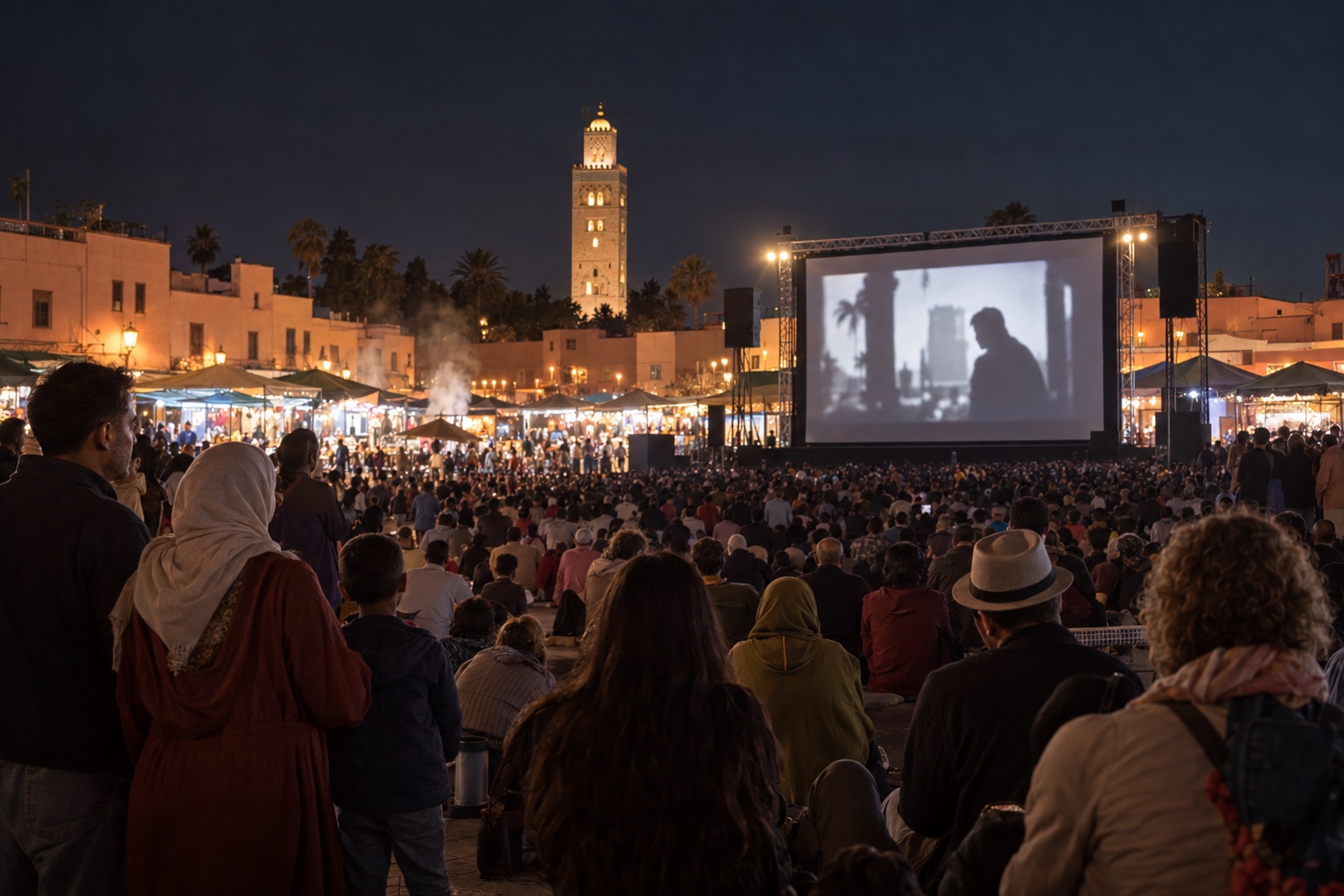
Night settles over Marrakech, a screen glows in Jemaa el-Fna, and the square’s ordinary theater of food stalls, storytellers and moving crowds briefly gathers around cinema. Elsewhere, invited filmmakers enter the Palais des Congrès and audiences queue at the Colisée. The festival works across these different scales: public spectacle, focused discovery and serious industry exchange.

Its international competition privileges early-career filmmakers, while Moroccan cinema, adventurous work, gala screenings, tributes, youth programming and public conversations expand the field. Celebrity gives the event visibility, but the deeper journey leads toward films and voices from Morocco, Africa and the Arab world that may be harder to encounter elsewhere.

The visitor should build the week around that relationship. Select one competition discovery, one Moroccan film, one conversation and one open-air night. Together they show how Marrakech uses hospitality not merely to receive world cinema, but to reposition where cinema’s important conversations can begin.

Why This Festival Is Special

Marrakech joins cinematic prestige to a regional responsibility that few glamorous festivals carry as visibly. World-famous artists may command the cameras, yet emerging Moroccan, Arab and African filmmakers occupy the institution’s future through competition, programming and the Atlas Workshops.

The city prevents cinema from becoming sealed professional culture. Jemaa el-Fna already contains storytelling, music, commerce and spectacle before any screen rises. When a film enters that space, it does not create public life; it negotiates with public life already in motion.

That negotiation gives the festival its special tension. It can be elegant without becoming entirely insulated, global without losing the need to listen locally, and celebratory while still asking who gets to make images. Marrakech is not merely a beautiful background. It is the force that keeps the event’s idea of cinema open. Few festival cities challenge the screen with such a powerful visual life of their own.

Festival Experience

What to Expect

Expect a festival that balances prestige with discovery. International stars and major filmmakers attract visible attention, yet the competition is devoted to first and second features, giving emerging directors genuine centrality. Moroccan Panorama and programs focused on bolder cinematic language can shift the week away from familiar festival hierarchies. Language varies by film and event. Check subtitle information carefully, especially when English, French and Arabic may overlap across the program. Conversations can be as valuable as screenings because filmmakers discuss craft, influence and regional production conditions before an audience prepared to listen.

Marrakech adds sensory contrast. Bright afternoons give way to cool evenings; formal interiors alternate with noisy streets; a measured post-film discussion may end minutes before the medina resumes its own overwhelming sequence of images. Leave space between events. The city can deepen a film, but only if the schedule permits the experience to settle.

Festival Highlights

  • Official Competition – First and second features place emerging filmmakers at the festival’s center. Select at least one film without advance reviews and allow the discovery to remain genuinely yours.
  • Moroccan Panorama – National work reveals the society hosting the international event. Pair a film with a conversation or local context that clarifies what the camera is observing.
  • The Eleventh Continent – Formally adventurous cinema challenges narrative habits. Enter rested, read only essential notes and stay for discussion before deciding what the experiment achieved.
  • In Conversation With – Major filmmakers speak about craft and career in an unusually direct setting. Prepare one informed question, but listen for the regional filmmakers and students shaping the room.
  • Jemaa el-Fna Screening – Open-air cinema meets one of the world’s most performative public squares. Reach the viewing area early and accept that the city will remain audible around the film.
  • Tribute Program – A career viewed through selected work produces more understanding than a ceremonial appearance alone. See the film before attending the celebration when scheduling permits.
  • Atlas Workshops Connection – Industry development for Moroccan, Arab and African projects reveals the festival’s future-facing role. Public-facing talks can show how regional films move from idea toward international circulation.
  • Audience Departure – Walking from a screening into Marrakech creates a final unprogrammed scene. Give the transition time; the city often supplies the question that completes the film.

Getting There & Around

Where It Happens

The festival’s geography is one of its strongest editorial arguments. The Palais des Congrès hosts formal screenings and high-profile activity in Hivernage; Cinéma Le Colisée provides the concentrated ritual of an urban movie house; cultural venues add specialized programs; and Jemaa el-Fna turns cinema outward toward a public square whose nightly life already depends on performance.

These venues should not be treated as interchangeable containers. A competition debut in a quiet auditorium asks for concentration. A tribute screening carries memory and ceremony. An open-air film in the square must coexist with weather, passing sound and spectators who may join without prior intention. The same image acquires a different social meaning in each setting.

Travel time also changes by hour. A straightforward daytime route can slow when the medina fills or traffic thickens around evening events. Save exact entrances, identify a realistic taxi drop-off and arrive early enough to absorb the transition. Marrakech does not disappear when the lights dim; it remains active at the edge of every screening.

Getting Around

Festival movement usually combines walking with small taxis. Hivernage and Guéliz have conventional streets, while the medina narrows into pedestrian lanes where a driver may leave you well before the destination. Carry the venue name in French or Arabic where useful, save a map offline and ask the riad to mark the nearest reliable pickup point.

Traffic can thicken near major evening events. A journey that looks short may lose time to road controls, audience arrivals or the final walk through a crowded district. Build a generous buffer before any screening with strict late-entry rules. Keep consecutive events in the same zone because a rapid cross-city transfer is rarely dependable.

Agree on taxi fares or confirm meter use according to current local practice, and use accommodation-arranged transport when an early or late journey feels uncertain. Walking between the Palais and parts of the modern city can be pleasant, but footwear, lighting and route familiarity matter. The program should guide movement; impatience should not.

Visitor Guide

Festival Food & Drink

A film festival can dismantle meal times, while Marrakech punishes inattentive eating with missed screenings or exhausted late nights. Use mornings and early afternoons for substantial meals, then keep evening food simple when the program becomes dense. A reservation is helpful near formal venues, but medina dining requires enough travel margin to navigate back out.

Street food around Jemaa el-Fna is part of the public-night atmosphere, yet the busiest moment is not always the best moment to experiment before a screening. Follow active stalls with visible turnover, confirm prices and eat where preparation feels orderly. Mint tea creates a useful pause between the screen and the square.

**Must Try**
• Tanjia – Slow-cooked meat associated with Marrakech, traditionally prepared in a clay vessel and shared.
• Tagine – Meat or vegetables cooked gently with spices; the regional variations reward more than one meal.
• Harira – Tomato, lentil and chickpea soup that restores warmth after a cool outdoor screening.
• Msemen – Layered griddled bread eaten with honey, cheese or savory fillings at breakfast.
• Moroccan salads – Small cooked and raw vegetable dishes that reveal spice and season without heaviness.
• Mint tea – Sweet, fragrant and social, best treated as time for conversation, never as a hurried beverage.

Budget & Costs

Accommodation is the largest variable, especially around prominent festival nights and desirable riads. Hivernage convenience can command a premium, while a medina stay may add transfer costs and time. Compare the complete daily journey before deciding which room represents value. Screening and event access varies by program, so wait for official ticketing information before estimating the cultural budget. Add taxis, meals between venues, possible guided city experiences and any premium attached to late-night dining near formal events. Keep an emergency transport reserve separate from discretionary spending.

Marrakech makes impulsive purchases easy, from souk goods to elaborate dinners. Set those budgets independently from the festival. The strongest investment is often another night, which allows a richer program with fewer daily conflicts. A well-paced stay costs more than a rushed weekend but can deliver far greater understanding per screening. Price airport transfers and any guided medina experience before arrival as well.

Tips for First-Time Visitors

Start with the competition and Moroccan program, then add prestige. This order protects the festival’s most distinctive material from being crowded out by recognizable names. Download or photograph the schedule, note subtitle languages and confirm which activities require tickets, invitations, reservations or simple early arrival.

Dress for warm daylight and cool nights. A compact layer matters at outdoor screenings and after late exits. Keep festival credentials, identification and modest cash organized, while using a secure bag in crowded public areas. Ask before photographing people closely, especially outside formal event spaces.

Do not schedule the medina as a narrow transit corridor. Its movement is unpredictable and deserves attention in its own right. If a route becomes confusing, stop in a well-lit active place and ask a trusted business or accommodation contact for direction. One fewer screening can produce a much stronger understanding of both city and festival.

Safety

Crowded squares, festival queues and medina lanes require ordinary awareness. Keep valuables in controlled storage, avoid displaying a phone at the edge of moving traffic and establish a meeting place that does not depend on mobile service. Use official festival staff or trusted venue personnel when an access issue becomes confusing.

The medina can disorient first-time visitors after dark. Save the accommodation pin, carry its contact details and know the nearest vehicle-access point. Decline unsolicited guiding firmly and calmly. For late returns, ask the hotel or riad to arrange a reputable driver when the route feels uncertain.

Hydration and food pacing matter despite mild seasonal temperatures. Outdoor nights can become cold, and long days reduce judgment. Respect local customs in clothing and photography beyond red-carpet areas. The festival is international, but the traveler remains a guest in a living Moroccan city.

Cultural Significance

The festival was created to promote cinema in Morocco and has developed into a visible meeting point between global film culture and the creative worlds of Africa and the Arab region. Its location matters because Marrakech has long served as a place of exchange, hospitality and image-making, including Morocco’s relationship with international production. Competition for early-career directors gives discovery institutional weight. The Atlas Workshops deepen that role by supporting projects and films from Moroccan, Arab and African filmmakers through mentorship and industry contact. This work addresses the less glamorous question beneath every premiere: who receives the resources to make the next film?

Public screenings and Moroccan programming keep the event connected to local audiences. Prestige can easily turn a destination festival inward. Marrakech is most culturally persuasive when a celebrated international guest, a regional first feature and a crowded square all belong to the same cinematic week.

Plan Your Journey

When to Go

The festival generally arrives in late autumn, when Marrakech days are comfortable and evenings can become sharply cool. Opening and closing periods carry ceremony, press activity and demand, while the middle days often provide the best rhythm for sustained screening: the program is fully underway, audience conversation has developed and the city is not yet saying goodbye.

Wait for the detailed schedule before fixing an intensive plan. Galas, competition films, conversations and public screenings operate through different access systems, and a famous guest may draw a queue that alters the rest of the day. Build each date around one non-negotiable event and leave a second choice nearby.

Stay long enough to experience the medina outside festival hours. A short visit built only from premieres can make Marrakech feel like scenery surrounding a red carpet. Morning walks, a quiet lunch and time in the city between screenings allow the festival’s location to acquire genuine meaning.

Where to Stay

Hivernage places travelers close to the Palais des Congrès, major hotels and several formal festival activities. It is the most efficient base for guests with repeated industry, gala or conversation commitments, and its wide streets simplify some late returns. The trade-off is atmosphere: the district can feel insulated from the density that makes Marrakech unforgettable. The medina offers riads, close contact with old-city life and easier access to Jemaa el-Fna. It also demands more navigation. Cars cannot reach every lane, nighttime wayfinding can be confusing and a screening across the modern city requires added transfer time. Ask the accommodation exactly where a taxi can collect and return guests.

Guéliz creates a practical middle ground with restaurants, shops and conventional street access. The best choice depends on the program’s center of gravity. Map the Palais, Colisée and public-screening zone before booking, then decide whether festival efficiency or immersion in the medina deserves the shorter journey.

Bottom Line & Key Days

Bottom Line

A final screening ends, but Marrakech refuses the clean silence of a cinema lobby. Motorbikes pass, tea is poured, the square continues and images from the film begin mixing with the city’s own visual abundance. The festival’s deepest effect occurs in that overlap, when the screen changes how the street is seen.

Travel here for discovery, not accumulation. One emerging filmmaker, one Moroccan work, one generous conversation and one public screening can form a complete festival journey. Add celebrity only where it deepens that arc. The result will feel more intimate than a schedule crowded with premieres.

The lasting memory may be a film no one at home has heard of yet. That is not a consolation prize beside prestige; it is the festival fulfilling its most important role. Marrakech welcomes world cinema, then quietly asks the traveler to reconsider where its center lies.

Key Days

• Opening Period – Ceremony and anticipation give the first screenings heightened energy. Keep extra time for access controls and press activity around formal venues.
• First Competition Day – Emerging filmmakers establish the festival’s discovery mission. Select a debut without waiting for consensus.
• Moroccan Cinema Focus – National work places the host country inside the program, not outside it. Pair a screening with a related conversation when possible.
• Atlas Workshops Period – Regional projects and industry exchange reveal how future films are supported. Attend an accessible talk that moves beyond finished premieres.
• Jemaa el-Fna Night – Public cinema enters the square’s existing performance culture. Reach the area early, dress warmly and let the city remain part of the soundtrack.
• Tribute and Conversation Day – Career recognition becomes richer when joined to craft discussion and an actual film. Build the sequence in that order.
• Closing Period – Awards and farewells consolidate audience judgment. Revisit the filmmaker or section that changed the week, leaving enough space for the city afterward.

Ready to Experience Marrakech International Film Festival?

You've explored what makes this festival special. Now it's time to plan your trip. Compare flights, book your hotel, arrange transportation, and take care of your travel essentials—all in one place.

✈ Find Flights

Loading booking widget...

Booking is completed on Expedia in a new tab.

🏨 Find Hotels

Search places to stay

Powered by Booking.com

Booking is completed on Booking.com in a new tab.

Rail & Bus Travel

Compare train and coach routes for the journey.

Compare Routes

Things to Do

Discover tours and attractions before or after the festival.

Explore Experiences

eSIM Mobile Data

Stay connected abroad without traditional roaming charges.

Get an Airalo eSIM

Travel bookings are provided by our trusted partners. We may earn a commission when you book through these links, at no additional cost to you.

Independent Editorial Standards

Every Follow the Festivals guide is independently researched and regularly reviewed using official festival information, destination resources, and trusted travel references. We also welcome verified updates from festival organizers, destination marketing organizations, tourism partners, and local experts to help keep our guides accurate, current, and useful for travelers.

Represent this festival or have a verified update to share? We'd love to hear from you through our contact page.