
Follow the Festivals

Gnaoua World Music Festival

Gnaoua World Music Festival

Essaouira, Morocco

2027-06-24 - 2027-06-26

The Story

Festival Overview

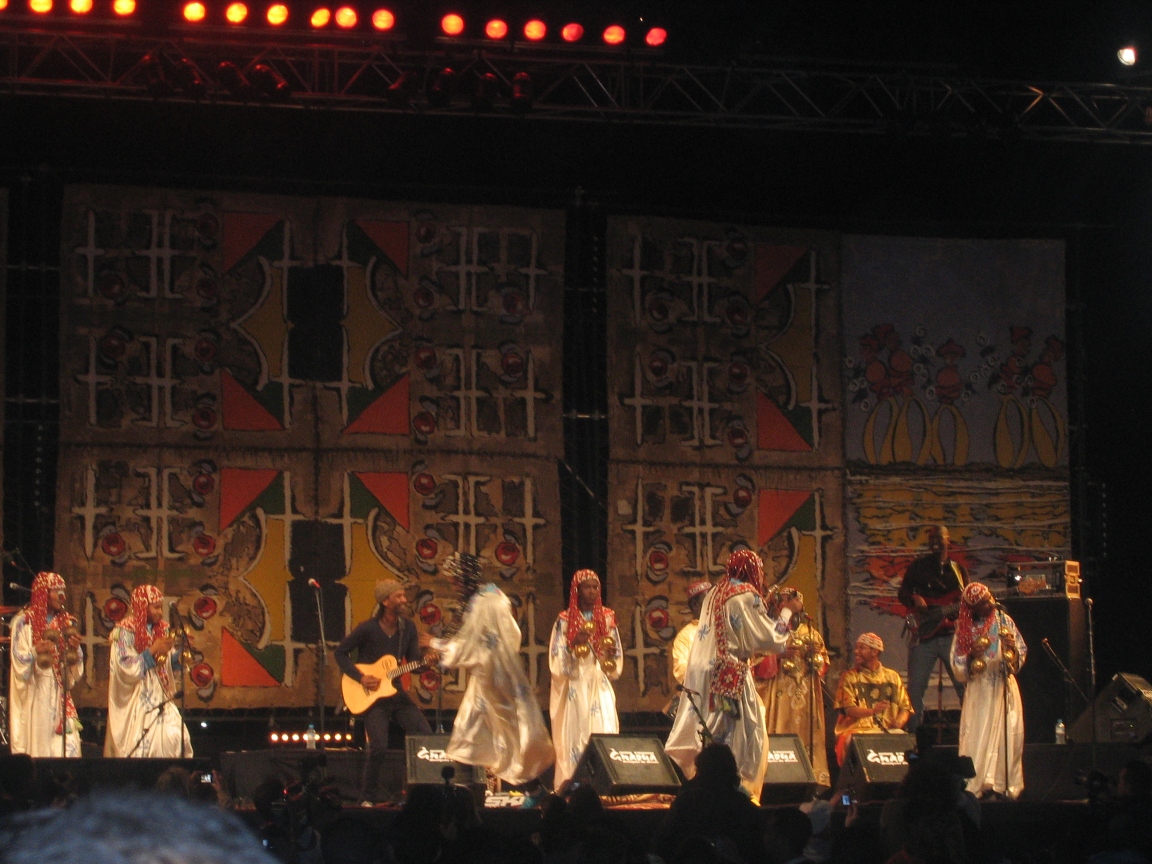
Essaouira faces the Atlantic behind honey-colored ramparts, blue boats, wind-polished streets, and a medina whose musical history is inseparable from Gnaoua culture. During the Gnaoua and World Music Festival, maalems lead the deep pulse of the guembri while qraqeb create interlocking metal rhythms and call-and-response vocals carry spiritual memory into vast public squares. The festival's defining idea is encounter: Gnaoua masters meet jazz improvisers, African artists, rock musicians, Sufi traditions, and electronic experimenters without treating the local form as exotic decoration. Free open-air concerts gather immense crowds, while smaller venues and intimate lila-inspired performances reveal the music's concentration and ritual depth. Travelers choose Essaouira because nowhere else offers this combination of living Gnaoua transmission, fearless fusion, Atlantic medina atmosphere, and an audience willing to follow a groove from sunset far into the night.

Why This Festival Is Special

The festival's distinction is not simply that Gnaoua music appears on an international bill. Gnaoua is the foundation from which every encounter begins. Maalems set the rhythmic and spiritual architecture, and visiting artists must listen, adapt, and create inside it. That reverses the usual hierarchy of global festivals and produces collaborations that cannot be replicated by booking the same names elsewhere. Essaouira deepens the choice: the Atlantic wind, port, medina, and history of cultural exchange give the music a physical home. Travelers come because the gathering joins transmission with invention at vast public scale while keeping living tradition in command.

Festival Experience

What to Expect

Expect a festival whose rhythm is different from a sequence of conventional band sets. A maalem may establish a repeated guembri phrase gradually, singers answer, qraqeb thicken the cycle, and the audience enters a shared physical pulse before a guest improviser changes its color. Large stages are celebratory and crowded; smaller performances reward patience and attentive listening. The medina remains active around the music, with vendors, families, artists, and visitors filling the same lanes. Wind carries sound and sand, late nights shorten sleep, and popular squares can become extremely dense. The mood is welcoming, but the tradition deserves respect: fusion is most powerful when the Gnaoua foundation is heard clearly.

Festival Highlights

  • Gnaoua maalems commanding large stages with guembri, qraqeb, voice, and a tradition carried through apprenticeship.
  • Original fusion encounters, where jazz, Afro-diasporic, rock, Sufi, or electronic artists build something new with Gnaoua musicians.
  • Moulay Hassan Square, turning the edge of the medina and port into a vast communal concert room.
  • Intimate performances and conversations that reveal spiritual, historical, and technical dimensions obscured by the biggest crowds.
  • Essaouira's Atlantic setting, with sea wind, ramparts, fishing boats, and whitewashed lanes inseparable from the sound.
  • The audience's collective response, moving from close listening to trance-rooted dance without a clean boundary between them.

Getting There & Around

Where It Happens

The festival uses Essaouira as a network of atmospheres. Moulay Hassan Square near the port becomes a monumental public stage where the crowd can feel city-sized. Beachfront areas open the sound toward the Atlantic, while medina courtyards, cultural spaces, and smaller squares bring performers and listeners closer. Ramparts, port gates, and blue-shuttered lanes connect these zones on foot. The concentration is part of the appeal, but bottlenecks form where major audiences enter narrow streets. Learn the main square, lodging route, and an alternate path in daylight. The strongest night may move from a free mass concert to a focused indoor or courtyard collaboration without ever leaving the old city.

Getting Around

Essaouira's festival core is pedestrian. Buses and shared transfers arrive outside the medina, after which luggage and daily movement continue on foot. The old city's lanes are compact but not always intuitive, and major concerts create one-way human flows near gates and squares. Save the riad pin, photograph a recognizable turn, and choose a meeting place that is not a vague stage entrance. Petit taxis serve newer neighborhoods and the beach but cannot solve medina congestion. For intercity travel, reserve the return seat in advance and allow time for festival traffic. At night, walk with purpose through populated routes rather than following every apparent shortcut.

Visitor Guide

Festival Food & Drink

Essaouira's table begins at the port. Grilled sardines, sea bass, squid, or the day's catch arrive with lemon and chermoula, carrying Atlantic immediacy into a festival built beside the water. Tagines reward a slower midday meal before the music, while bissara and harira provide modest, restorative bowls. Mint tea is both refreshment and social ritual; fresh orange juice works between crowded walks. Eat the main meal before sunset, then use msemen, sandwiches, or fruit for late-night support. Choose busy stalls where fish is displayed clearly and cooked thoroughly, and agree on the price before ordering by weight. Alcohol is available in limited licensed settings, but the most destination-specific rhythm comes from seafood, tea, and patient conversation.

Must Try
• Grilled sardines — Fresh Atlantic sardines cooked over charcoal with salt, lemon, and chermoula, simple enough to reveal their quality.
• Fish tagine — Seafood slowly cooked with preserved lemon, olives, tomatoes, herbs, and spices in an earthenware vessel.
• Bissara — A thick purée of split peas or broad beans finished with olive oil, cumin, and paprika for an inexpensive restorative meal.
• Msemen — Layered Moroccan flatbread griddled until crisp outside and chewy within, served plain or with sweet or savory fillings.
• Mint tea — Green tea poured with fresh mint and sugar, an essential act of Moroccan welcome as well as a pause between performances.

Budget & Costs

Many major public concerts have historically been free, making the gathering unusually accessible, but accommodation becomes the decisive cost. Medina riads and beachfront hotels rise quickly as rooms disappear; reserve early and compare comfort, late access, and walkability. Food can remain affordable through soup, bread, grilled fish, and cafés, while private concerts, premium experiences, and intercity transfers add expense. Keep cash in small denominations and agree on prices at market-style seafood counters. Marrakech or Casablanca connections require time as well as money. The best value comes from staying long enough to experience Essaouira beyond a single packed night.

Tips for First-Time Visitors

Begin with a Gnaoua-led performance before chasing an international collaboration; understanding guembri, qraqeb, and call-and-response makes every fusion set richer. Arrive early at Moulay Hassan Square or accept a position farther back where breathing room survives. Carry a wind layer, ear protection, water, and minimal valuables. Learn basic greetings and ask before photographing people at close range. Keep daytime plans light enough for rest, because the most important music may unfold after midnight. Do not treat sacred or trance-rooted elements as costume. Curiosity is welcome when paired with attention to the musicians and community carrying the tradition.

Safety

Crowd density is the principal festival concern. Remain at the edge of a packed square if lateral movement becomes difficult, identify exits on arrival, and avoid forcing against the flow in medina gates. Keep valuables zipped and phones discreet in bottlenecks. Atlantic wind, sun, dehydration, sleep loss, and late-night chill accumulate across several days. Eat and rest deliberately. Use populated routes back to lodging and only recognized transport outside the walls. Morocco is socially conservative; respectful dress and behavior improve the experience, particularly away from stage areas. If attending an intimate spiritual presentation, follow the host's guidance and photograph only when clearly welcome.

Cultural Significance

Gnaoua culture developed through the histories of sub-Saharan Africans in Morocco, including enslavement, displacement, Islamic spirituality, healing practice, music, and community memory. Maalems transmit repertoire and knowledge through apprenticeship, while lila ceremonies use sound, invocation, color, and rhythm within a spiritual framework. The Essaouira festival, created in the late 1990s, brought unprecedented visibility and established cross-cultural creation as its central method. That success carries responsibility: the event matters because it supports living heirs, transmission, and dialogue—not because it extracts a compelling rhythm for outside stars. It has helped place Gnaoua music at the center of an international conversation while affirming its Moroccan and African roots.

Plan Your Journey

When to Go

The festival usually occupies several days in early summer, when Essaouira is bright, windy, and cooler than inland Morocco. Arrive before opening night so medina lanes, stage locations, and the beach orientation feel familiar. Daytime is for talks, exhibitions, workshops, seafood, and rest; late afternoon starts the public build; headline concerts and fusion sets can run deep into the night. Opening provides the first ceremonial charge, while the middle night often carries the densest audience. The closing evening can be musically profound but physically demanding after several late finishes. Add a recovery day rather than leaving on the first bus after dawn.

Where to Stay

Inside the medina, a riad places visitors among the atmosphere and within walking distance of major squares, but sound, stairs, and hard-to-find doors vary. The edge of the medina offers easier luggage access and a faster route to both stages and transport. Along the beach, modern hotels provide space, elevators, and Atlantic views, trading some intimacy for dependable comfort. Book early because Essaouira's supply tightens dramatically during the gathering. Ask whether late entry is possible and save the location pin offline. A beautiful riad becomes stressful if the nighttime route through unfamiliar lanes is not understood before the crowd arrives.

Bottom Line & Key Days

Bottom Line

Gnaoua World Music Festival deserves a place among the world's essential music journeys because Essaouira lets heritage and experiment breathe through the same pulse. Hear qraqeb before you see the procession, feel a guembri line gather thousands in Moulay Hassan Square, and watch a visiting improviser surrender to the maalem's architecture. At dawn, the medina returns to gulls, carts, and Atlantic light, but the rhythm does not disappear. It remains attached to the port city and to the people whose memory made the celebration possible.

Key Days

Arrival

Enter Essaouira before the largest crowds, learn the medina-to-stage routes, and hear the city at its ordinary Atlantic pace.

Opening

Begin with a Gnaoua-led performance, allowing guembri, qraqeb, voice, and collective response to establish the festival's language.

Festival Day

Use daylight for talks, food, craft, and rest, then move from an intimate encounter toward one major open-air collaboration.

Peak Night

Reach the chosen square early, protect breathing room and valuables, and keep enough energy for music that may continue past midnight.

Closing

Choose a final maalem rather than chasing every stage, then give Essaouira one quiet recovery day after the amplification ends.

Ready to Experience Gnaoua World Music Festival?

You've explored what makes this festival special. Now it's time to plan your trip. Compare flights, book your hotel, arrange transportation, and take care of your travel essentials—all in one place.

✈ Find Flights

Loading booking widget...

Booking is completed on Expedia in a new tab.

🏨 Find Hotels

Search places to stay

Powered by Booking.com

Booking is completed on Booking.com in a new tab.

Rail & Bus Travel

Compare train and coach routes for the journey.

Compare Routes

Things to Do

Discover tours and attractions before or after the festival.

Explore Experiences

eSIM Mobile Data

Stay connected abroad without traditional roaming charges.

Get an Airalo eSIM

Travel bookings are provided by our trusted partners. We may earn a commission when you book through these links, at no additional cost to you.

Independent Editorial Standards

Every Follow the Festivals guide is independently researched and regularly reviewed using official festival information, destination resources, and trusted travel references. We also welcome verified updates from festival organizers, destination marketing organizations, tourism partners, and local experts to help keep our guides accurate, current, and useful for travelers.

Represent this festival or have a verified update to share? We'd love to hear from you through our contact page.