
Follow the Festivals

Ubumuntu Arts Festival

Ubumuntu Arts Festival

Kigali, Rwanda

2027-07-12 - 2027-07-18

The Story

Festival Overview

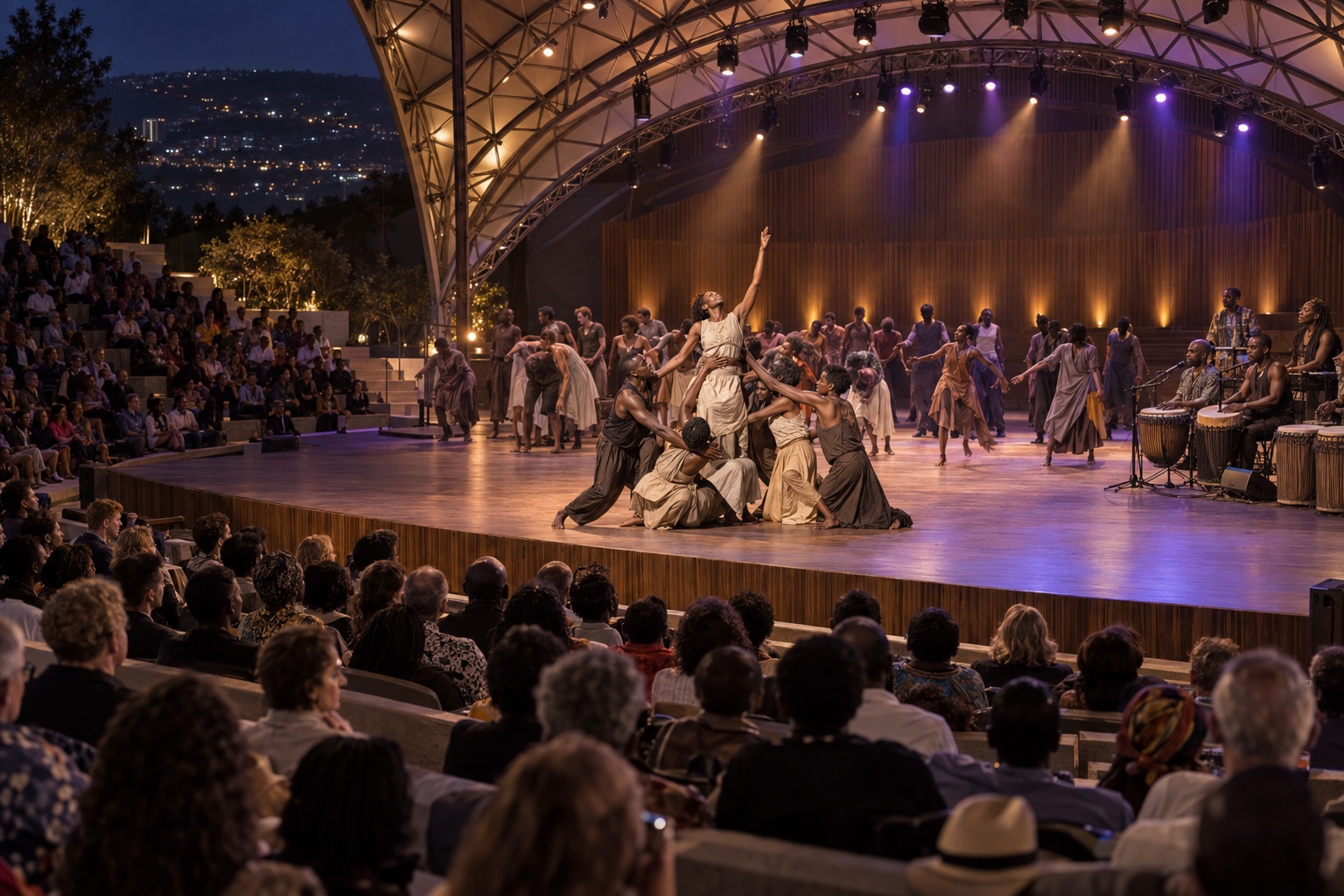
An actor waits beyond the entrance to an outdoor stage.

The audience has not yet taken its seats. No music has begun. The Kigali Genocide Memorial around the amphitheater has already established the evening’s first silence.

Ubumuntu Arts Festival is an annual international performing arts gathering founded by Rwandan theater director Hope Azeda. Theater, dance, music, workshops and public conversations bring artists from Rwanda and other countries to Kigali for work concerned with humanity, trauma, identity, social responsibility and the possibility of living together.

The festival takes place at the Kigali Genocide Memorial after Rwanda’s 100-day commemoration of the 1994 Genocide against the Tutsi. Its principal programme is free and open to the public, although registration may be required.

The Kinyarwanda word *ubumuntu* means “being human.”

Here, it is not offered as an easy answer.

It becomes the question each performance must enter.

Why This Festival Is Special

The festival does not place art beside memory as decoration.

It asks art to accept responsibility for where it is being performed.

The Kigali Genocide Memorial commemorates the victims of the Genocide against the Tutsi and contains burial grounds where more than 250,000 victims have been laid to rest. No performance can turn that setting into a neutral venue.

Artists enter knowing that silence already carries meaning there. Some use language to confront what has been avoided. Others depend on bodies, rhythm or repetition when words cannot hold the experience being addressed.

The work does not promise to heal every person who encounters it. A play cannot complete reconciliation, and an evening of dance cannot remove trauma.

Performance can still create a place where difficult truths are given form and witnessed by others.

The stage does not replace remembrance.

It carries remembrance forward.

Festival Experience

What to Expect

Ubumuntu is a concentrated arts festival rather than a conventional entertainment programme.

Performances may move between spoken theater, dance, music, multimedia work and forms that resist familiar categories. Some pieces emerge directly from Rwandan experience. Others arrive with artists addressing conflict, displacement, discrimination, violence or social fracture in their own communities.

The emotional tone can change sharply. One work may carry testimony or grief; another may use humor, movement or celebration. Joy does not necessarily signal that difficult subjects have been left behind.

Discussions and workshops can provide additional context, but not every performance will explain itself completely. The audience may leave with uncertainty rather than a resolved message.

The festival’s outdoor amphitheater sits within the Kigali Genocide Memorial. Visitors must therefore follow the standards of a place of remembrance even when the stage becomes energetic. Applause, laughter and music occur within a space whose primary authority does not belong to the festival.

Admission may be free, but capacity remains finite. Confirm registration, programme times, language information and access requirements before attending.

Festival Highlights

  • Begin with Rwandan performances. Local artists and companies possess the clearest authority to decide how Rwanda’s history, present life and creative future enter the stage. Read the programme notes, then let the work establish its own language before searching for a universal message.
  • International theater expands the conversation without making different histories equivalent. A production concerned with war, displacement or discrimination elsewhere may create recognition across borders, but each artist’s context should remain intact. Listen for distinctions as carefully as connections.
  • Dance and physical theater can carry experiences that resist direct speech. Remain attentive to breath, repetition, distance and contact between performers without assigning immediate symbolic meaning to every gesture. The body may be asking the audience to witness before interpreting.
  • Music changes the amphitheater’s emotional temperature. A song can gather voices after an intensely private performance or allow celebration to return without pretending grief has disappeared. Notice how the audience responds before deciding what the transition means.
  • Workshops and panel discussions offer the strongest opportunity to hear artists describe their intentions directly. Ask about technique, collaboration and creative choices without requesting personal trauma or treating a performer’s biography as public property.
  • The Kigali Genocide Memorial must be experienced outside festival hours as well. Walk through the exhibitions and grounds according to visitor guidance, allow silence to remain uninterrupted and avoid turning burial spaces into photographic backdrops.
  • The interval after each performance matters. Some audience members begin discussing the work immediately; others remain seated. Resist the impulse to convert every reaction into conversation. Shared attendance does not require a shared emotional timetable.

Getting There & Around

Where It Happens

The festival is held at the outdoor amphitheater of the Kigali Genocide Memorial in Gisozi.

The memorial documents the history of the Genocide against the Tutsi, honors those who were killed and provides burial grounds, archives, education and spaces for remembrance. It is not simply a cultural venue that happens to contain historical exhibitions.

The amphitheater allows living artists to perform within that environment, but the surrounding site retains its purpose. Visitors should learn which areas permit photography, where silence is expected and how to move respectfully near graves and commemorative spaces.

Kigali extends beyond the memorial. Hills shape the city’s roads and views, while neighborhoods carry galleries, cafés, markets, workshops and contemporary performing arts. Experiencing that present life prevents the destination from being reduced to catastrophe.

The festival was created within Rwanda’s own arts community. Its international reach begins in Kigali rather than arriving there from outside.

The memorial holds the past openly.

The city continues around it.

Getting Around

Kigali is spread across steep hills, making distances longer and more physically demanding than they appear.

Taxis and app-based car services provide the simplest transportation for many visitors. Confirm the destination as the Kigali Genocide Memorial in Gisozi and allow additional time for traffic before performances.

Moto-taxis are common and efficient for experienced travelers, but use only recognized operators, wear the provided helmet and avoid carrying loose bags or clothing. A car may be more appropriate at night or after an emotionally difficult programme.

Public buses serve the city but can be challenging for first-time visitors attending a scheduled event. Learn the route in daylight before depending on it for an evening performance.

Walking works within individual neighborhoods, though hills, limited sidewalks and road crossings require attention. Do not assume a short downhill journey will remain easy on the return.

Arrange transportation before the final performance if possible. Large audiences leaving together can increase waiting times.

Keep the memorial’s address and accommodation details available offline. A quiet departure should not become a negotiation with a dying phone battery.

Visitor Guide

Festival Food & Drink

Kigali’s meals provide time for the day to settle.

A plate of isombe or ibihaza arrives without needing to explain the performance that preceded it. Brochettes cook over charcoal. Beans, plantain, cassava, potatoes and vegetables create a table designed for nourishment rather than spectacle.

Rwandan food reflects regional agriculture, family traditions and connections across East and Central Africa. Restaurants range from informal neighborhood kitchens and buffet lunches to contemporary dining rooms interpreting local ingredients in new forms.

Eat before the evening programme when possible. Performances and discussions may continue long enough to make a late dinner uncertain, and arriving hungry reduces the patience difficult work deserves.

Rwandan coffee belongs naturally to the morning after. Drink it somewhere that identifies its origin and allows enough time to distinguish the cup from a generic idea of African coffee.

**Must Try**

• **Isombe:** Cassava leaves cooked until tender, often with ground peanuts and served beside beans, rice or plantain.

• **Ibihaza:** Pumpkin commonly prepared with beans into a soft, sustaining dish.

• **Brochettes:** Skewered meat, fish or vegetables grilled over charcoal and served throughout Kigali.

• **Ubugali:** A firm maize- or cassava-based accompaniment used to gather sauces and stews.

• **Matoke:** Green cooking bananas prepared until tender, sometimes served in a savory sauce.

• **Akabenz:** Fried or roasted pork pieces, often seasoned with onion and chile.

• **Sambaza:** Small freshwater fish associated with Lake Kivu, commonly fried until crisp.

• **Rwandan coffee:** High-grown coffee produced across the country and served through Kigali’s expanding café culture.

The meal does not need to resolve the evening.

It only needs to make room around it.

Budget & Costs

The festival’s core programme is free, although registration may be required and donations may support its continuation.

Accommodation and travel to Kigali will form the largest costs. Staying in a central neighborhood with dependable transportation may cost more than a remote room but will simplify evening journeys.

Taxis are affordable relative to many international capitals, yet repeated trips across Kigali accumulate. Group activities geographically and avoid returning to accommodation between every event.

Meals range from inexpensive local restaurants and buffets to higher-cost international dining. A balanced budget should include neighborhood food and at least one café serving traceable Rwandan coffee.

The Kigali Genocide Memorial does not require visitors to purchase an elaborate guided experience to behave respectfully. Follow the current admission and donation guidance and support its educational work through official channels.

Do not treat free artistic labor as valueless. Donate when possible, purchase work through authorized channels and acknowledge performers accurately when sharing the experience.

The festival removes the ticket price.

It does not remove the cost of making the work possible.

Tips for First-Time Visitors

Visit the memorial before attending the festival, but do not compress both experiences into an inadequate interval.

Register in advance when the current programme requires it. Free admission does not guarantee entry after the amphitheater reaches capacity.

Read descriptions and content guidance before choosing performances. Subjects may include violence, genocide, displacement and other traumatic experiences.

Arrive on time and remain until an appropriate transition if you need to leave. Walking out during a quiet or emotionally exposed moment can affect both performers and nearby audience members.

Follow all memorial rules concerning photography. Even where cameras are permitted, ask whether the image should be taken.

Do not request personal testimony from survivors, artists or staff. Their presence does not create an obligation to disclose.

Allow humor and celebration to exist without treating them as evidence that trauma has been overcome. Artists determine the emotional range of their own work.

Plan less for the following morning. Some performances continue in memory after the audience has gone.

Safety

Kigali is generally navigable for visitors, but ordinary urban precautions remain necessary.

Use established transportation providers, confirm vehicle details and avoid walking unfamiliar routes alone late at night.

Road traffic can be fast, and sidewalks are inconsistent. Cross carefully and remain visible after dark.

Keep valuables secure and carry only what is needed at the memorial and festival. Follow security screening without treating it as an inconvenience.

Emotional safety deserves equal attention. Leave a performance when necessary, seek support from a companion and avoid assuming that distress must be endured to show respect.

Follow memorial instructions exactly. Restricted spaces, burial areas and exhibitions require conduct appropriate to the site.

Ask before photographing people, particularly during grief, prayer or emotionally exposed discussion.

Political and historical conversations require care. Listen to Rwandan sources, avoid casual comparisons and do not repeat unverified claims.

During the dry season, drink water and protect against sun during daytime activities. Carry a light layer for the cooler evening amphitheater.

Cultural Significance

Ubumuntu Arts Festival was founded by Hope Azeda, artistic director of Mashirika Performing Arts and Media Company and one of Rwanda’s leading theater practitioners.

Its creation belongs to Rwanda’s continuing exploration of how art can support dialogue, remembrance and social responsibility after the Genocide against the Tutsi. The festival also invites artists from other societies to bring work shaped by their own histories and concerns.

*Ubumuntu* expresses an understanding of humanity formed through relationship with others. The festival places that idea under pressure rather than using it as a reassuring slogan. Performances examine what happens when people deny another person’s humanity and what responsibilities arise afterward.

The timing after the 100-day commemoration period matters. The festival does not close remembrance or announce that mourning has ended. It allows artistic work to enter once the formal national period has reached its conclusion.

The Kigali Genocide Memorial gives those questions a physical and historical foundation that cannot be generalized.

Humanity is discussed in many places.

Here, the consequences of its abandonment are buried beside the stage.

Plan Your Journey

When to Go

Ubumuntu Arts Festival usually takes place in July, following the conclusion of Rwanda’s annual 100-day commemoration period.

The core programme commonly unfolds across several days. Attend more than one evening if possible. A single performance may introduce the festival’s purpose, while repeated visits reveal how differently artists approach the same questions.

Travelers should visit the Kigali Genocide Memorial before attending their first evening performance. Give the exhibitions and grounds their own time rather than rushing through them immediately before the stage opens.

Do not fill the hours after a memorial visit with a dense sightseeing schedule. The material can be emotionally demanding, and the festival may deepen rather than relieve that experience.

Kigali’s dry season generally brings comfortable daytime conditions, cooler evenings and limited rainfall, although current weather should always guide preparation. The outdoor amphitheater may feel noticeably cooler after dark.

Arrive before the programme begins. Entering late disrupts both performers and an audience already engaged with difficult material.

Where to Stay

Kiyovu offers a calm, central base with restaurants, cafés and relatively straightforward access to several parts of Kigali. Its hillside setting and quieter streets suit travelers who want space after evening performances.

Kimihurura combines accommodation with a broad selection of restaurants and contemporary city life. It works well for visitors planning to explore Kigali beyond the memorial, though traffic affects travel times.

Kacyiru places travelers near institutions, galleries and parts of Kigali’s cultural and civic landscape. It can provide a useful base for a trip that includes both the festival and broader contemporary Rwanda.

Nyarutarama offers hotels and guesthouses in a more residential setting. It generally requires planned transportation but may provide a quieter return after emotionally demanding evenings.

Accommodation near the memorial can shorten the journey, but proximity alone should not determine the choice. Kigali’s hills and road network make short map distances slower than expected.

Choose a hotel or guesthouse whose staff can arrange dependable transportation. Returning calmly matters more than being surrounded by nightlife after this festival.

Bottom Line & Key Days

Bottom Line

The final applause ends unevenly.

Some people stand. Others remain seated while programs are gathered and performers leave the stage. Conversations begin near the exit, but several audience members walk toward it without speaking.

A technician crosses the empty amphitheater and removes the last object used in the performance.

The stage is bare again.

Beside it, the memorial remains.

Key Days

**Arrival Day:** Settle into Kigali, arrange transportation and allow the city’s hills, neighborhoods and daily rhythm to become visible before visiting the memorial.

**Memorial Day:** Give the Kigali Genocide Memorial several unhurried hours. Do not schedule the first performance immediately after leaving the exhibitions.

**Opening Festival Evening:** Arrive early, understand the amphitheater and begin with the complete programme rather than selecting only one performance.

**Workshop and Conversation Day:** Attend sessions suited to your interests, allowing artists to explain their own methods and cultural contexts.

**International Performance Evening:** Listen for differences among the histories entering the stage instead of reducing them to a universal story of suffering.

**Final Festival Evening:** Return with fewer expectations. Notice how the audience, memorial and stage have changed through repeated attendance.

**Following Morning:** Leave room for rest, a quiet meal or Rwandan coffee before beginning another demanding visit.

Ready to Experience Ubumuntu Arts Festival?

You've explored what makes this festival special. Now it's time to plan your trip. Compare flights, book your hotel, arrange transportation, and take care of your travel essentials—all in one place.

✈ Find Flights

Loading booking widget...

Booking is completed on Expedia in a new tab.

🏨 Find Hotels

Search places to stay

Powered by Booking.com

Booking is completed on Booking.com in a new tab.

Rail & Bus Travel

Compare train and coach routes for the journey.

Compare Routes

Things to Do

Discover tours and attractions before or after the festival.

Explore Experiences

eSIM Mobile Data

Stay connected abroad without traditional roaming charges.

Get an Airalo eSIM

Travel bookings are provided by our trusted partners. We may earn a commission when you book through these links, at no additional cost to you.

Independent Editorial Standards

Every Follow the Festivals guide is independently researched and regularly reviewed using official festival information, destination resources, and trusted travel references. We also welcome verified updates from festival organizers, destination marketing organizations, tourism partners, and local experts to help keep our guides accurate, current, and useful for travelers.

Represent this festival or have a verified update to share? We'd love to hear from you through our contact page.

Photo Credits