
Follow the Festivals

Busan Fireworks Festival

Busan Fireworks Festival

Busan, South Korea

2026-11-07 - 2026-11-07

The Story

Festival Overview

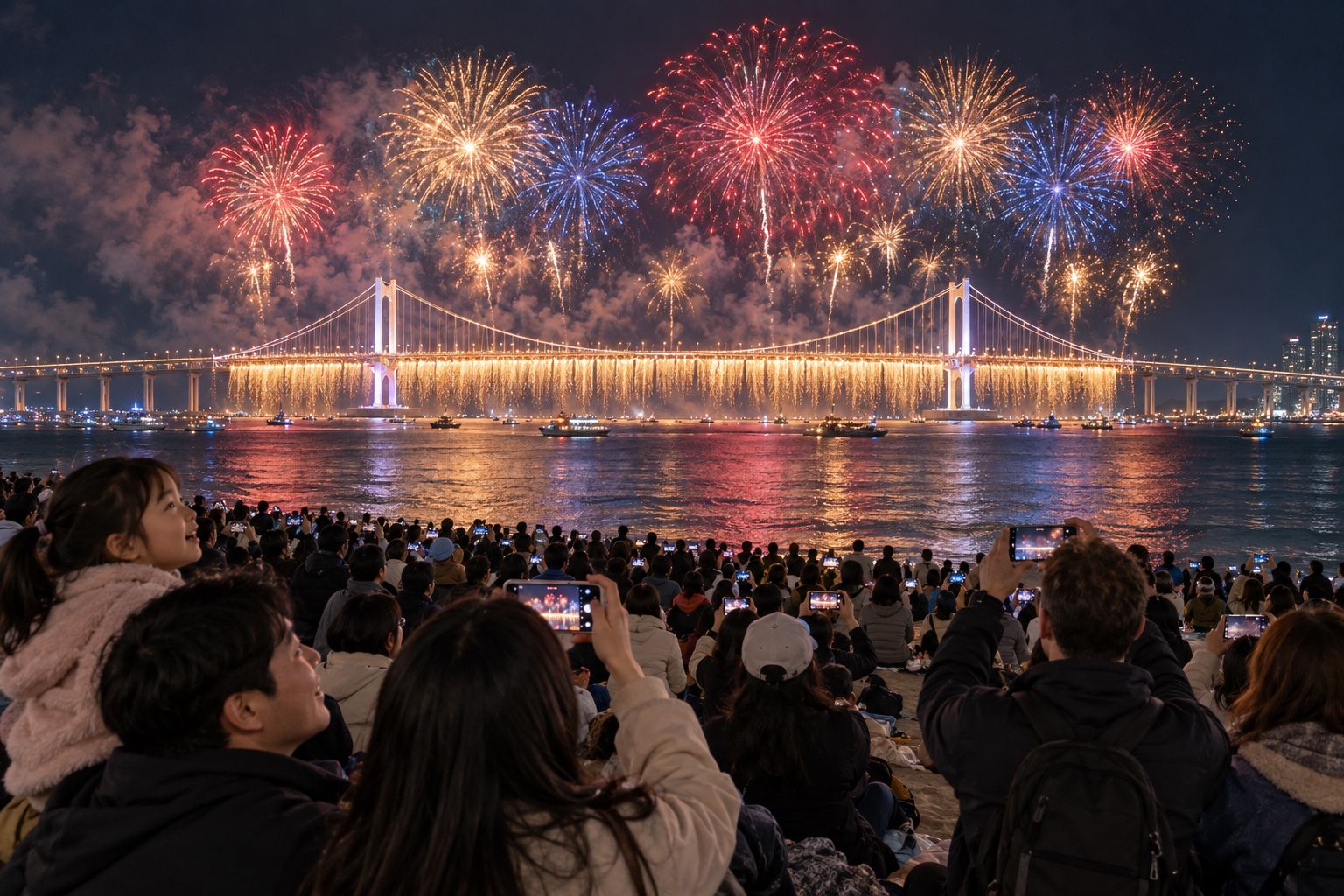
Gwangandaegyo becomes a line of light across the water, the beach darkens beneath it and an enormous crowd waits through cold sea air for the first ignition. Busan Fireworks Festival is a single-night spectacle, but its real shape begins hours earlier through viewing decisions, transport controls and the gradual transformation of Gwangalli into a public theater.

The display uses the bridge, barges, music and wide waterfront to create images that exceed an ordinary fireworks show. Large shells establish scale while bridge-mounted effects pull the architecture into the composition. The best view is therefore not simply the closest patch of sand; it is a position that preserves the complete span.

The traveler’s festival is determined before the sky lights. A carefully selected viewing zone, warm clothing, patient arrival and disciplined exit create the conditions for wonder. Without them, the evening becomes a struggle against the crowd that was entirely predictable.

Why This Festival Is Special

Busan does not place fireworks above a generic field. It composes them around a bridge whose curve, lights and relationship to the sea already define the city. The structure becomes stage, horizon and instrument at once.

The display also changes according to distance. From Gwangalli, the viewer enters sound and symmetry. From a mountain or distant coast, the event becomes a portrait of Busan’s entire night geography. Few fireworks festivals offer such radically different readings of the same choreography.

Its deepest image arrives when the final effects fade and Gwangandaegyo returns to ordinary illumination. The bridge is unchanged, yet the audience now sees it through the memory of fire. A successful civic festival makes familiar infrastructure feel newly possessed by the public imagination. Reflections extend the composition below the horizon, so sea and sky answer one another. The city’s maritime character is present in every successful viewing angle.

Festival Experience

What to Expect

Expect a long wait followed by concentrated visual intensity. Streets become pedestrian territory, restaurants operate under pressure and the beach fills in layers from early arrivals to late standing crowds. Preliminary performances or announcements may precede the main sequence, but the emotional center is the coordinated display across bridge and water. Fireworks can be extremely loud, especially near the central shore. Music and narration may be difficult to hear outside official sound coverage, which changes alternative viewing sites into a more purely visual experience. Smoke direction can also affect clarity from one side of the bay.

The crowd release is part of the event. When the finale ends, hundreds of thousands of people begin moving toward the same streets and stations. Immediate speed is impossible. Visitors who expect a controlled, gradual return remain calmer and safer than those who interpret every pause as a failure.

Festival Highlights

  • First Bridge Illumination – Gwangandaegyo changes from city infrastructure into a performance surface. Watch the full span before focusing on individual effects.
  • Opening Volleys – Early sequences establish scale and sound across the bay. Keep the phone lowered long enough for the body to register the first impact.
  • Bridge-Mounted Cascade – Fireworks can appear to pour from the structure toward the water, making architecture part of the choreography. A frontal sightline reveals the complete line.
  • Large-Caliber Shells – Monumental bursts expand beyond ordinary visual expectation. Their effect depends on open sky, so avoid a position blocked by towers or trees.
  • Musical Fireworks – Timing, color and rhythm are designed as one composition. Official zones with reliable sound offer the fullest version.
  • Multipoint Exchange – Effects moving between bridge and barges make the bay feel spatially active. Step back mentally from individual explosions and read the entire field.
  • Finale – Rapid layers of fire, smoke and reflected light turn the water into a second sky. Enjoy the final silence before joining the exit flow.
  • Post-Show Bridge View – As smoke clears and ordinary illumination returns, the bridge appears newly familiar. That quieter image completes the transformation.

Getting There & Around

Where It Happens

Gwangalli Beach is the primary auditorium, facing the illuminated curve of Gwangandaegyo. The central sand provides a frontal relationship to bridge effects, music and large aerial shells, but it also carries the greatest crowd pressure. Paid or controlled seating may offer order without eliminating the difficult exit.

Igidae, Dongbaekseom, Millak and elevated viewpoints can provide alternative perspectives. Each changes the spectacle. A side angle may lose symmetry, a mountain view sacrifices sound and detail for citywide scale, and a distant waterfront can reduce crowd intensity while placing part of the bridge behind land or buildings.

The correct choice depends on priority. First-time visitors seeking the full designed composition should favor an official Gwangalli viewing zone and accept the logistics. Photographers may value elevation. Crowd-sensitive travelers should select an alternative only after verifying access, sightline and safe departure. The festival is geographically precise; “somewhere near the water” is not a plan.

Getting Around

Metro Line Two is the principal approach to Gwangalli, with Gwangan and Geumnyeonsan stations serving different sides of the district. Official crowd plans may assign routes, close exits or hold passengers outside stations. Follow staff instructions even when another entrance appears shorter.

Arrive early enough to walk the final distance in daylight. Roads near the beach and bridge close progressively, limiting taxis and buses. Ride-hailing is not a reliable last-mile strategy once the control zone expands.

After the finale, remain patient. Stations may meter entry to keep platforms safe, and side streets can be converted into one-way pedestrian flows. Walking to a more distant station can help only when officials permit the route and the group already knows it.

Set a post-show holding plan: a late café reservation outside the densest zone, a warm hotel within walking distance or acceptance of a long controlled queue. The goal is not to beat a million people home. It is to leave without creating danger for yourself or others.

Visitor Guide

Festival Food & Drink

Eat an early, complete meal in the district before restaurants become overwhelmed. A late reservation close to showtime creates tension and may leave the group searching for a viewing place in darkness. Carry only food and drink permitted under current event rules, and manage waste carefully on the beach.

Gwangalli and nearby Millak are known for seafood, cafés and bars, but festival night is not representative of ordinary service. Return another day for an unhurried meal and a calmer bridge view.

**Must Try**
• Dwaeji gukbap – Pork-and-rice soup associated with Busan, warming after a cold waterfront evening.
• Milmyeon – Wheat noodles served cold or warm, with a distinctive Busan history.
• Eomuk – Fish cake, often served with hot broth and well suited to sea air.
• Hoe – Korean-style sliced raw fish, best enjoyed at a reputable restaurant with clear pricing.
• Ssiat hotteok – Sweet pancake filled with seeds, offering warmth and texture as street food.
• Grilled shellfish – Coastal flavor delivered simply, ideal on a non-festival night when service can breathe.

Budget & Costs

Public viewing areas can make the central spectacle accessible, while paid seating, bridge-view rooms and restaurant packages command significant premiums. Decide whether the budget buys comfort, a guaranteed sightline or proximity. These benefits are different and should not be confused.

Accommodation near Gwangalli rises quickly. A central hotel on the metro may cost less, but the return requires patience. Add early meals, warm drinks, transit and a possible late taxi from outside the controlled zone.

Avoid unofficial seat sales or vague view guarantees. A premium room is worthwhile only when the property confirms the angle and event-day access. Keep emergency transport funds available, though money cannot remove crowd controls. The best budget protects warmth, hearing, safe movement and a clear view before it purchases luxury. Food minimums or table packages near the beach should be checked for actual viewing access, duration and cancellation rules. A reservation alone does not guarantee a complete bridge panorama.

Tips for First-Time Visitors

Select the viewing area before selecting dinner. Study the bridge orientation, likely sound coverage, restroom access and departure route. If using ticketed seating, verify the legitimate seller and exact gate. If using public beach space, bring only permitted compact items and expect personal space to narrow. Wear warm, wind-resistant clothing and shoes suited to long standing. Ear protection is valuable for children and sound-sensitive adults. Keep the phone charged, but do not spend the entire display recording a view that official cameras will capture more clearly.

Agree on a meeting point well away from the immediate beach entrance. Mobile networks may slow, and a separated group cannot safely push against outgoing crowds. Save Korean place names offline. After the show, follow the established flow and let the city control the pace. Photograph the daytime sightline before the crowd closes in. The image helps a separated companion identify the zone and confirms that towers or temporary structures will not block the display.

Safety

Crowd safety governs every decision. Follow one-way walking routes, capacity controls and station metering without trying to find a shortcut. Do not stop at bottlenecks for photographs, and never climb barriers, rocks or waterfront structures to improve the view.

Cold wind, prolonged standing and extreme sound require preparation. Wear layers, hydrate and use hearing protection. Children should carry contact information and remain physically connected to their group. Select a reunion point outside the primary crowd zone.

Waterfront edges, hills and alternative overlooks introduce fall risks after dark. Use only authorized viewing areas and established paths. Monitor official weather, transport and cancellation notices through the day. The display is powerful because of its scale; the same scale makes individual improvisation unsafe. If the crowd stops, stop with it and preserve space for breathing. Forward pressure from behind can become dangerous when people at the front have nowhere to move.

Cultural Significance

The festival presents Busan through its defining geography: mountain, dense city, beach, bridge and open sea. Gwangandaegyo is daily infrastructure and a symbol of the city’s modern maritime identity. Turning it into the center of a public artwork allows residents to see a familiar structure at monumental scale. The event also reflects Busan’s ambition as an international tourism and cultural city. Its technical complexity, waterfront setting and enormous audience distinguish it from a local fireworks night. Yet the spectacle remains meaningful because citizens occupy the shore together, bringing civic familiarity to global presentation.

Public safety has become central to how major Korean gatherings are governed. Crowd monitoring, controlled routes and staged transport are not external inconveniences; they are part of the festival’s contemporary civic responsibility. Respecting them is part of participating in Busan’s shared event. The bridge’s temporary transformation also expresses a port city accustomed to exchange, engineering and outward movement. Fire makes those ordinary civic qualities suddenly emotional.

Plan Your Journey

When to Go

The festival is generally held on a cool autumn evening, with the principal display concentrated into one date. Exact timing, access controls and weather decisions must be confirmed through official Busan notices. A same-day arrival by air or intercity train creates unnecessary risk because the event cannot be recovered the next morning.

Reach the viewing district in the afternoon. Restaurants and cafés fill early, roads close in stages and metro stations become increasingly controlled. The hours before sunset are useful for understanding sightlines, finding restrooms and eating before the crowd reaches full density.

Wind and rain can affect fireworks operations, while the sea makes the temperature feel colder than inland forecasts suggest. Bring a wind-resistant layer, hat and something insulating to sit on if using the beach. Keep the following morning light; departure may take far longer than the display itself.

Where to Stay

Gwangalli offers the most immersive base. A hotel with a verified bridge-facing room can remove the beach crowd problem, though prices rise sharply and descriptions of “ocean view” do not guarantee an unobstructed fireworks angle. Confirm floor, orientation and any event access restrictions directly with the property. Seomyeon provides broad lodging, food and metro connections, making it a practical base for visitors who want the wider city. The return after the event will be crowded, but multiple lines and late-night activity support patience. Haeundae offers waterfront atmosphere and alternative distant views, yet Dongbaekseom and coastline geometry can limit the full composition from some locations.

Book for the exit as much as the show. A cheaper property requiring several transfers may feel punishing after hours outdoors. If staying outside Gwangalli, identify the exact station and walking route before the day, then keep that plan unchanged when crowds surge.

Bottom Line & Key Days

Bottom Line

The finale ends in seconds, but departure unfolds slowly. Smoke drifts over the bay, the bridge settles back into its regular lights and the crowd begins moving under careful direction. That gradual return is not separate from the festival. It is the final civic act of sharing one waterfront.

Busan Fireworks Festival is worth the effort when the viewing decision is made honestly. Central Gwangalli offers the designed composition and maximum intensity; alternative sites trade parts of that experience for distance, elevation or reduced pressure. No location supplies every advantage.

Choose deliberately, prepare for cold and let the exit take the time it needs. The reward is more than a large fireworks display. It is the sight of Busan using bridge, sea and public attention to turn its own geography into art. Long after individual bursts are forgotten, the spatial memory remains: bridge across darkness, cold water below and an entire shoreline briefly looking in the same direction.

Key Days

• Planning Day – Viewing angle, transport and lodging should be resolved before arrival. Confirm official notices and reject vague sightline promises.

• Arrival Afternoon – Reach the selected district before closures intensify. Eat, locate restrooms and walk the exit route in daylight.

• Sunset Period – The bridge and crowd gradually become the stage. Settle into position and add warm layers before darkness.

• Preliminary Program – Music and early effects establish the official viewing field. Test hearing protection and keep movement limited.

• Main Display – Bridge, barges, sound and large shells create the full composition. Watch the complete frame, not only the phone screen.

• Finale and Controlled Exit – Remain still for a moment, then follow staff-managed routes. Activate the agreed meeting and transport plan.

• Following Morning – Return to Gwangalli in calm conditions. The ordinary bridge view gives scale to what the night transformed.

Ready to Experience Busan Fireworks Festival?

You've explored what makes this festival special. Now it's time to plan your trip. Compare flights, book your hotel, arrange transportation, and take care of your travel essentials—all in one place.

✈ Find Flights

Loading booking widget...

Booking is completed on Expedia in a new tab.

🏨 Find Hotels

Search places to stay

Powered by Booking.com

Booking is completed on Booking.com in a new tab.

Rail & Bus Travel

Compare train and coach routes for the journey.

Compare Routes

Things to Do

Discover tours and attractions before or after the festival.

Explore Experiences

eSIM Mobile Data

Stay connected abroad without traditional roaming charges.

Get an Airalo eSIM

Travel bookings are provided by our trusted partners. We may earn a commission when you book through these links, at no additional cost to you.

Independent Editorial Standards

Every Follow the Festivals guide is independently researched and regularly reviewed using official festival information, destination resources, and trusted travel references. We also welcome verified updates from festival organizers, destination marketing organizations, tourism partners, and local experts to help keep our guides accurate, current, and useful for travelers.

Represent this festival or have a verified update to share? We'd love to hear from you through our contact page.