
Follow the Festivals

Busan International Film Festival

Busan International Film Festival

Busan, South Korea

2026-10-06 - 2026-10-15

The Story

Festival Overview

An unfamiliar film enters a theater differently.

No one has quoted the reviews because there may not be any. The director’s name does not guarantee applause. The audience sits without knowing whether the next two hours will confirm a reputation or begin one.

Busan International Film Festival is a major celebration of Korean, Asian and international cinema held across Busan each autumn. Its programme includes premieres, emerging directors, established filmmakers, documentaries, short films, outdoor screenings, guest conversations, audience-led events and an industry platform connecting films with possible futures beyond the festival.

The principal screenings gather around Busan Cinema Center and neighboring theaters in Centum City. Community BIFF returns part of the festival to Nampo-dong and BIFF Square, where the event began before moving into its purpose-built architectural home.

That relationship gives BIFF its character.

Centum City shows what the festival has become: a major cinematic institution capable of introducing films to international audiences and industry professionals.

Nampo-dong remembers why that growth mattered: films leaving theaters with people who want to argue about them in the street.

Busan has built cinema larger rooms without allowing the audience to disappear inside them.

Why This Festival Is Special

A film festival can become so important that it starts separating cinema from the people who made it important.

Busan resists that separation through geography.

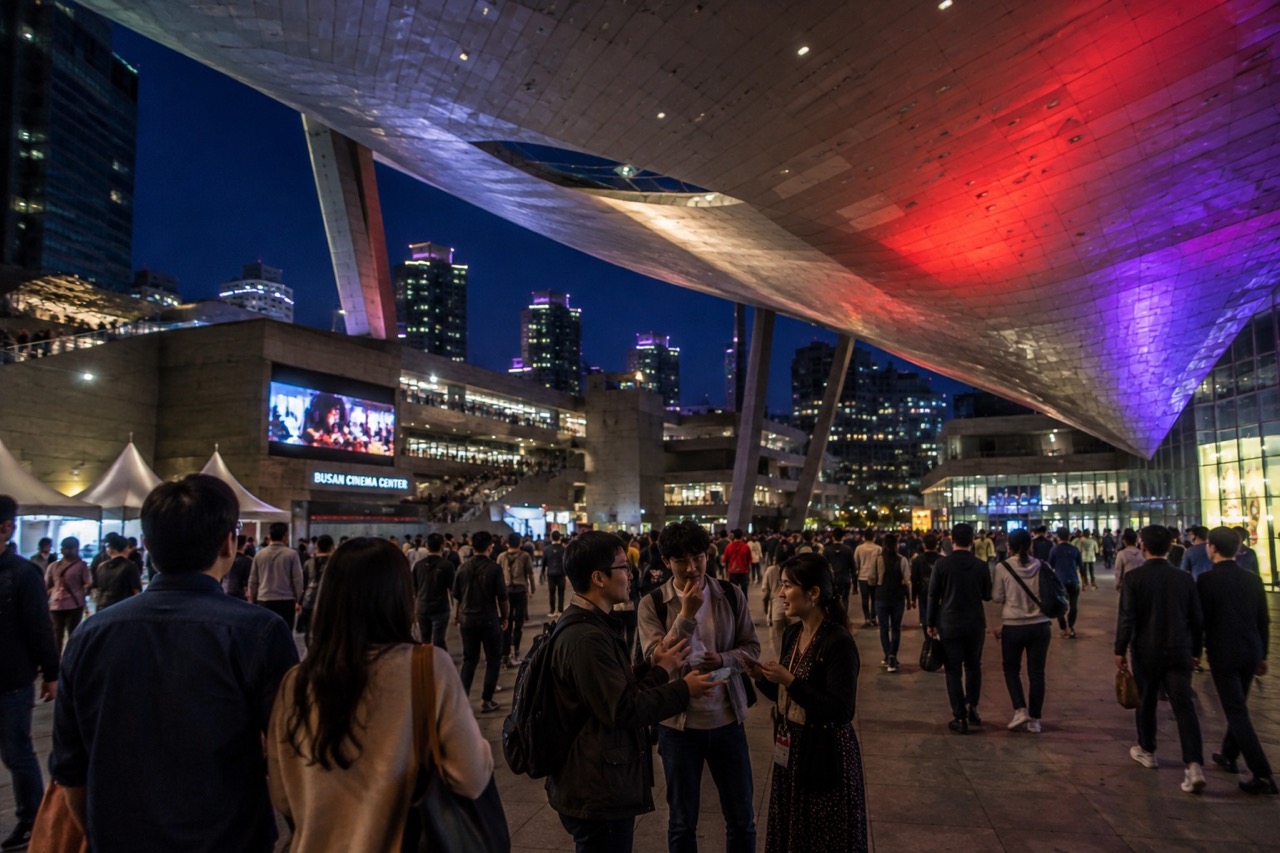
The Busan Cinema Center gives BIFF a visible institutional home. Its enormous roof, outdoor theater and dedicated screening spaces announce that cinema belongs permanently within the city’s cultural architecture.

Nampo-dong holds another kind of permanence. BIFF Square, neighboring cinemas and crowded commercial streets remember the festival before it possessed a monumental center. Community BIFF returns programming authority to audiences and local participants rather than treating them only as ticket holders.

The New Currents competition carries that commitment into the programme. It focuses on first or second features by emerging Asian directors, presenting work whose future remains uncertain.

An unknown film does not need Busan to declare it important.

It needs a room in which importance can begin becoming possible.

Festival Experience

What to Expect

The programme is too large to master completely.

Sections may introduce new Asian directors, contemporary Korean cinema, established international filmmakers, documentaries, animation, shorts and experimental work. Competition screenings sit beside gala presentations, retrospectives, outdoor films and midnight programmes.

Guest Visits bring directors, actors or other filmmakers into the theater after selected screenings. Some conversations are interpreted into English; others are not. The uncertainty belongs partly to a festival operating across many languages and cinematic cultures.

Centum City provides the most concentrated experience. Several cinemas stand within walking distance of Busan Cinema Center, allowing visitors to watch multiple films without crossing the city.

Nampo-dong feels different. BIFF Square opens directly into commercial streets near markets, food stalls and older theaters. Community BIFF may include audience-curated screenings, workshops, outdoor programmes and events in which viewers become programmers or participants.

The festival also reaches other Busan locations through changing community and outdoor initiatives. These programmes should be confirmed rather than assumed, since venues and formats can change.

A successful day rarely contains the maximum number of screenings.

It contains enough time for one film to remain present before another begins.

Festival Highlights

  • New Currents introduces first or second features by Asian directors. Attend without trying to predict the winner. The section matters because the films have not yet accumulated the reputations that would make selection easy.
  • A Window on Asian Cinema provides a broader view of filmmaking across the region, placing countries, industries and aesthetic traditions beside one another without pretending they belong to a single cinematic identity.
  • Korean Cinema Today reveals the industry from within its own major festival. Commercial work, independent voices and emerging filmmakers appear in relationships that international distribution may later simplify.
  • Wide Angle brings documentaries, short films, animation and experimental forms into the programme. These screenings often provide the fastest route beyond familiar feature-film expectations.
  • Open Cinema uses Busan Cinema Center’s outdoor theater to turn watching into a public event. Weather, scale and collective reaction become part of the screening.
  • Guest Visits allow the first audience response to meet the people responsible for the film. The strongest question may concern a choice no reviewer has yet discussed.
  • Community BIFF restores Nampo-dong as an active center rather than a commemorative square. Audience programming, public events and participatory work show that festival history can be renewed instead of merely marked.
  • BIFF Everywhere and other community initiatives may carry screenings into parks, rooftops, neighborhood facilities or unexpected locations across the city. Their changing geography demonstrates that cinema does not require one kind of room.

Getting There & Around

Where It Happens

Busan Cinema Center is the festival’s principal architectural home. Cinemas, an outdoor theater, event spaces and the immense illuminated roof gather screenings, ceremonies, talks and public activity beside the Suyeong River.

Centum City extends the festival through nearby commercial cinemas and cultural venues. Distances are manageable on foot, although large buildings and vertical shopping complexes make finding the correct auditorium slower than expected.

Nampo-dong contains BIFF Square, older theaters and Community BIFF venues. The district sits near Jagalchi Market, Gukje Market and some of Busan’s busiest commercial streets.

The two festival centers reveal different eras of the city. Centum City is planned, vertical and institutionally confident. Nampo-dong is dense, layered and inseparable from street commerce.

Additional screenings may appear throughout Busan through community programmes. Beaches, neighborhood venues, cultural centers and unconventional spaces can become temporary cinemas.

The festival should not be experienced as though every venue were interchangeable.

A film at the Busan Cinema Center enters an institution.

A film in Nampo-dong returns to the crowd that helped build one.

Getting Around

Busan’s subway is the most reliable connection between festival districts. Centum City has direct subway access, while Nampo and Jagalchi stations serve the older festival area.

Travel between Centum City and Nampo-dong requires crossing a large portion of Busan. Never schedule consecutive screenings in the two districts without a generous interval.

Within Centum City, walking between Busan Cinema Center and neighboring commercial cinemas is practical. Still, locating the correct building, floor and screen can consume more time than the map suggests.

Buses can fill gaps in the subway network but become vulnerable to traffic around beaches, commercial districts and major events. Taxis offer comfort without guaranteeing speed.

The airport, Busan Station and festival venues occupy different parts of the city. Do not place a screening immediately after arrival unless the ticket can be sacrificed without consequence.

Use a transit card, keep the official venue map available offline and check the final subway before attending a late guest conversation or midnight programme.

A director may be allowed to let the film run long.

The last train will not share that generosity.

Visitor Guide

Festival Food & Drink

A film ends in another country.

The theater doors open in Busan.

Nampo-dong restores the audience through smell first. Fish cakes warm in broth. Seeds crack beneath the surface of *ssiat hotteok*. Seafood fills market tanks and counters near Jagalchi. People who spent two hours watching someone else’s city return to their own bodies beside a food stall.

Ssiat hotteok begins as fried dough filled with sugar before sunflower, pumpkin and other seeds are added. The result is crisp, sticky and practical enough to eat while discussing whether the ending worked.

Busan eomuk carries fish into multiple shapes and textures, served from skewers with hot broth that suits a late outdoor screening. Milmyeon cools wheat noodles in broth, often with sliced meat, cucumber and a spicy seasoning that can be adjusted at the table.

Dwaeji-gukbap offers a more sustaining pause. Pork and rice arrive in broth with chives, salted shrimp and condiments added according to preference. It is fast enough for festival schedules without becoming disposable food.

Centum City provides efficient restaurants and department-store dining between screenings. Nampo-dong provides the stronger sense that cinema has returned to the street. Jagalchi and the surrounding markets extend the meal into Busan’s working relationship with the sea.

Do not schedule every lunch in the shortest interval. One unhurried meal may preserve more of the films than another screening can add.

### Must Try

• **Ssiat hotteok:** Fried sweet pancake filled with melted sugar and a mixture of seeds.

• **Busan eomuk:** Fish cakes served on skewers, in broth or in numerous prepared forms.

• **Milmyeon:** Chilled wheat noodles served in broth or mixed with spicy sauce.

• **Dwaeji-gukbap:** Pork and rice soup seasoned at the table with chives, salted shrimp and other accompaniments.

• **Hoe:** Sliced raw fish or seafood served with dipping sauces and vegetables.

• **Grilled eel:** Eel cooked over heat and finished with a savory or spicy glaze.

• **Nakji dishes:** Octopus prepared grilled, stir-fried or in Busan’s seafood-rich stews.

• **Pajeon:** Savory pancake made with scallions and other ingredients, often shared.

• **Bingsu:** Shaved-ice dessert suited to warmer festival afternoons.

Food returns the viewer to Busan.

Conversation determines whether the film comes with them.

Budget & Costs

General screening tickets are comparatively accessible for a major international film festival, while ceremonies, special events, midnight programmes and master classes can cost more.

Booking fees, cancellations and ticket limits vary by edition. Purchase only through official channels and study refund rules before building an ambitious schedule.

Accommodation near Centum City and Haeundae can rise during festival periods. Nampo-dong and Seomyeon may offer broader price ranges, with transportation time added to the calculation.

A modest visit can combine a guesthouse, subway travel, several general screenings and market meals. A midrange budget allows a comfortable hotel, multiple screenings each day and reserved restaurant breaks. A larger budget may include premium accommodation and special festival events, but public access remains central to BIFF.

Industry badges are not travel upgrades. They exist for accredited professional purposes and should not be treated as necessary for an ordinary viewer.

Budget time as carefully as money. Five inexpensive tickets can produce less value than three screenings with enough space to think.

The festival does not reward the person who spent the most.

It rewards the person still capable of watching.

Tips for First-Time Visitors

Choose a programme philosophy before choosing individual titles. Follow one country, one competition, several first features or a question crossing multiple films. The schedule becomes easier when selection has a reason.

Reserve high-priority screenings through official ticket channels as soon as sales open. Popular titles, guest appearances and limited screenings can sell out quickly.

Check subtitle codes for every film. Do not assume an international festival provides English subtitles or interpretation at every screening and Guest Visit.

Leave at least one daily slot open. Recommendations emerge after the festival begins, tickets are returned and an unexpected conversation may become more valuable than the original plan.

Arrive early. Late entry can cost the reserved seat, disrupt the audience and may be refused after the festival’s admission threshold.

Do not photograph or record during screenings, including trailers and credits. Guest events have separate rules announced by staff.

Stay through the credits unless transportation or safety makes departure necessary. The film has not finished because the story stopped.

Ask one good question rather than making a speech at a Guest Visit. A new director’s limited audience time should remain available to the room.

Spend one period in BIFF Square without a screening scheduled. The festival’s history becomes visible when cinema is allowed to coexist with eating, shopping and ordinary public movement.

Safety

The principal risks are crowding, fatigue, late-night transportation and severe weather rather than the screenings themselves.

Centum City becomes busy around ceremonies, outdoor events and popular talks. Follow staff directions and keep entrances clear even when waiting for guests or photographs.

Busan’s autumn weather can include heavy rain, strong wind or residual typhoon conditions. Outdoor screenings and stages may change quickly. Carry waterproof protection and monitor official announcements.

Long screening days reduce movement and hydration. Walk between films, drink water and eat a complete meal before fatigue becomes part of every reaction.

Late programmes may end after convenient transit options have diminished. Confirm the final train and prepare a taxi alternative before entering the theater.

Keep belongings with you in cinemas and public areas. Do not leave bags to reserve seats where seating is unassigned.

Age ratings and admission rules are enforced. Identification may be required for restricted films.

Ticket scams remain avoidable. Use official sales channels and never allow desperation for a sold-out film to override basic judgment.

No film is worth becoming stranded, ill or unsafe.

Another screening will eventually begin.

Cultural Significance

BIFF began in 1996 as South Korea’s first international film festival and developed into one of Asia’s most influential cinema events.

Its importance lies partly in scale, but more significantly in orientation. BIFF has consistently created substantial space for Asian cinema within an international festival system that can otherwise filter the region through a small number of established industries and directors.

Competition sections, project development, markets and funding initiatives create different stages of support. A film may arrive complete and seek an audience, while another project arrives as a script, pitch or unfinished possibility.

Busan’s role as a port city gives this exchange an appropriate setting without providing a complete metaphor. Films do not move like cargo, and filmmakers are not merely passing through. The festival’s real work happens through judgment, conversation, disagreement and relationship.

The movement from Nampo-dong to Busan Cinema Center represented institutional growth. The return of Community BIFF to Nampo-dong protects another form of cultural memory: audiences were not incidental to that growth.

The building made BIFF permanent.

The street keeps it public.

Plan Your Journey

When to Go

BIFF generally takes place for approximately ten days during early autumn. Annual dates, programme sections and venues should be confirmed when the official schedule is released.

Opening days carry premieres, ceremonies and the greatest concentration of industry attention. Tickets for headline films and major guest appearances can disappear quickly.

The middle of the festival often provides the best balance. The city has settled into its screening rhythm, repeat showings create alternatives and viewers begin recommending discoveries that received little attention before the first projection.

Closing days bring competition decisions and final screenings, but some filmmakers and industry guests may already have departed. They suit visitors more interested in films than red-carpet energy.

Stay for at least four nights if possible. A shorter visit can work when built around one programme section or destination area, but constant arrival and departure undermines the patience necessary for unfamiliar cinema.

Autumn weather can change outdoor screenings and public events. Busan remains exposed to coastal rain and wind, while daytime warmth may disappear quickly after dark.

Build one indoor alternative into every outdoor plan.

A film festival already contains enough uncertainty on the screen.

Where to Stay

Centum City is the most efficient base for serious screening schedules. Busan Cinema Center, commercial cinemas and supporting venues cluster within a compact district connected by subway. The area favors punctuality, comfortable hotels and rapid transitions between films.

Haeundae provides more restaurants, nightlife and access to the beach while remaining reasonably close to Centum City. Travel time increases during busy periods, but the walk beside the sea can create necessary distance from a full day indoors.

Gwangalli offers a neighborhood atmosphere, waterfront evenings and views toward Gwangan Bridge. It works well for visitors willing to trade immediate venue access for a stronger sense of Busan after screenings.

Nampo-dong suits travelers drawn to Community BIFF, BIFF Square, Jagalchi Market and the festival’s older geography. Reaching Centum City requires a substantial cross-city journey, so this base works best when the programme deliberately includes both districts rather than beginning every morning in the east.

Seomyeon offers the most balanced transportation position between eastern and central Busan. It also provides abundant late-night dining, although it lacks the immediate cinematic atmosphere of Centum or Nampo.

Choose accommodation after selecting the screenings that matter most. Busan stretches along mountains, bays and coastlines; two venues that share the same city can sit far enough apart to ruin a tightly planned day.

At BIFF, the wrong room is rarely the least beautiful one.

It is the one on the wrong side of the next film.

Bottom Line & Key Days

Bottom Line

The credits end on a film almost no one in the room had seen before tonight.

For several seconds, the theater remains dark. The audience is still deciding what happened, whether it worked and which image has followed them out of the story.

Then the lights rise.

A director walks to the front of the room. Perhaps this is a first feature. Perhaps years of work have produced a film whose future still consists only of the people sitting here.

Applause offers encouragement without certainty.

The conversation begins cautiously. A moderator speaks. The director answers. Someone describes a production difficulty that the finished film concealed.

Then a hand rises from the audience.

The question notices something specific: a silence, a cut, a character left outside the frame. The director pauses before answering because the film has already become slightly different in another person’s attention.

Tomorrow, the screening may be fuller.

A programmer may carry the title elsewhere. A distributor may begin a conversation. Nothing may happen at all.

Busan cannot promise the film a future.

It has given the film its first question.

Key Days

Programme announcement day begins the festival intellectually. Viewers discover the sections, countries, directors and questions from which their own route will be built.

Ticket-release periods determine access to the most sought-after screenings. Preparation matters, but flexibility prevents one failed reservation from damaging the entire visit.

Opening night gives BIFF its most visible ceremony and introduces the first major film. The city’s cinematic institution appears at full scale.

The first days bring premieres, guests and industry attention. Emerging films enter rooms before public consensus has formed around them.

Community BIFF returns audience participation to Nampo-dong through a shorter programme whose dates may not span the entire festival. Its concentrated period deserves deliberate planning.

Middle days allow recommendations to circulate. A film that arrived unnoticed may begin filling through conversation rather than promotion.

Awards and closing screenings provide resolution for competitions. They cannot determine which films will continue traveling, finding audiences or changing the people who made them.

That future remains outside the programme.

Ready to Experience Busan International Film Festival?

You've explored what makes this festival special. Now it's time to plan your trip. Compare flights, book your hotel, arrange transportation, and take care of your travel essentials—all in one place.

✈ Find Flights

Loading booking widget...

Booking is completed on Expedia in a new tab.

🏨 Find Hotels

Search places to stay

Powered by Booking.com

Booking is completed on Booking.com in a new tab.

Rail & Bus Travel

Compare train and coach routes for the journey.

Compare Routes

Things to Do

Discover tours and attractions before or after the festival.

Explore Experiences

eSIM Mobile Data

Stay connected abroad without traditional roaming charges.

Get an Airalo eSIM

Travel bookings are provided by our trusted partners. We may earn a commission when you book through these links, at no additional cost to you.

Independent Editorial Standards

Every Follow the Festivals guide is independently researched and regularly reviewed using official festival information, destination resources, and trusted travel references. We also welcome verified updates from festival organizers, destination marketing organizations, tourism partners, and local experts to help keep our guides accurate, current, and useful for travelers.

Represent this festival or have a verified update to share? We'd love to hear from you through our contact page.