
Follow the Festivals

Jinju Lantern Festival

Jinju Lantern Festival

Jinju, South Korea

2026-10-03 - 2026-10-18

The Story

Festival Overview

Before the Namgang carried wishes, it carried warnings.

Jinjuseong Fortress stood above the river while defenders watched the opposite bank through darkness. During the Japanese invasions of Korea in the late sixteenth century, lanterns were used as military signals, to expose or deter troops attempting to cross the water and to send communication toward families beyond the fortress.

After the battles, lanterns took on another purpose. They were floated in remembrance of the soldiers, officials and civilians who died defending Jinju.

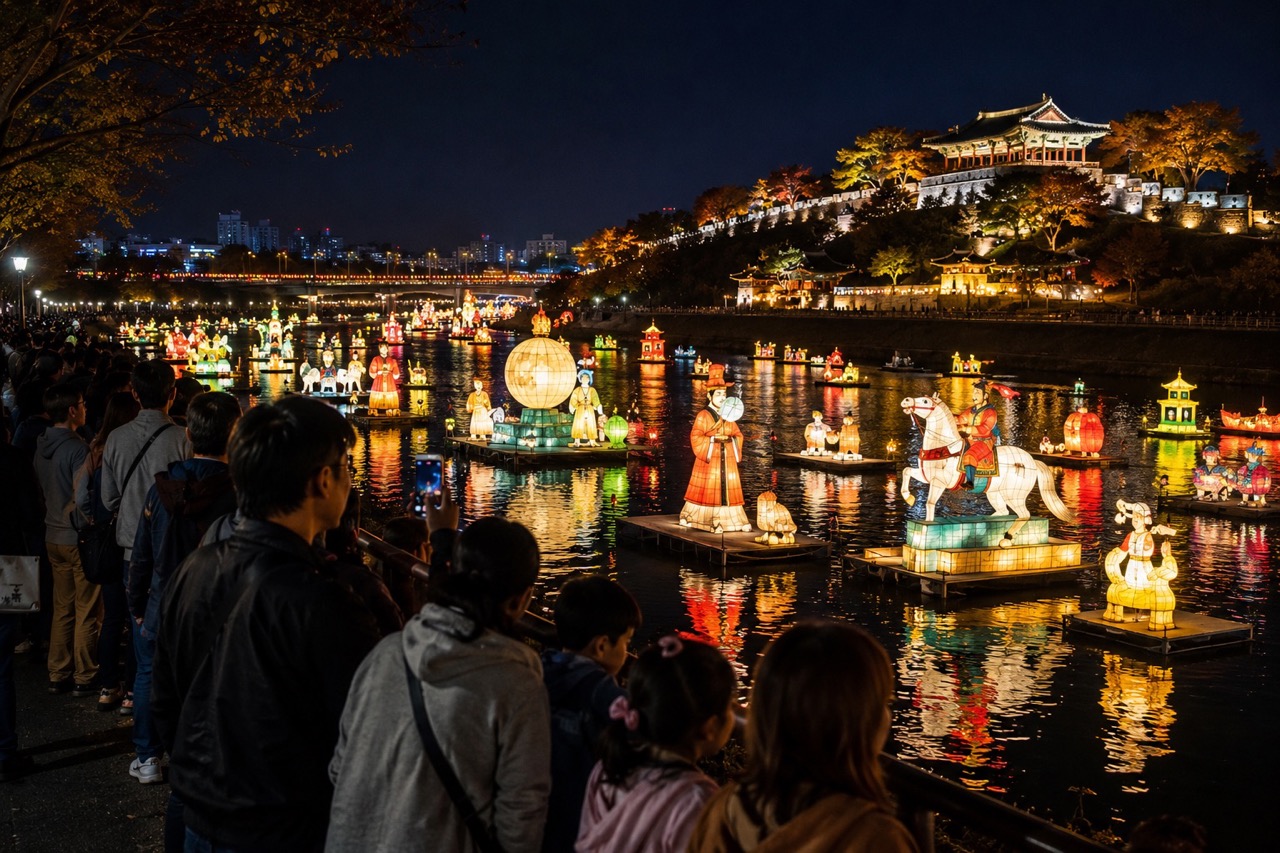
Jinju Namgang Lantern Festival is an autumn celebration of illuminated art, historical memory and public participation held along the Namgang River and around Jinjuseong Fortress. Large lantern installations occupy the water and riverbanks, smaller lights carry personal wishes, and the fortress becomes part of a night landscape shaped by fire, reflection and remembrance.

The contemporary festival includes playful characters, international lantern forms, performances, fireworks and family activities. Yet the river beneath them has not become a neutral display surface.

Every light enters water that once separated people who were trying to reach one another.

Jinju keeps sending the message after the danger has passed.

Why This Festival Is Special

A lantern can perform several kinds of work without changing its form.

It can warn.

It can communicate.

It can mourn.

It can carry a wish.

During the first siege of Jinjuseong, light on the Namgang belonged to strategy and survival. Defenders needed to see the river and communicate beyond the fortress. The successful defense became part of Jinju’s civic memory.

The second siege brought devastating loss. Later lantern traditions honored those who died, allowing the same river that marked danger to become a place of remembrance.

The contemporary festival adds hope without erasing either history. Visitors write personal wishes. Children recognize illuminated animals and stories. International lanterns enter a landscape once defined by invasion. The river is now safe enough to carry imagination, but the festival remains meaningful because Jinju remembers when it was not.

The beauty does not replace the warning.

It shows what the city hopes light can carry now.

Festival Experience

What to Expect

The festival begins to reveal itself near sunset.

Lanterns that appeared sculptural in daylight begin glowing from within. Reflections gather beneath them until the river seems deeper than it did an hour earlier. Jinjuseong’s walls rise above the northern bank, while illuminated installations extend across and along the water.

Some lanterns represent Korean history, folklore, animals, architecture or contemporary characters. Others arrive through international cultural exchange. Tunnels and walls of smaller wish lanterns surround visitors with individual messages rather than monumental images.

The festival occupies both sides of the Namgang. Bridges and temporary crossings may connect areas that would otherwise require a longer walk. Movement becomes increasingly slow as evening crowds concentrate near the fortress, major installations and performance spaces.

Daytime is quieter and more historical. The fortress, museum, pavilions and river geography can be examined without illumination directing every view. Night transforms those same locations into the festival.

The strongest visit uses both conditions.

See what the fortress was built to defend.

Then return when the river begins carrying light.

Festival Highlights

  • Jinjuseong Fortress provides the festival’s historical foundation. Walk the walls and visit the National Jinju Museum before darkness, then return to see the fortress illuminated above the river it once defended.
  • The first collective lighting transforms the Namgang from a daytime waterway into the festival’s central image. Watch from a position that includes both lanterns and fortress rather than isolating one installation from the landscape.
  • Floating lantern displays carry the greatest scale. Historical scenes, animals, architecture and imaginative forms appear to occupy the river while reflections create a second, unstable version beneath them.
  • Wish-lantern participation returns the experience to one person and one message. Official programmes may allow visitors to hang, display or float lanterns according to environmental and safety controls.
  • Memorial elements deserve attention before novelty installations. They explain why remembrance remains inside a festival that can otherwise appear purely celebratory.
  • Fireworks and lighting performances add spectacle above the river. Their scale is temporary, while the quieter lanterns remain visible before and after each burst.
  • Community-made lanterns reveal another layer of Jinju. A city does not remember only through official monuments. Students, residents and local groups also determine which stories and hopes enter the light.

Getting There & Around

Where It Happens

The Namgang River is the festival’s central venue.

Jinjuseong occupies the northern bank, with fortress walls, Chokseongnu Pavilion, shrines, memorials and the National Jinju Museum forming the principal historical area.

Lantern installations extend across the river and along both banks. Their exact locations and themes change, making the annual venue map essential.

The southern riverbank provides some of the strongest broad views back toward Jinjuseong. From here, the fortress, illuminated water and passing crowds can be seen as one composition.

Temporary floating bridges or controlled crossings may connect festival zones. These are functional attractions as well as transportation, bringing visitors close to the lanterns and river surface. Admission or access arrangements can vary.

Jungang Market and Nongae Market lie within the wider central district and provide a transition from festival lighting into ordinary commercial life.

Somangjinsan Lantern Theme Park extends Jinju’s lantern identity beyond the principal festival period. During the event, it can also provide an elevated perspective and a quieter understanding of how the city has made lantern craft part of its continuing public identity.

The fortress remembers from above.

The river carries the memory forward.

Getting Around

Jinju is connected to other Korean cities by intercity rail and bus. Both arrival points require onward planning because the fortress and principal riverfront festival areas are not immediately adjacent to every terminal.

Local buses and festival shuttles may provide the most efficient access. Routes, temporary stops and operating periods should be confirmed shortly before travel.

Road closures and parking restrictions make driving into the central festival zone difficult. Park-and-ride or remote parking arrangements, when provided, are more practical than searching for a space near the river after sunset.

Once inside the festival area, walking is essential. The full circuit can become long when both banks, the fortress and temporary bridges are included.

Choose one bank for arrival and identify at least two possible routes back. A temporary crossing may close before other festival areas, while crowd controls can slow access to permanent bridges.

Taxis become scarce when programmes end. Leave before the largest departure wave or remain near the river until it passes.

Do not let transportation determine the final memory.

Plan it early enough that the last lantern can remain the last lantern.

Visitor Guide

Festival Food & Drink

Jinju’s table gathers mountain, river and southern-coast ingredients in the same city.

Its markets historically received grain, vegetables, medicinal plants and seafood moving inland. Jinju bibimbap reflects that abundance. Rice is arranged with vegetables, seasoned raw beef, mung-bean jelly and other ingredients in a brass bowl, creating enough color for the dish to be known as flower rice.

The meal appears carefully composed before the first spoon breaks its symmetry.

Jinju naengmyeon carries another form of layering. Buckwheat noodles rest in a broth built from seafood and other ingredients, then receive slices of *yukjeon*—beef coated lightly and pan-fried. The result connects inland meat culture with flavors arriving from the coast.

Grilled eel belongs naturally beside the Namgang. Rich flesh meets smoke and a sweet-savory or spiced glaze, producing a meal substantial enough for a long autumn evening outdoors.

The central markets offer the most direct introduction. Noodle alleys, small restaurants and food stalls allow the city to feed visitors without turning the riverbank into the only dining district.

Festival food trucks widen the options, but they should not replace Jinju’s own table. Eat something local before the lights turn on, then allow a smaller snack to carry the body through the evening.

### Must Try

• **Jinju bibimbap:** Rice arranged with vegetables, mung-bean jelly, seasoned beef and regional accompaniments.

• **Jinju naengmyeon:** Cold buckwheat noodles served in a complex broth and topped with slices of pan-fried beef.

• **Yukjeon:** Thin beef slices coated and pan-fried, served independently or over Jinju naengmyeon.

• **Grilled eel:** Eel cooked over heat and finished with a savory or spicy glaze.

• **Jinju gyobang cuisine:** Refined dishes associated with the city’s historical banquet and entertainment culture.

• **Dwaeji-gukbap:** Pork and rice soup served with seasonings adjusted at the table.

• **Pajeon:** Savory scallion pancake suited to sharing.

• **Jinju honey bread:** Bread filled with red bean paste, coated in syrup and topped with nuts.

A lantern turns practical light into memory.

Jinju’s food often does something similar with ingredients that once arrived through necessity, trade and preservation.

Budget & Costs

General access to the festival is commonly free, making accommodation, transportation, food and optional activities the principal expenses.

Certain experiences, temporary crossings, workshops or wish-lantern programmes may require small fees. These arrangements should be confirmed for the specific edition.

Central accommodation rises in price and fills quickly during popular weekends. Staying near a direct bus route can reduce costs while preserving access.

A modest visit can rely on public transportation, free lantern viewing and market meals. A midrange budget allows a central hotel, museum time and several participatory activities. A larger budget may include a river-view room, guided historical interpretation and private transportation outside peak periods.

Souvenir lanterns vary in quality and origin. Ask whether an item is locally made before assuming festival imagery represents Jinju craft.

The most important historical context requires little money.

It requires entering the fortress before the lights come on.

Tips for First-Time Visitors

Begin at Jinjuseong in daylight. Without the fortress, the lanterns lose the physical reason they entered Jinju’s history.

Visit the National Jinju Museum or read reliable historical interpretation before the evening programme. The first and second sieges should not collapse into one uncomplicated story of victory.

Walk both riverbanks. The fortress side provides proximity to history; the opposite bank reveals how the fortress and lanterns occupy the same landscape.

Choose historical and memorial installations before moving toward entertainment areas. The visual sequence will then deepen rather than scatter the festival’s meaning.

Participate in a wish-lantern programme only through an official activity. Environmental rules determine whether lanterns are floated, displayed or collected after use. Never release a private lantern independently.

Carry a small flashlight without directing it toward installations or other visitors. Uneven riverside paths remain dark precisely because the lanterns are meant to dominate the view.

Allow children to enjoy character lanterns without pretending that every object carries the same historical weight. Playfulness is part of the modern festival, but it should not erase the reason the city gathers.

After taking the photograph, lower the camera.

The river communicates through movement that a still image cannot retain.

Safety

River edges, temporary structures and darkened paths require attention. Remain behind barriers and never step onto an unapproved section of shoreline for a clearer photograph.

Temporary floating crossings can move underfoot and may impose one-way traffic or capacity limits. Follow staff instructions and keep children close.

Crowds compress near major lanterns, fireworks viewpoints and bridge entrances. Avoid stopping within pedestrian flow, particularly when looking backward toward the fortress.

Autumn evenings can become cold near the water. Carry layers even when afternoon temperatures feel warm.

Rain makes ramps, fortress stone and riverside surfaces slippery. Waterproof footwear with reliable grip is essential.

Fireworks and amplified performances can affect hearing. Families should carry appropriate ear protection for children and move away if sound becomes painful.

Do not release candles, paper lanterns or other objects into the Namgang outside official activities. Fire risk, litter and river ecology matter more than recreating a photograph.

The river once presented an obvious danger.

Its modern risks are quieter, but they still deserve respect.

Cultural Significance

The festival’s origin belongs to the Imjin War, when Japanese forces invaded Korea and Jinjuseong became the site of two major sieges.

During the first defense, lanterns supported military strategy and communication. The fortress held, establishing the battle as a significant Korean victory.

The later siege ended differently. Soldiers, officials and civilians died in catastrophic numbers when the fortress fell. Jinju’s memory therefore carries both resistance and grief.

Lanterns later became commemorative, honoring those who died and consoling their spirits. The contemporary festival developed this inherited practice into a large public event centered upon history, peace and shared wishes.

That transformation should not be mistaken for the removal of conflict. A wish for peace matters because the river remembers war.

The festival also raises questions about how history is made approachable. Playful lanterns and international displays welcome broad audiences, while memorial ceremonies and fortress interpretation keep the event connected to Jinju.

The city does not ask every lantern to mourn.

It asks the festival to remember why light was once necessary.

Plan Your Journey

When to Go

The festival generally takes place during autumn, when evenings are cooler and the Namgang can hold long reflections beneath clearer seasonal skies.

Visit on a weekday if possible. Lower crowd density makes it easier to move between riverbanks, read historical material and stand far enough from the largest lanterns to see their relationship with the fortress.

Weekends bring fuller performance programmes and a stronger collective atmosphere. They also place significant pressure on roads, restaurants, temporary crossings and the most popular viewing areas.

Arrive during the afternoon. Walk Jinjuseong, visit the museum and look across the Namgang before the lights begin competing for attention. Eat early or reserve dinner after the principal evening walk.

Remain beyond the first lighting period. Many visitors arrive as darkness falls, photograph the largest installations and leave together. Later hours can return portions of the river to a slower rhythm.

Rain intensifies reflections but complicates riverside movement. Wind can affect certain programmes and make autumn evenings colder than daytime temperatures suggest.

The river changes with every condition.

That is one reason the lanterns must keep adjusting to it.

Where to Stay

Accommodation near Jinjuseong and the northern riverbank provides the most immediate access to the fortress and central lantern displays. It also places guests inside the busiest pedestrian and traffic conditions.

Downtown Jinju offers restaurants, markets and practical walking access without requiring every hour to remain on the river. The areas around Jungang Market and Nongae Market are particularly useful for travelers who want local food after the festival.

The southern bank can provide views back toward Jinjuseong and access to lantern areas across the river. Confirm which bridge or temporary crossing will remain available at the intended return time.

Jinju’s railway station sits away from the central fortress district. Hotels near it make arrival easy but require bus or taxi travel to the festival. The intercity bus terminal is closer to some central areas but still demands careful planning during road closures.

Stay for two nights if possible. A single evening encourages urgency. A second allows the river to become familiar enough that the visitor notices what has changed rather than merely seeing everything lit at once.

Choose a hotel according to the bank where the night will end.

The Namgang is easy to admire across.

It may take much longer to cross.

Bottom Line & Key Days

Bottom Line

Near the end of the evening, the largest lanterns still command the river.

Figures rise above the water. Fortress walls glow behind them. Cameras continue collecting reflections that break and reassemble whenever the Namgang moves.

Farther along the bank, a smaller lantern carries someone’s handwritten wish.

It does not warn of soldiers in the water. It does not ask a family whether someone inside the fortress remains alive. It does not attempt to contain the grief of those who could not return home.

The message belongs to another time.

Perhaps it asks for health. Reconciliation. Safety. A future in which someone can cross a distance that feels impossible tonight.

The river receives it without answering.

Eventually, the festival lights will go dark. Jinjuseong will remain above the Namgang, holding the memory of people who once needed illumination to survive, communicate and be remembered.

The small wish will disappear with the others.

For one night, it reached the opposite bank.

Key Days

Opening night introduces the festival’s public meaning through collective illumination, performances and ceremonial remembrance. The first lighting carries particular force because the river changes in one visible movement.

Weekday evenings provide the clearest opportunity to study installations and cross between banks without peak congestion.

Weekend programmes bring larger performances, family participation and fireworks alongside the heaviest crowds.

Memorial ceremonies connect the lanterns directly with the defenders and civilians of Jinjuseong. These should be approached as acts of remembrance rather than visual entertainment.

Community and wish-lantern activities allow individual messages to enter the larger display. One small light joins thousands without losing the words attached to it.

Closing night gives the illumination a temporary quality. The lanterns remain bright, but everyone understands that the river will soon return to darkness.

The message has been sent.

The water does not need to hold the light forever.

Ready to Experience Jinju Lantern Festival?

You've explored what makes this festival special. Now it's time to plan your trip. Compare flights, book your hotel, arrange transportation, and take care of your travel essentials—all in one place.

✈ Find Flights

Loading booking widget...

Booking is completed on Expedia in a new tab.

🏨 Find Hotels

Search places to stay

Powered by Booking.com

Booking is completed on Booking.com in a new tab.

Rail & Bus Travel

Compare train and coach routes for the journey.

Compare Routes

Things to Do

Discover tours and attractions before or after the festival.

Explore Experiences

eSIM Mobile Data

Stay connected abroad without traditional roaming charges.

Get an Airalo eSIM

Travel bookings are provided by our trusted partners. We may earn a commission when you book through these links, at no additional cost to you.

Independent Editorial Standards

Every Follow the Festivals guide is independently researched and regularly reviewed using official festival information, destination resources, and trusted travel references. We also welcome verified updates from festival organizers, destination marketing organizations, tourism partners, and local experts to help keep our guides accurate, current, and useful for travelers.

Represent this festival or have a verified update to share? We'd love to hear from you through our contact page.