
Follow the Festivals

Carnaval de Oruro

Carnaval de Oruro

Oruro, Bolivia

2027-02-06 - 2027-02-09

The Story

Festival Overview

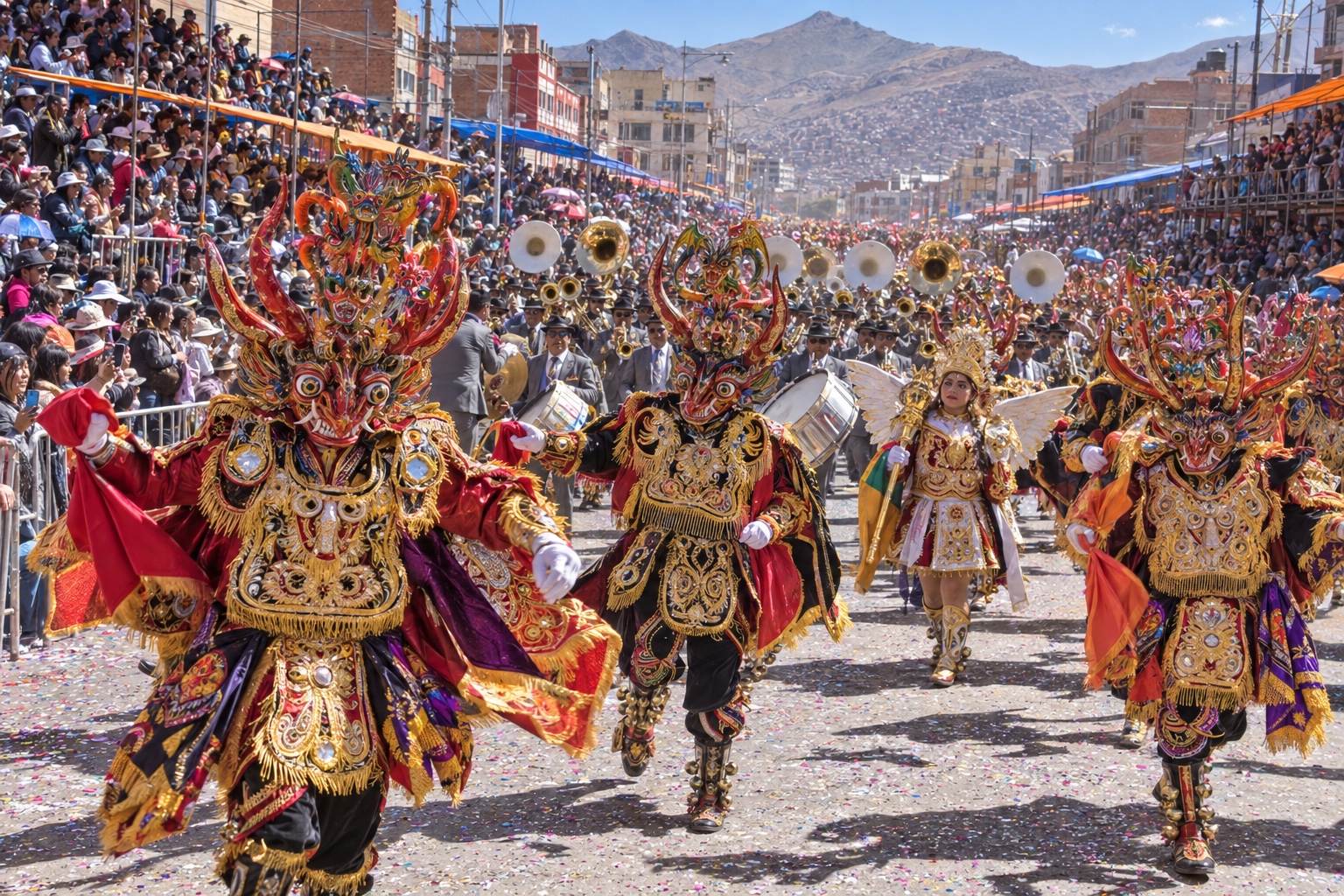
Before sunrise, brass bands and dancers already fill Oruro’s high-altitude streets. Costumes glitter, masks enlarge human faces into devils and archangels, and each fraternity moves toward the Sanctuary of the Socavón. The procession is spectacle, but its governing logic is pilgrimage. Participants dance the route as an offering, carrying devotion through fatigue, music and public display.

That purpose changes how a traveler should watch. The carnival is not a sequence of interchangeable parade acts. Diablada, Morenada, Caporales and other forms hold distinct histories, rhythms and social identities. Staying long enough to notice those differences reveals a city presenting belief through disciplined collective movement.

Oruro’s altitude, cold nights and enormous crowds make preparation essential. A good visit balances reserved route viewing with time near the sanctuary and space to recover. The reward is one of the world’s most powerful demonstrations of how ritual can remain sacred while becoming vast public theater.

Why This Festival Is Special

Oruro is special because devotion is made visible through sustained physical work. The beauty of a mask or embroidered cape matters, but it gains force from the kilometers walked, the music repeated and the vow carried toward the sanctuary. Spectacle and sacrifice occupy the same body.

The city also changes the scale of attention. Thousands of performers pass, yet each fraternity has its own sound and internal order. A visitor begins overwhelmed, then gradually learns to distinguish dances, bands and gestures. That education happens through time, not explanation alone.

Near the end of the route, exhaustion reveals the governing truth. Dancers continue because arrival has meaning beyond applause. The carnival can be photographed as color, but it is remembered as endurance directed toward belief. Few festivals ask the traveler to witness public celebration and pilgrimage without separating them, and fewer sustain that union with such collective power.

Festival Experience

What to Expect

Expect sustained sound, dense crowds and a procession that continues far beyond the length of an ordinary parade. Brass bands arrive in waves. Dancers repeat demanding steps at altitude, and elaborate costumes create heat, weight and limited vision. The audience participates through applause, music, food and long endurance.

Different dance fraternities should not blur into one spectacle. Look at footwork, masks, textiles, musical phrasing and group formation. Diablada’s dramatic cosmology differs from Morenada’s measured force or Caporales’ athletic drive. The route becomes more legible once each entrance is treated as a distinct cultural statement.

Comfort will fluctuate. Seats can be tight, bathrooms crowded and weather changeable. Carry only what can remain secured on the body. Eat before the longest block and keep water accessible. The most meaningful moments may come late, when fatigue strips away easy performance and the pilgrimage’s seriousness becomes unmistakable.

Festival Highlights

  • Diablada – Devils, angels and sacred drama turn the route into a moving cosmology. Watch an entire fraternity pass so the relationship between masks, band and formation becomes clear.
  • Morenada – Heavy costumes and deliberate steps create a powerful collective pulse. Notice how dancers sustain character and precision across the long route.
  • Caporales – Athletic footwork, bells and commanding movement bring a different physical energy. Choose a clear sightline that keeps the dancers’ full steps visible.
  • Brass Bands – Musicians are not background accompaniment; they carry the procession’s endurance. Listen for how instrumentation and tempo change the identity of each fraternity.
  • Sanctuary Arrival – The route’s spiritual purpose becomes clearest as dancers approach the Socavón. Remain respectful, keep passages open and avoid turning prayer into a photographic obstacle.
  • Costume Detail – Embroidery, metalwork, feathers and masks hold religious, regional and social meaning. Use daylight to study craftsmanship without touching performers or blocking preparation.
  • Predawn Continuity – Carnival does not reset neatly at midnight. Staying through a quieter, colder interval reveals the discipline beneath the public celebration.
  • Second-Day Procession – The atmosphere and devotional emphasis shift after the principal pilgrimage. Attend with fewer checklist ambitions and compare how the city’s relationship to the dancers changes.

Getting There & Around

Where It Happens

The central experience follows a long urban procession and pilgrimage route through Oruro, culminating at the Sanctuary of the Virgen del Socavón. Grandstands, street-level viewing, gathering areas and the sanctuary create different relationships to the same movement. The route is not merely a stage; completing it is part of the dancers’ offering.

Reserved seating offers a stable view and reduces uncertainty, but position matters. Early-route sections show fresher dancers and more space, while later sections carry visible fatigue and stronger devotional consequence. Near the sanctuary, performance becomes arrival. Crowds tighten and movement requires patience.

Beyond the route, plazas, markets, churches and fraternity spaces reveal preparation and aftermath. Visitors should not enter changing or ritual areas without invitation. Study the official route, identify controlled crossings and choose one dependable base for the longest day. Constant relocation usually sacrifices more dance than it gains.

Getting Around

During the principal processions, central Oruro becomes a walking city. Road closures, barriers and crowd controls make ordinary vehicle routes unreliable. Choose lodging and seating with this reality in mind, then walk the route during daylight before the largest crowds arrive.

Identify official crossing points. A destination visible across the procession may be inaccessible for hours, and attempting informal crossings endangers dancers and spectators. Keep each day on one side of the route whenever possible. Groups should establish a fixed reunion point that remains recognizable after dark.

Taxis are useful before closures and after crowds thin, but pickup locations require clear communication. Bus and rail arrivals can be intensely busy, so secure onward travel early and allow time for station access. Uneven pavement, steep sections and altitude slow normal walking speed.

The strongest movement plan is conservative: one seating zone, nearby food and bathrooms, and a known walking return. Oruro rewards stillness. Let the pilgrimage come past you.

Visitor Guide

Festival Food & Drink

Oruro’s food should support altitude and long viewing hours. Begin with a substantial breakfast, eat before entering a crowded route section and favor warm dishes when night temperatures fall. Street stalls can be excellent, but choose high-turnover vendors and food cooked in front of you. Hydration matters more than appetite may suggest.

**Must Try**
• Api – A warm, thick corn drink flavored with spice, especially welcome before sunrise.
• Pastel – Fried pastry often paired with api for a practical cold-morning breakfast.
• Charquekan – Dried meat served with potatoes, corn, cheese and egg, strongly associated with Oruro.
• Thimpu – A hearty meat, potato and rice preparation suited to a restorative seated meal.
• Salteña – Baked pastry filled with juicy meat stew, convenient when eaten carefully away from crowds.
• Chicha or local beer – Traditional and popular drinks best consumed modestly at altitude.

Carry water even in cold weather and limit alcohol during acclimatization. Reserve one calm restaurant meal away from the parade so regional cooking is experienced as more than fuel.

Budget & Costs

Carnival demand raises lodging and transport prices, while reserved route seating adds a significant fixed cost. Build the budget around accommodation first, then secure travel and seating. A cheap room far from the center may create expensive, uncertain transport during closures, so location has practical value.

Food and daily purchases remain comparatively manageable, but long hours encourage repeated small spending. Carry small cash for snacks, water and bathrooms while keeping most money secured. Costume photography should never depend on uninvited payments or intrusive bargaining.

Add contingency for an extra acclimatization day, a missed connection or a warmer layer. Bolivia’s broader travel costs may feel affordable, yet carnival is not an ordinary week. The best savings come from early booking and a simple itinerary, not from eliminating health or access safeguards. One reliable seat, central lodging and adequate recovery time produce more value than several improvised upgrades made under crowd pressure.

Tips for First-Time Visitors

Acclimatize before the main procession. Walk slowly, drink water, eat regularly and seek medical advice if severe headache, confusion, breathlessness at rest or persistent nausea develops. Coca products may be culturally common, but they are not a substitute for recognizing serious altitude illness.

Buy seating through a reliable source and confirm the exact section, access point and rules. Bring layers, sunscreen, rain protection, tissues, small cash and a portable battery. Keep valuables zipped in front. A seat cushion can transform a long viewing day if permitted.

Learn the names of several dances before arrival. Recognition turns visual overload into attention. Ask permission before photographing individuals at close range, never touch costumes and maintain silence around prayer. Do not schedule an immediate long-distance departure after an overnight procession. Fatigue at altitude affects judgment. The first visit succeeds when the traveler sees less, understands more and remains physically capable of receiving the final hours.

Safety

Altitude is the first safety concern. Acclimatize, hydrate, limit alcohol and respond seriously to worsening symptoms. Cold, sun and rain can occur within the same long viewing period, so layered protection is essential. Eat regularly even when excitement suppresses hunger.

Crowds create pickpocketing and separation risks. Carry valuables in closed front compartments, avoid displaying money and establish a fixed meeting point. Use official crossings, follow steward instructions and never enter the moving route. Dancers have limited visibility and cannot stop easily.

Purchase seating and transport from reliable providers. At night, move with companions along active streets and use verified taxis. Keep copies of identification separate from originals and know the location of medical help. Fireworks, alcohol and compressed audiences require situational awareness without panic. Respectful distance is a safety practice: space protects costumes, performers, ritual activity and the traveler’s ability to leave calmly.

Cultural Significance

Carnaval de Oruro brings together Indigenous Andean traditions and Catholic devotion in a living religious system. The ancient figure associated with the underworld became intertwined with the devil, while devotion to the Virgen del Socavón shaped the pilgrimage’s destination. The resulting dances do not illustrate a simple historical fusion; they continually negotiate belief, labor, danger and community.

UNESCO recognition acknowledges the carnival’s intangible heritage, but preservation depends on dancers, musicians, mask makers, embroiderers, organizers and families who transmit knowledge through practice. Months of rehearsal and expense stand behind the public days.

Visitors should resist treating the event as exotic costume theater. Its scale emerges from vows, fraternity membership and civic identity. The route is meaningful because bodies complete it. Watching fatigue, precision and prayer together reveals why Oruro’s carnival belongs simultaneously to religious life, national culture and the communities that keep its demanding forms alive.

Plan Your Journey

When to Go

Carnival’s principal public days fall in the period before Lent, but rehearsals, religious observances and preparatory traditions begin much earlier. Travelers should confirm the official calendar before booking because parade order, access arrangements and supporting events can change. The great pilgrimage procession is the essential anchor; the following day offers another experience of dance, audience and ritual.

Arrive several days before the main procession. Oruro sits at extreme altitude, and a body flown directly from low elevation may struggle precisely when the longest viewing day begins. A quiet first day, steady hydration and limited alcohol protect the entire trip.

Daytime sun can feel intense while evenings and predawn hours turn sharply cold. Pack layers, rain protection and sun protection together. The best schedule allows one major procession day, one slower ritual or neighborhood encounter and a recovery period before onward travel. Carnival deserves stamina, not a rushed arrival and immediate departure.

Where to Stay

Central Oruro offers the clearest access to the procession route, civic plazas and sanctuary approach. A room within walking distance reduces dependence on vehicles when streets close and crowds intensify. The trade-off is noise through the night, restricted access and demand that rises well before carnival.

Confirm the exact relationship between the hotel and the route. A property that appears close on a map may sit behind barriers or on the wrong side of a closure. Ask about water reliability, heating, luggage storage, breakfast during early departures and whether reception operates throughout the night.

Travelers unable to secure central lodging sometimes base farther out, but transport must be arranged with realistic closure knowledge. Do not assume a taxi can reach the door during procession hours. Comfort matters at altitude: quiet sleep, warm bedding and a dependable bathroom can be more valuable than decorative luxury. Reserve early, reconfirm directly and retain a written record of the booking.

Bottom Line & Key Days

Bottom Line

When a fraternity reaches the Socavón after hours of music and movement, the costumes no longer appear as decoration. They carry dust, fatigue, craftsmanship and intention. The traveler who has stayed with the procession understands that the carnival’s power was never contained in a single mask or photograph. It accumulated along the route.

Plan for that accumulation. Arrive early enough to acclimatize, secure a dependable viewing position and learn the principal dance forms. Carry warmth, water and patience. Do not spend the entire day chasing a better angle; allow complete groups to pass and let repetition sharpen perception.

Oruro leaves a lasting image of belief performed at civic scale. Brass continues after the body expects silence, dancers continue after spectacle should have ended, and the sanctuary gives their effort direction. The carnival becomes unforgettable when the visitor stops asking what happens next and begins to understand why the movement must continue.

Key Days

• Arrival and Acclimatization – Reach Oruro before the principal events, walk gently, learn the central route and protect the body from an immediate altitude burden.

• Final Rehearsal Phase – Fraternities refine music, formations and costume before public culmination. Observe only where welcomed and leave working spaces unobstructed.

• Principal Pilgrimage Day – The longest and most important procession carries dance fraternities toward the Socavón. Hold one reliable position and prepare for extended viewing.

• Sanctuary Arrival Period – Devotional meaning intensifies near the route’s end. Keep approaches open, lower the camera when prayer begins and follow local direction.

• Overnight Continuity – Music and movement continue through cold, fatigue and changing crowds. Add layers, take safe breaks and never let exhaustion govern transport decisions.

• Following-Day Procession – A different public rhythm allows comparison across dances and audiences. Attend selectively and give the body space to recover.

• Departure Day – Avoid an early connection after an overnight schedule. Eat, hydrate, collect luggage calmly and allow road or station congestion in the final plan.

Ready to Experience Carnaval de Oruro?

You've explored what makes this festival special. Now it's time to plan your trip. Compare flights, book your hotel, arrange transportation, and take care of your travel essentials—all in one place.

✈ Find Flights

Loading booking widget...

Booking is completed on Expedia in a new tab.

🏨 Find Hotels

Search places to stay

Powered by Booking.com

Booking is completed on Booking.com in a new tab.

Rail & Bus Travel

Compare train and coach routes for the journey.

Compare Routes

Things to Do

Discover tours and attractions before or after the festival.

Explore Experiences

eSIM Mobile Data

Stay connected abroad without traditional roaming charges.

Get an Airalo eSIM

Travel bookings are provided by our trusted partners. We may earn a commission when you book through these links, at no additional cost to you.

Independent Editorial Standards

Every Follow the Festivals guide is independently researched and regularly reviewed using official festival information, destination resources, and trusted travel references. We also welcome verified updates from festival organizers, destination marketing organizations, tourism partners, and local experts to help keep our guides accurate, current, and useful for travelers.

Represent this festival or have a verified update to share? We'd love to hear from you through our contact page.