
Follow the Festivals

Festival of Lights Berlin

Festival of Lights Berlin

Berlin, Germany

2026-10-09 - 2026-10-18

The Story

Festival Overview

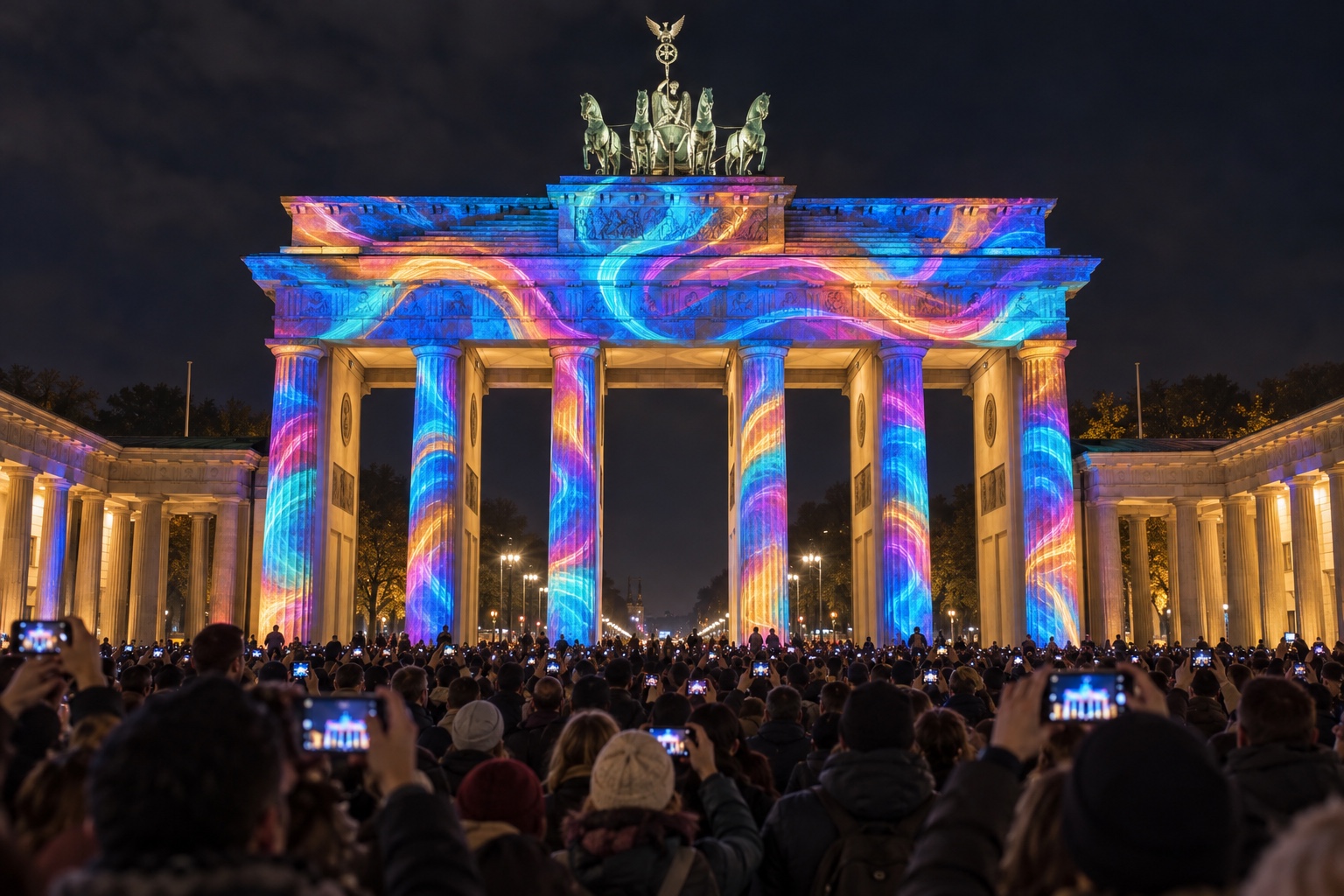
A familiar façade waits in darkness while people gather across the square. Then color reaches its columns, windows disappear and stone details return in an order daylight never suggested. The building has not changed, yet the crowd begins looking as though it has been given back.

Festival of Lights Berlin uses projections and illumination across landmarks, streets, squares and districts. The temptation is to treat the city as a chain of images, but the stronger experience is a second reading. Berlin’s architecture already carries political history, damage, reconstruction and daily familiarity. Light temporarily rearranges those layers, asking the traveler to see what was present before the projection and what remains after it ends.

Why This Festival Is Special

Berlin is already a city of surfaces carrying argument. Imperial buildings, memorial spaces, divided-city traces and contemporary glass all tell different versions of power and change. Projection adds another layer without permanently settling the meaning beneath it.

That impermanence makes the festival special. A façade can appear playful, fractured or newly monumental for a few minutes, then return to stone. The traveler learns that seeing differently does not require erasing what came before. Light becomes a method of rereading, and darkness provides the margin in which the city’s familiar details can surprise even people who pass them daily.

Festival Experience

What to Expect

Installations are distributed across central Berlin and may range from static illumination to timed video works with music. Popular landmarks draw dense crowds, while quieter sites allow more space to compare projection with architecture. Outdoor displays are often accessible without admission, but special interior shows, concerts or tours may operate separately.

Expect walking, waiting and repeated transitions between darkness and bright screens. Weather can make a long route tiring, and attempting every listed location reduces each work to proof of attendance. Choose a cluster, arrive before illumination and let the original building remain visible in memory. The festival becomes coherent when movement follows an idea or neighborhood rather than a maximum count.

Festival Highlights

  • The First Illumination – A dark façade receives color and the crowd’s conversation drops. Transformation begins through shared attention rather than physical change.
  • Bebelplatz – Multiple architectural surfaces can hold coordinated projection, allowing the square itself to become part of the composition.
  • Brandenburg Gate – A national symbol is temporarily rewritten by moving image. The tension between monument and projection gives the work its force.
  • Berlin Cathedral – Domes, stone and religious space respond differently to light than modern façades, making scale and history part of the visual language.
  • Potsdamer Platz – Contemporary architecture carries brightness without the same historical weight, revealing another chapter of Berlin’s urban identity.
  • The Quiet Side Street – Leaving a major installation restores darkness and ordinary windows. Contrast allows the previous work to settle rather than vanish.
  • The Final Fade – A projection ends and the building returns. The unchanged façade now holds details the traveler did not notice before.

Getting There & Around

Where It Happens

The festival spreads across Berlin rather than occupying one enclosed precinct. Central monuments, historic squares, government buildings and contemporary districts become separate stages connected by streets and transit. Bebelplatz, Potsdamer Platz and the Brandenburg Gate often function as recognizable anchors, but the current map should govern each visit.

Distance is editorial. Moving from one illuminated landmark to another passes through unlit architecture, memorials, shops and ordinary residential life. Those intervals prevent the city from becoming only projection surface. A strong route includes darkness because Berlin’s actual scale and texture teach the difference between an artwork and the place receiving it.

Getting Around

Public transport and walking work together. Use rail for large jumps between clusters, then explore each area on foot. Road traffic and parking add little value around dense central installations. Check late service and construction notices before committing to a final distant site.

Build a route with a clear beginning and end rather than zigzagging toward every famous image. Crowds can slow pavements and station entrances, so leave room around timed projections. Stop outside pedestrian flow before using a tripod or map. The successful route preserves enough attention for the final building instead of spending it all in transit.

Visitor Guide

Festival Food & Drink

Eat before beginning a long route or plan one seated pause between clusters. Cold weather and constant photography can hide fatigue until the group loses interest in both art and city. Carry water even when the air feels cool, and do not block pavements with food near crowded installations.

Berlin’s late dining and casual food fit a mobile festival evening. A warm snack can support movement, while a neighborhood meal after the final site gives the images time to become conversation.

**Must Try**
• Currywurst – Fast, warm and practical between distant light routes.
• Döner Kebab – A Berlin staple with enough substance for a long walking evening.
• Kartoffelpuffer – Crisp potato pancakes suited to cool weather and outdoor eating.
• Berliner Pfannkuchen – A filled pastry that pairs well with a late coffee.
• Local Beer – Best enjoyed after the route when navigation and photography are finished.

Budget & Costs

Many outdoor installations can be viewed freely, making transport, accommodation and food the main costs. Special interior programs, concerts, tours or reserved experiences may require separate admission. Verify each element rather than assuming the entire festival follows one access model.

A central hotel can reduce late transport but may cost more than a room near a direct rail line. Buy an appropriate transit pass if routes cross several districts. Budget time as carefully as money: chasing distant installations can spend an evening without deepening it. One coherent walk often provides better value than a costly attempt to collect the whole city.

Tips for First-Time Visitors

Choose one compact cluster for the first evening. Photograph the building before illumination, then look without a screen before making images. This sequence prevents the camera from becoming the only way the work was experienced.

Wear warm waterproof layers and shoes suited to long pavement distances. Bring a charged battery, but travel light; tripods can obstruct busy squares and may be restricted. Respect memorials, traffic lanes and residents while seeking a view. Confirm whether special shows require tickets. Free outdoor access does not make every doorway, road island or private threshold an acceptable photography position.

Safety

Darkness, traffic and crowd concentration require ordinary city awareness. Cross only at permitted points, keep valuables secure and move away from pedestrian flow before stopping for photographs. Never step into a roadway or bicycle lane for a clearer angle.

Cold rain and long walking can reduce concentration. Dress for the forecast, stay hydrated and end the route before fatigue makes navigation careless. Groups should choose a meeting point at each major square. Respect barriers and police or staff instructions. Light can make a façade feel detached from its surroundings, but the street remains real and operational throughout the performance.

Cultural Significance

Berlin’s architecture embodies successive political systems, destruction, division, reunification and reinvention. Lighting these buildings cannot be culturally neutral, even when the imagery is celebratory. Every projection enters a conversation already taking place on the façade.

The festival makes public art accessible across ordinary city space and encourages residents and visitors to gather after dark. Its strongest cultural function is renewed attention. Familiar monuments become questionable again: what do they symbolize, who controls their image and why does temporary color change the way history feels? Light offers no permanent answer, which allows the city to remain more complex than the spectacle.

Plan Your Journey

When to Go

The festival usually arrives in autumn, when evenings are cool and rain or wind can change walking comfort quickly. Go after dark for the full effect, but reach the first site before illumination begins if you want to understand how the architecture is being altered. Weeknights often permit more patient looking than peak weekend periods.

Visit on more than one evening if possible and give each route a separate geographic focus. Weather, technical changes and temporary crowd controls can affect what is visible. A later visit also reveals whether a work grows through repetition or depends on surprise. Always confirm official dates, nightly operating periods, participating sites and any ticketed elements before departure.

Where to Stay

Mitte offers immediate access to many landmark clusters and makes a late walk back practical. It is convenient for first-time visitors, but prices can be high and the district may encourage an overly narrow view of Berlin centered only on monumental sights.

Prenzlauer Berg, Kreuzberg, Friedrichshain and other well-connected neighborhoods can provide stronger evening life while keeping festival routes accessible by rail. Choose accommodation near more than one useful line because installations are distributed and service disruptions happen. The best base supports both the illuminated city and the ordinary morning after, when Berlin deserves to be seen without projection.

Bottom Line & Key Days

Bottom Line

Festival of Lights Berlin becomes meaningful when illumination changes how the traveler reads the city after the equipment is gone. The successful evening is not the one with the largest collection of bright façades. It is the one in which architecture, history, darkness and movement have been allowed to inform one another.

At the final site, the projection fades and people begin turning toward the station. Stone returns without ceremony. Yet a column now seems heavier, a repaired surface more visible and the building’s place in the square harder to ignore. Berlin has not been replaced by light; it has been briefly rearranged so the eye can encounter it again. The lasting image is therefore not the brightest frame, but the ordinary façade carrying new attention into the night.

Key Days

• Opening Evening – The first illumination carries collective anticipation and the heaviest desire to see headline works immediately. Choose one anchor and accept the crowd.
• Early Weeknight – Lower pressure can allow architecture, sound and projection cycles to be observed more patiently.
• Peak Weekend – Streets and squares gain festival energy while transport and photography positions become more contested.
• Closing Evening – Final viewing brings urgency, but the strongest choice is often returning to one work with a more informed eye.

Ready to Experience Festival of Lights Berlin?

You've explored what makes this festival special. Now it's time to plan your trip. Compare flights, book your hotel, arrange transportation, and take care of your travel essentials—all in one place.

✈ Find Flights

Loading booking widget...

Booking is completed on Expedia in a new tab.

🏨 Find Hotels

Search places to stay

Powered by Booking.com

Booking is completed on Booking.com in a new tab.

Rail & Bus Travel

Compare train and coach routes for the journey.

Compare Routes

Things to Do

Discover tours and attractions before or after the festival.

Explore Experiences

eSIM Mobile Data

Stay connected abroad without traditional roaming charges.

Get an Airalo eSIM

Travel bookings are provided by our trusted partners. We may earn a commission when you book through these links, at no additional cost to you.

Independent Editorial Standards

Every Follow the Festivals guide is independently researched and regularly reviewed using official festival information, destination resources, and trusted travel references. We also welcome verified updates from festival organizers, destination marketing organizations, tourism partners, and local experts to help keep our guides accurate, current, and useful for travelers.

Represent this festival or have a verified update to share? We'd love to hear from you through our contact page.

Photo Credits