
Follow the Festivals

Fête de la Musique

Fête de la Musique

Paris, France

2027-06-21 - 2027-06-21

The Story

Festival Overview

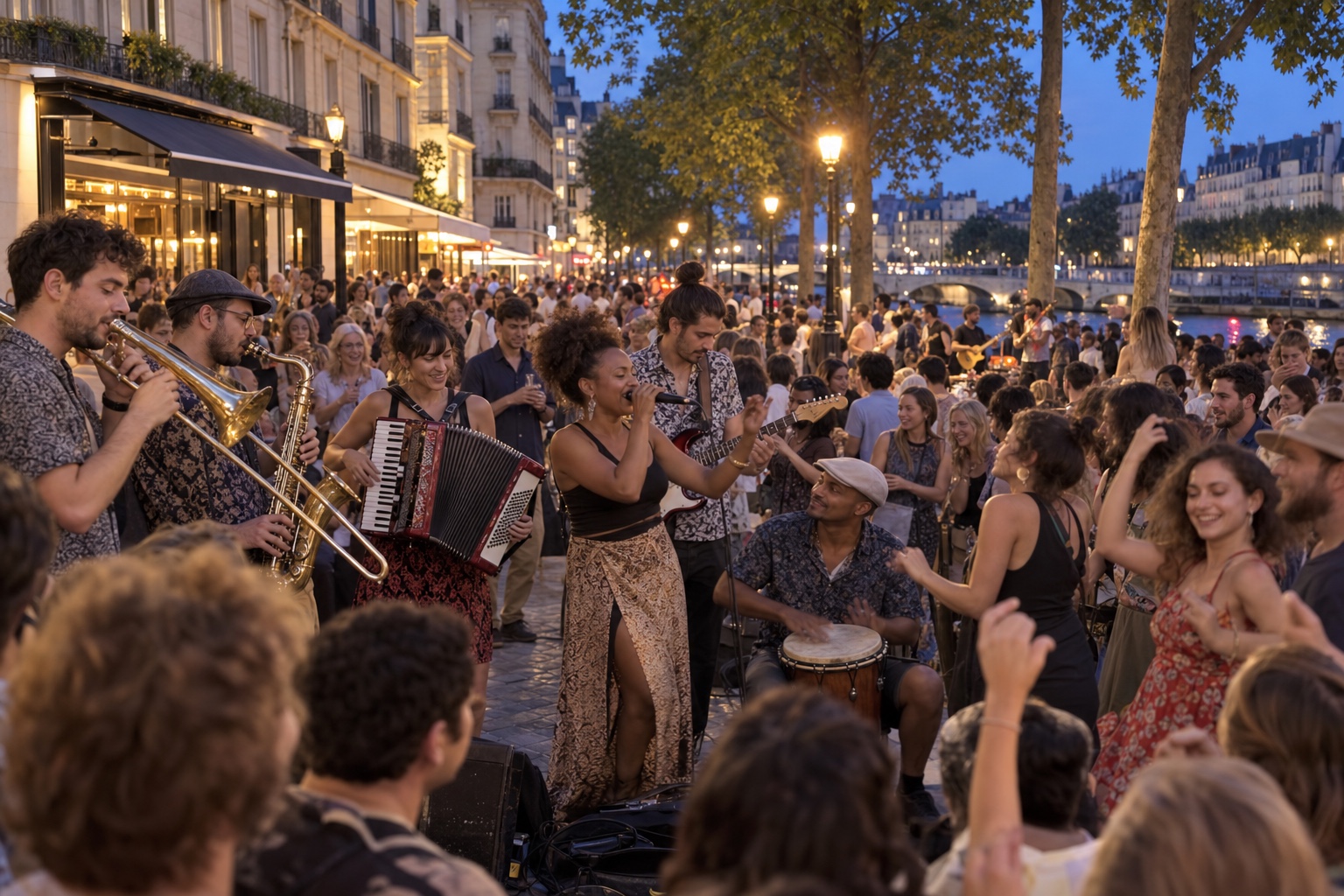
On the June solstice, Paris turns music into a citywide public practice. Fête de la Musique places amateur players beside established performers in streets, squares, churches, parks, courtyards, cultural institutions, bars, and purpose-built stages. The result is not one concert with a perimeter but thousands of overlapping encounters shaped by the neighborhoods that host them.

Paris rewards selective listening. A traveler might hear a choir beneath stone vaults, brass at a corner, electronic music beside the Seine, and a student band outside a café within the same evening. Large programmed stages draw the densest crowds, while the festival’s character often appears in smaller performances discovered on foot. Choose one part of the city as a base and let nearby sounds guide the rest of the night.

Why This Festival Is Special

Fête de la Musique changes the relationship between Paris and sound. Monumental spaces matter, but so do doorways, courtyards, small churches, and corners where a player can gather strangers without a formal invitation. The listener encounters the city through the people who practice music there.

Its distinction lies in proximity and contrast: rehearsal and performance, amateur and professional, sacred acoustics and street amplification, planned concert and accidental discovery. A favorite memory may not appear on the official map at all. It can be the moment a block pauses for one song and then releases everyone back into the summer night.

Festival Experience

What to Expect

Early in the day, the festival can feel dispersed: rehearsals, school groups, acoustic sets, and cultural programs appear within an otherwise ordinary Paris. By late afternoon, sidewalks fill, café fronts become stages, and listeners gather wherever a performance creates enough room. Sound carries between blocks, so polished concerts and spontaneous playing frequently overlap.

The scale varies enormously. A church recital may require quiet attention and limited seating; a neighborhood rock band may have no barrier at all; a prominent electronic or pop stage can produce a tightly managed crowd with security checks. Most public performances are free, but capacity, reservations, or venue rules may still apply.

After dark, popular areas become slow and loud. The pleasure comes from accepting that discovery will replace a perfect schedule, while retaining one clear meeting place and return route. Expect queues for toilets and food, patchy mobile service in dense crowds, transit changes, and a gradual rather than coordinated finish.

Festival Highlights

  • Hearing skilled amateurs and professional musicians share the same public night
  • Moving from a formal recital to an improvised street performance within a few blocks
  • Watching a familiar Paris square or riverbank become a listening space
  • Exploring one arrondissement through its local venues, residents, and musical tastes
  • Staying past sunset as scattered daytime sets develop into a citywide nighttime gathering

Getting There & Around

Where It Happens

The festival spreads across all of Paris. Major public concerts may occupy prominent squares, parks, riverfront spaces, institutional courtyards, or broad avenues, while independent performances appear outside cafés, music schools, churches, galleries, and neighborhood associations. Activity can change sharply from one block to the next.

There is no complete route and no useful way to cover the whole city. Treat the official map as a collection of clusters, then choose one or two connected by a simple Metro line or a comfortable walk. Bridges, narrow streets, security controls, and packed station entrances slow movement after dark. Confirm the precise address and access point for any priority performance.

Getting Around

Walking and the Metro are the best combination, but both require patience. Use transit to reach the selected district early, then explore on foot without repeatedly crossing Paris. Some stations, bus routes, roads, and river crossings may close or change access as crowds grow. Save an offline map and identify two nearby stations rather than relying on one entrance.

Bicycles and scooters are awkward in dense pedestrian areas, and parking is impractical. Taxis cannot reliably reach streets under control. Agree on a fixed meeting point away from the loudest stage, because calls and messages can fail. Before midnight, check current service notices and decide whether the final return is by Metro, night bus, licensed taxi, or walking with companions.

Visitor Guide

Festival Food & Drink

The festival is easier with an early meal and a flexible late snack. Reserve dinner only if it sits near the chosen cluster and does not consume the best performance hours. Busy streets create long waits, so carry water and favor established cafés, bakeries, markets, or vendors that handle food safely.

Must Try

• Jambon-beurre — A simple ham-and-butter baguette that travels well before the crowds tighten.
• Falafel — A practical Marais meal when bought before peak evening queues.
• Crêpe — A portable sweet or savory option from a busy stand with food prepared to order.
• Parisian pastry — Choose a neighborhood bakery for a daytime treat before outdoor programming begins.

Budget & Costs

Most street and public performances are free, making accommodation and ordinary Paris expenses the main costs. Central rooms can be expensive but reduce late transport uncertainty. Budget for meals, water, local transit, and a licensed ride home if service changes or fatigue makes walking unsafe.

Do not assume every indoor program is open without a reservation, and avoid unofficial offers that claim to sell access to a free public stage. A good-value plan uses a transit pass, an early casual meal, refillable water where appropriate, and free performances within one walkable cluster. Flexible hotel terms help if heat, weather, or transport disruption affects the trip.

Tips for First-Time Visitors

Choose one priority concert and one neighborhood, then allow room for unplanned discoveries. Screenshot the official listing, address, and access instructions on the day. Arrive early for limited spaces, carry water, use hearing protection near amplified stages, and wear shoes suited to hours of standing and walking.

Do not stop in doorways, bicycle lanes, or emergency routes to listen. Keep valuables in closed front-facing storage and establish a reunion point before entering a dense crowd. Ask before photographing individual performers at close range. If traveling with children, focus on daytime programs and identify toilets and a quiet exit before settling into a viewing spot.

Safety

Crowd density, traffic changes, heat, dehydration, loud sound, and petty theft are the primary concerns. Keep the phone and wallet secured, carry water, use earplugs near speakers, and leave a packed area before discomfort becomes urgency. Never stand in an active roadway merely because other spectators have done so.

Follow police, venue, and steward directions around barriers or evacuation paths. Watch footing around curbs, broken glass, cables, and crowded Metro stairs. Pace alcohol and stay with companions after dark. In hot weather, schedule shade and rest; during storms, leave exposed stages and trees. Use official transit information and licensed transport for the return.

Cultural Significance

France launched Fête de la Musique in the early 1980s around a direct idea: music should enter public space, participation should include amateurs as well as professionals, and audiences should have free access to live performance. Its June 21 date connects the event to the longest days of the year and gives outdoor music time to continue well after ordinary working hours.

Paris shows how that policy became social custom. Conservatories, institutions, neighborhood groups, clubs, religious spaces, commercial venues, and independent musicians all interpret the same invitation differently. The format has spread internationally, but its Paris expression remains tied to the density of the city and to the democratic proposition that a street can briefly become a stage without separating performer from public.

Plan Your Journey

When to Go

Fête de la Musique takes place every year on June 21. Daytime programs may serve families, schools, museums, and community groups, but the event gathers force from late afternoon through the night as work ends and more performers occupy public space. Arrive before evening if a named concert matters; central viewing areas can fill well before the first set.

June brings long daylight and often warm weather, though rain or a heat episode can alter outdoor plans. Stay through dusk to experience the change from informal neighborhood performance to a denser nighttime gathering. Build the trip around June 21 rather than a weekend assumption, and check the current official program shortly before travel because locations, access rules, and transit arrangements change each year.

Where to Stay

The Marais, Latin Quarter, Bastille, and central arrondissements provide immediate access to many performances but bring high room rates, street noise, and difficult late-night vehicle access. Canal Saint-Martin or République offers strong Metro connections and an active street atmosphere, while Montparnasse and the outer arrondissements can provide calmer lodging near direct lines.

Select a hotel by the final journey, not only by daytime sightseeing. A room within walking distance of the chosen neighborhood is valuable after Metro stations become crowded or entrances close. Ask about air-conditioning, sound insulation, and overnight reception. Travelers who need quiet should avoid rooms directly above bars, major squares, or streets listed as performance locations.

Bottom Line & Key Days

Bottom Line

Fête de la Musique is one of the best dates for hearing Paris as a lived-in city rather than a sequence of attractions. Its scale rewards restraint, comfortable walking, and a willingness to follow music beyond the most advertised stages.

Choose one district, secure the late return, and leave enough space in the plan for an unexpected performance.

Key Days

June 21 — Daytime

Use family programs, institutions, acoustic sets, and neighborhood performances to explore before the largest crowds gather.

June 21 — Evening

Settle into the chosen cluster before dusk, when public concerts and street activity intensify across Paris.

Late-Night Return

Check live transit changes before the final set and leave with a confirmed station, night bus, walking route, or licensed ride.

Ready to Experience Fête de la Musique?

You've explored what makes this festival special. Now it's time to plan your trip. Compare flights, book your hotel, arrange transportation, and take care of your travel essentials—all in one place.

✈ Find Flights

Loading booking widget...

Booking is completed on Expedia in a new tab.

🏨 Find Hotels

Search places to stay

Powered by Booking.com

Booking is completed on Booking.com in a new tab.

Rail & Bus Travel

Compare train and coach routes for the journey.

Compare Routes

Things to Do

Discover tours and attractions before or after the festival.

Explore Experiences

eSIM Mobile Data

Stay connected abroad without traditional roaming charges.

Get an Airalo eSIM

Travel bookings are provided by our trusted partners. We may earn a commission when you book through these links, at no additional cost to you.

Independent Editorial Standards

Every Follow the Festivals guide is independently researched and regularly reviewed using official festival information, destination resources, and trusted travel references. We also welcome verified updates from festival organizers, destination marketing organizations, tourism partners, and local experts to help keep our guides accurate, current, and useful for travelers.

Represent this festival or have a verified update to share? We'd love to hear from you through our contact page.