
Follow the Festivals

Mohacs Buso Carnival

Mohacs Buso Carnival

Mohacs, Hungary

2027-02-04 - 2027-02-09

The Story

Festival Overview

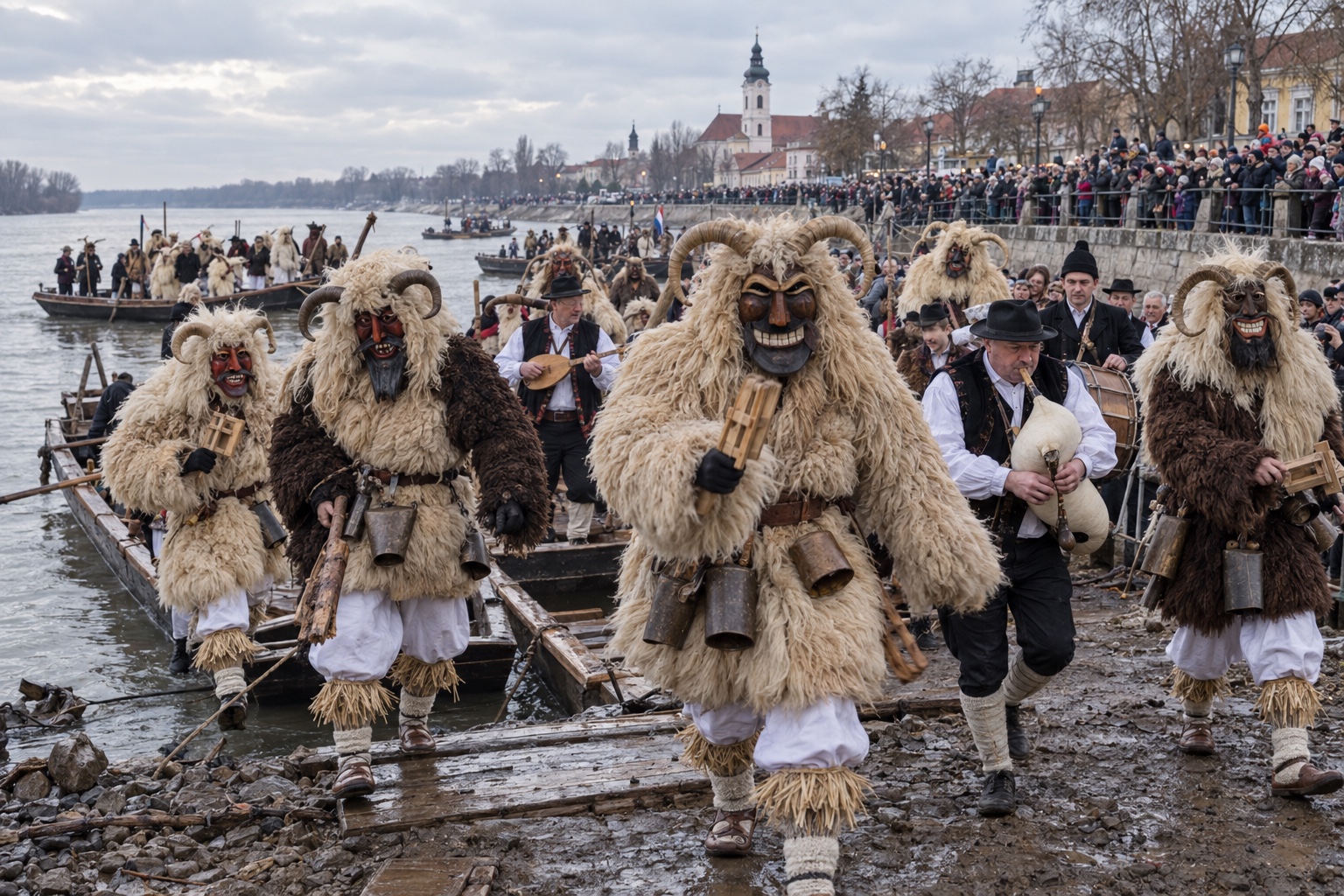
A bell, horn or wooden rattle sounds before the masked figure reaches the square. The busó wears a carved wooden face, wool turned outward and enough noise to disrupt ordinary winter. Across Mohács, groups cross the Danube, process through streets, dance, joke and gather around fires that symbolically carry the cold season away. Busójárás belongs to the town’s Šokac Croatian heritage and has become a wider emblem of Mohács. Its power does not come from one parade. Mask carving, tambura music, dance houses, family participation, food and self-organized busó groups give the custom continuity.

Visitors must accept close contact and unpredictability. Busós may tease spectators, vehicles and horses move through crowded streets, and the sound is physical. The correct response is not fear or entitlement, but alert participation. Mohács offers a rare winter carnival where the town remains the author of its own transformation.

Why This Festival Is Special

Busójárás is special because disguise strengthens community identity while concealing individual faces. The wooden face makes an individual anonymous, yet group style, craft lineage and local relationships become more visible. Fearsome appearance produces recognition among those who understand the code.

The town is not a backdrop. Boats cross the Danube, squares hold fires, courtyards reveal preparation and streets carry noise between them. Moving through Mohács explains the custom more clearly than watching a single stage.

The festival also completes its thought. Winter is embodied, mocked, launched, burned and finally dismissed. Sunday offers grand public theater; Tuesday closes the ritual with local confidence.

Visitors remember masks, but the lasting insight is transmission. A child’s small costume, an artisan carving and an established group entering the square belong to one system. Mohács makes heritage feel alive because every generation has a role in frightening winter away.

Festival Experience

What to Expect

Expect noise at close range. Busós carry rattles, horns and other sound-making tools, while carts, horses and machines add movement. The masks are intentionally unsettling, and playful encounters may collapse the distance between performer and spectator. Remain attentive and communicate discomfort clearly without obstructing the custom.

Sunday is extremely crowded. Sightlines can disappear, restaurants fill and mobile movement slows. Arrive early, eat before the procession and identify a meeting point. Families may prefer earlier days for mask carving, children’s busó programs and dance.

This is not a polished parade isolated behind barriers. Self-organized groups bring different styles, objects and local relationships. Watch how costumes differ and how musicians sustain movement. Fire closes the day symbolically, but the deeper experience is seeing a community use disguise to reveal belonging. The strongest viewing comes from patience: remain in one place long enough to distinguish group identities.

Festival Highlights

  • Danube Crossing – Busó groups arrive by boat and transform the waterfront into a threshold. Reach the viewing area early and keep embarkation routes clear.
  • Carnival Sunday Procession – Masks, wagons, horses and music move through Mohács at maximum scale. Hold one position and never step into the route.
  • Great Bonfire – The town gathers as winter is symbolically burned. Follow barriers, wind instructions and child-safety guidance.
  • Coffin Launch – The symbolic winter coffin is committed to the Danube before the fire. Watch respectfully without crowding the waterfront edge.
  • Mask Carving – Demonstrations reveal individual craft beneath the fearsome public image. Ask before photographing artisans and buy directly when possible.
  • Tambura and Dance House – South Slavic music and communal dance place the custom in Šokac cultural life. Join only after watching the steps and local etiquette.
  • Busó Courtyard – Open preparation spaces reveal group identity, tools and costume assembly. Enter only when the program invites visitors.
  • Shrove Tuesday Farewell – The final coffin burning completes winter’s expulsion. Stay through the ending and let the smaller weekday crowd reveal the ritual’s local center.

Getting There & Around

Where It Happens

The city center, Széchenyi Square, Kóló Square, Danube waterfront and connecting streets form the ritual map. Carnival Sunday begins with preparation and the boat crossing from Mohács Island, then channels busó groups into a procession toward the center. The great fire gathers the crowd after daylight movement.

Busóudvar, the Kanizsai Dorottya Museum, craft sites and open courtyards explain masks, costume and community history. Multiple stages present tambura bands, folk dance and dance houses. The Selyemgyár cultural quarter may host additional arrivals or performances.

The center becomes difficult to cross once groups, wagons, horses and visitors fill it. Choose one side of the procession and use official crossings. Keep children close and never enter a moving group for a photograph.

Mohács is compact, but its festival geography changes by hour. Study the daily official map and allow the town’s ritual sequence to determine movement.

Getting Around

Central Mohács becomes pedestrian territory during the busiest events. Road closures and visitor volume make ordinary driving impractical. Follow official parking guidance and walk from designated areas. Travelers approaching from selected directions may use the Újmohács side and ferry or passenger boats when recommended.

Arrive early on Sunday. Late drivers can spend the most important hours in traffic. If based in Pécs, verify bus or organized transfer times and the return after the bonfire.

Inside town, use fixed landmarks and official crossings. A destination across the parade route may remain inaccessible. Carts, horses and noisy groups require extra space, especially for children and mobility-sensitive visitors.

Waterfront surfaces, cobbles and mud demand stable waterproof shoes. After dark, stay on active streets and use known transport. The strongest plan parks once, walks deliberately and allows the carnival to pass without repeatedly chasing it.

Visitor Guide

Festival Food & Drink

Food is part of Busójárás hospitality and winter endurance. Eat before Sunday’s main procession, when central restaurants and stalls face their greatest demand. Choose hot, high-turnover dishes and keep hands free for crowded streets. A warm meal also restores attention after hours outdoors.

**Must Try**
• Sokac bean stew – A robust regional preparation often cooked publicly during carnival.
• Fish soup – Danube-region paprika broth, commonly made with river fish.
• Sausages – Grilled or smoked meat served with bread, mustard and pickles.
• Lángos – Fried dough topped with garlic, sour cream or cheese.
• Fánk – Carnival doughnuts associated with the season.
• Pálinka – Fruit spirit offered widely; consume sparingly in cold, crowded conditions.

Warm wine and spirits can create a false sense of warmth. Alternate with water and hot nonalcoholic drinks. Reserve one seated meal outside peak hours so Šokac and Hungarian cooking receives more attention than a hurried street snack.

Budget & Costs

Many street events are free, but lodging, transport and food rise around the main weekend. Reserve a central room early or calculate the full cost of repeated travel from Pécs. A cheap distant stay may lose value through parking, fuel and missed hours. Museums, workshops and selected activities may charge admission. Craft purchases deserve a separate budget because a mask or handmade object carries real labor. Buy directly from recognized makers and avoid cheap imitations that detach imagery from the community.

Food remains manageable when a seated lunch replaces repeated festival snacks. Carry small forints while keeping most funds secure; payment options vary among stalls.

Add contingency for winter weather, alternative transport or an extra night. The festival’s best experiences do not require premium access. Value comes from time: an early arrival, a complete Sunday sequence and Tuesday’s closing teach more than money spent chasing every stage.

Tips for First-Time Visitors

Learn that Busójárás is a living Šokac tradition, not a monster costume festival invented for visitors. Read about the clothing, mask craft, boat crossing and winter coffin before arrival. That context changes playful intimidation into cultural language.

Dress for mud and cold. Carry minimal valuables, hearing protection for children and a portable battery. Keep cameras close to the body and ask permission for portraits or workshop images.

Do not touch masks, grab costumes or block busó groups. Some interaction is boisterous; step back clearly if uncomfortable. Stay outside horse and vehicle paths. Families should select a reunion point and write contact details for children.

Use Friday or Saturday for museums, crafts and dance, then approach Sunday with fewer objectives. Return Tuesday if possible. The final burning shows that the custom’s meaning extends beyond the most crowded procession and completes the editorial journey naturally.

Safety

Noise, fire, horses, carts and dense crowds are the central risks. Keep outside procession lanes and obey barriers around bonfires and pyrotechnics. Children need close supervision and hearing protection. Never approach an animal from behind or enter a working group.

Wear waterproof, slip-resistant shoes and layered clothing. Mud, ice and cobbles change footing. Fire warmth can encourage unsafe crowd compression; maintain an exit route and follow wind-related instructions.

Secure valuables in front and limit phone use while moving. Agree on a fixed meeting place because mobile contact may fail. Drink moderately; pálinka does not protect against cold and reduces judgment near the river and fire.

Use official parking and verified transport. The Danube waterfront requires particular care after dark. A respectful distance is not passive observation—it protects performers, animals, children and the traveler’s ability to experience the custom without becoming an obstacle.

Cultural Significance

Busójárás grew from the carnival customs of Mohács’s Šokac Croatian community. Wooden masks, woolen clothing, noise, procession and fire mark the transition out of winter while giving groups a space for disguise, self-expression and collective memory. UNESCO recognition acknowledges the tradition as intangible heritage.

Popular legend links the masks to frightening Ottoman forces away, but the official tradition itself cautions against treating that story as literal history. The custom’s documented strength lies in community transmission, not a simple military origin.

Mask carvers, musicians, families and self-organized busó groups pass knowledge across generations. Children participate before becoming adult bearers of the tradition. Visitors encounter a town where heritage is not performed by a single cast; it is distributed through social groups.

The busó has become an emblem of Mohács, but the festival remains meaningful because local people continue to decide how the figure moves, jokes, sounds and returns each year.

Plan Your Journey

When to Go

The celebration unfolds across six days at the end of the carnival season. Early weekdays offer children’s events, exhibitions and a gentler introduction before the streets transform completely. Saturday expands music, crafts and dance. Carnival Sunday carries the Danube crossing, principal procession, coffin launch and great bonfire. Shrove Tuesday closes the cycle with another procession and the burning of winter’s coffin.

Choose Sunday for maximum scale and Tuesday for ritual conclusion with somewhat less visitor pressure. Staying several nights reveals how masks move from workshop and neighborhood preparation into public ceremony.

February weather can be cold, wet, snowy or muddy. Waterproof boots, warm layers and gloves are essential. Arrive before the Sunday road surge and keep departure flexible around closures. Exact program times and routes must be checked each year. The carnival rewards travelers who see preparation and aftermath, not only the central spectacle.

Where to Stay

Mohács provides the deepest experience and the simplest walking access once streets close. Rooms are limited, so book early and confirm parking, heating and late check-in. A central property may be noisy, but it removes dependence on vehicles during the busiest hours.

Pécs offers far greater lodging and dining choice, yet the journey to Mohács becomes difficult on Carnival Sunday. Use organized transport, an early bus or a car parked according to official guidance. Do not assume an ordinary road approach will remain open.

Villages and guesthouses in Baranya can provide quiet regional stays, but require a sober driver and reliable winter-road plan. Visitors approaching from the east may find parking on the Újmohács side and crossing by passenger vessel useful when officially recommended.

Select lodging around the return after the bonfire, not the easy morning arrival. Warmth, dry footwear and a short night walk improve the following day more than luxury.

Bottom Line & Key Days

Bottom Line

When the winter coffin burns, the mask no longer looks like a souvenir image. It belongs to boats, mud, tambura rhythm, family groups and days of preparation. The visitor understands that Mohács has not staged a picturesque interruption; it has completed a seasonal argument in public.

Plan for the full argument. Arrive before Sunday, learn the craft, hold one reliable parade position and treat fire and noise with respect. Stay for Tuesday when possible. Warm clothing, early transport and modest alcohol make attention possible.

Busójárás leaves a powerful contradiction: concealment reveals belonging. Behind carved faces are artisans, neighbors and groups whose identities are well known to one another. The carnival welcomes outsiders, but it remains compelling because Mohács does not surrender authorship. Winter departs on the town’s terms, and the traveler’s task is to witness that confidence without getting in its way.

Key Days

• Small Carnival Opening – Children, exhibitions and early processions introduce the tradition at a gentler scale. Use the day for museums and orientation.

• Friday Cultural Program – Music, dance and mask exhibitions deepen context before the largest crowds. Learn the center’s walking routes.

• Saturday Craft and Dance – Workshops, cooking and multiple stages show the custom’s social infrastructure. Reserve energy for Sunday.

• Sunday Danube Crossing – Busó groups arrive by boat and transform the waterfront. Secure a position early and keep routes clear.

• Sunday Main Procession – Masks, horses, carts and music fill the center. Stay behind barriers and watch complete groups pass.

• Sunday Coffin and Bonfire – Winter is launched and burned through connected rituals. Protect children from crowd pressure and fire zones.

• Shrove Tuesday Burial – A final procession and coffin burning close carnival. Attend with fewer photographic ambitions and let the town finish its own story.

Ready to Experience Mohacs Buso Carnival?

You've explored what makes this festival special. Now it's time to plan your trip. Compare flights, book your hotel, arrange transportation, and take care of your travel essentials—all in one place.

✈ Find Flights

Loading booking widget...

Booking is completed on Expedia in a new tab.

🏨 Find Hotels

Search places to stay

Powered by Booking.com

Booking is completed on Booking.com in a new tab.

Rail & Bus Travel

Compare train and coach routes for the journey.

Compare Routes

Things to Do

Discover tours and attractions before or after the festival.

Explore Experiences

eSIM Mobile Data

Stay connected abroad without traditional roaming charges.

Get an Airalo eSIM

Travel bookings are provided by our trusted partners. We may earn a commission when you book through these links, at no additional cost to you.

Independent Editorial Standards

Every Follow the Festivals guide is independently researched and regularly reviewed using official festival information, destination resources, and trusted travel references. We also welcome verified updates from festival organizers, destination marketing organizations, tourism partners, and local experts to help keep our guides accurate, current, and useful for travelers.

Represent this festival or have a verified update to share? We'd love to hear from you through our contact page.