
Follow the Festivals

Oktoberfest Blumenau

Oktoberfest Blumenau

Blumenau, Brazil

2026-10-07 - 2026-10-25

The Story

Festival Overview

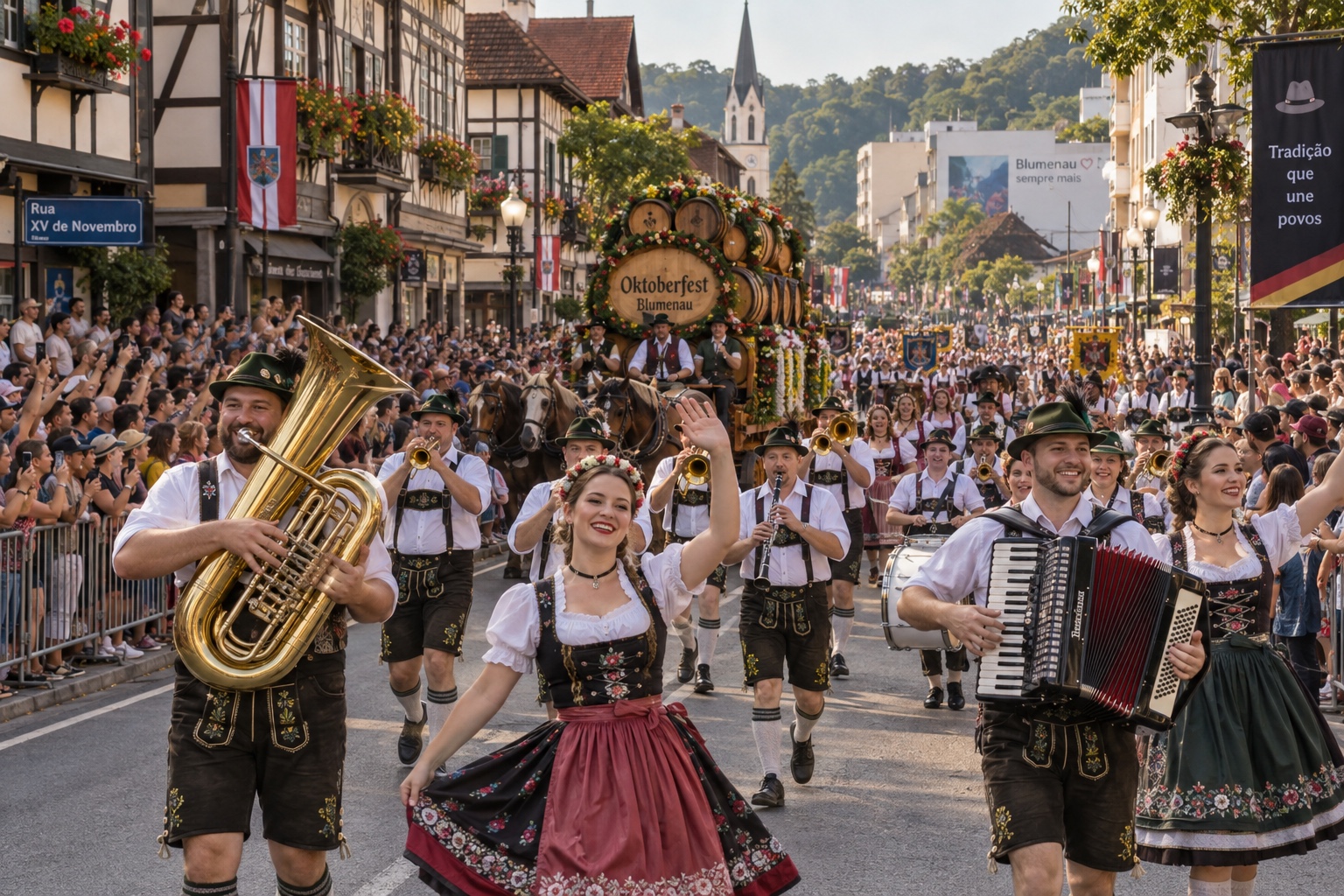
A parade turns Rua Quinze de Novembro into a moving family album. Brass bands, decorated vehicles, dance groups and hunting clubs pass crowds who recognize the references before visitors do. Later, those same traditions enter the pavilions as music, food and communal tables. Oktoberfest

Blumenau is a multiweek celebration of the city’s German Brazilian heritage, centered on Parque Vila Germânica and extending through public parades. Beer is prominent, but the event’s deeper subject is continuity: how immigration history, local institutions and contemporary tourism keep reshaping one another.

The traveler experiences it best by combining street and pavilion. A parade shows who is representing the city; a quieter meal explains the food; an evening hall reveals how participation turns heritage into celebration. Drinking may accompany that journey, but it should never become the journey’s organizing principle. The traveler understands the festival more clearly after seeing both settings. The street shows who is celebrating and why; the pavilions show how that inherited identity becomes an open, contemporary night out.

Why This Festival Is Special

Blumenau’s Oktoberfest does not become meaningful by reproducing Bavaria perfectly. Its power comes from showing what German traditions became after generations in Brazil: preserved, adapted, commercialized and still capable of organizing community life.

The traveler can hear that history moving between settings. A parade group performs for neighbors in daylight. Hours later, a band converts similar references into pavilion celebration. Food carries family memory while beer branding speaks to a modern tourism economy.

Invest time in the connection between street and hall. The float, dance and dish begin to explain one another. Blumenau is special because the festival’s borrowed name contains a local story that could not have been written anywhere else. The festival’s finest moments are often modest: a family applauding its neighbors in the parade, a musician adjusting to a table’s singing, or a baker explaining a cake remembered from childhood. Those details give the spectacle its credibility.

Festival Experience

What to Expect

Inside the pavilions, expect bands, dancing, communal tables, German Brazilian dishes, beer service, traditional dress and a crowd that becomes louder as the evening progresses. Popular nights can feel compressed, with food lines and limited seating. Parades offer a more intergenerational atmosphere. Decorated floats, music and community groups connect festival symbols to industries, clubs and neighborhoods. The city becomes participant, not backdrop.

Alcohol is visible, yet many of the most valuable experiences occur before heavy drinking controls the room. Eat early, watch dancers closely and move between halls while orientation remains easy. The traveler should expect both sincere cultural pride and commercial festival machinery. Holding those together produces a more accurate understanding than treating the event as an imported Munich replica. Conversation is part of the event’s rhythm. Shared tables and dance floors can turn strangers into temporary companions, but no visitor owes the hall constant participation. A quieter meal or early walk often restores the energy needed for the next band.

Festival Highlights

  • Opening Parade – The first procession declares that the festival belongs to the city before it belongs to the venue. Stand where the route offers space and remain through the community groups, not only the largest floats.
  • Rua Quinze Processions – Music, dress and decorated vehicles turn central Blumenau into public theater. Early arrival improves sightlines and respects residents who need street access.
  • Vila Itoupava Parade – A district setting brings the celebration closer to community traditions beyond the central tourism corridor. The journey requires extra planning and rewards visitors seeking local context.
  • Pavilion Bands – Live polka, brass and popular music organize the communal mood. Listen before choosing a table; the right hall depends on whether the group wants dancing, conversation or spectacle.
  • Germanic Dance – Choreography turns inherited form into living social practice. Give a complete performance attention, since passing glimpses reduce skill to costume.
  • Communal Tables – Strangers share space, food and song, making sociability part of the architecture. Approach with courtesy and understand that another group’s celebration is not open seating without invitation.
  • The City After the Parade – Restaurants, façades and ordinary streets retain the festival’s references after the procession passes. Walking slowly reveals what the temporary spectacle drew from permanent Blumenau.

Getting There & Around

Where It Happens

Parque Vila Germânica is the festival’s operational heart, with large pavilions, stages, food, beer service and themed public areas. The complex concentrates music and social energy, and each hall may carry a different sound and crowd density.

Official parades move through central streets, especially Rua Quinze de Novembro, while some programming reaches districts tied closely to local German Brazilian life. These processions bring clubs, families and institutions into public view.

The two settings teach different lessons. Vila Germânica shows how heritage becomes a contemporary tourism engine. The parade route shows who continues to perform, build and transmit that heritage. Travelers who remain only inside the beer halls see the festival’s volume but miss its civic authorship. Treat these places as one connected story, not interchangeable venues. A parade afternoon in the historic center and an evening at Vila Germânica reveal different social scales; Vila Itoupava rewards visitors prepared for a separate excursion.

Getting Around

Blumenau’s center and Vila Germânica can be manageable on foot from a well-positioned hotel. Rain, heat and crowded pavements make the same distance feel longer at night, so test the route during daylight.

Use official festival buses, licensed taxis or verified rides when walking is impractical. Parade closures reshape central traffic, and a pickup point on the wrong side of the route can become inaccessible. A designated sober driver must remain sober; festival parking does not solve the return risk.

Inside Vila Germânica, identify each pavilion and the exit before drinking begins. Groups should select one reunion landmark and avoid drifting between halls without communication. After major concerts, waiting for the first crowd to clear may improve the journey. Travelers visiting Vila Itoupava or breweries outside the center need a separate daytime transport plan, not an extension of the evening’s improvisation.

Visitor Guide

Festival Food & Drink

Food gives the festival cultural weight beyond beer. Pavilion counters serve hearty dishes suited to long evenings, but peak queues can make choice feel mechanical. Eat before the main crowd, share portions and leave one meal for a quieter city restaurant where the cooking can be experienced without amplified music.

Beer ranges from large labels to regional brewing traditions. Taste slowly, drink water and alternate with food. The local brewing story matters more when flavor remains perceptible.

**Must Try**
• Eisbein – Pork knuckle delivers the festival’s most substantial plate and is best shared.
• Bratwurst – Sausage in a simple serving works well before the halls become crowded.
• Spätzle – Soft egg noodles offer comfort beside richer meats and sauces.
• Sauerkraut – Fermented cabbage brings acidity that balances heavy dishes.
• Cuca – Crumb-topped cake expresses southern Brazilian German baking traditions.
• Regional Beer – A measured tasting connects agriculture, craft and the city’s contemporary identity.

Budget & Costs

Accommodation rises around parade weekends and popular nights. Staying within walking distance may cost more, yet it can remove repeated ride expenses and the safety problem of a late return. Reserve early with clear cancellation terms. Admission varies by day and may include free or reduced periods under current rules. Confirm those conditions officially. Food, beer, souvenir mugs and traditional clothing can expand spending quickly, especially across multiple nights.

Set separate budgets for meals, tasting and merchandise. A regional restaurant meal may offer greater cultural value than another round inside a crowded pavilion. Include rain gear, local transport and a sober return. Visitors traveling from distant airports should account for the transfer to Blumenau and avoid scheduling a tight departure after the final night. Set a separate allowance for regional food, transport and any excursion beyond the central corridor. The drink price is visible; the cumulative cost of repeated rides, snacks and convenience purchases is what usually unsettles an otherwise sensible plan.

Tips for First-Time Visitors

Attend one parade and one pavilion session. That pairing prevents the festival from collapsing into a beer-hall stereotype. At the parade, remain attentive to community groups and local references; inside, identify a performance worth watching from beginning to end.

Traditional clothing may affect ticket conditions when it meets official rules, but costume should never be assembled casually from caricature. Buy or borrow from knowledgeable local sources and wear it with respect.

Carry minimal belongings, water and rain protection allowed by current policy. Re-entry restrictions can make an early departure final, so complete necessary errands before entering. Set a drink limit while judgment is clear, establish transport and keep the hotel address offline. The first-time visitor gains more from tasting, listening and asking questions than from matching the pace of the loudest table. Learn the current entry, re-entry and age rules before leaving the hotel. Keep identification accessible, carry only what the venue permits and decide how much alcohol fits the evening before the first crowded toast makes that judgment less reliable.

Safety

Alcohol management is the central safety responsibility. Eat, hydrate, count drinks and use transport arranged before entering. Never drive after drinking, and do not accept an unverified ride because official queues feel slow.

Crowded halls require awareness near stages, exits and service lines. Move toward open space when pressure builds. Traditional costumes and accessories should not create sharp edges or tripping hazards, and footwear must handle wet streets.

Follow bag, age and re-entry rules, which may change by edition. Keep valuables secure and supervise children closely. Spring storms can affect streets and river conditions, so monitor official weather and city guidance. A group member who becomes ill or disoriented needs staff support immediately. The festival is generous enough to enjoy without testing personal limits. Large halls can separate groups quickly, especially after a performance ends. Select a fixed meeting place, keep enough phone power for the return and do not let an unfamiliar companion determine how everyone gets back to the accommodation.

Cultural Significance

Oktoberfest emerged in Blumenau after destructive floods, using celebration and tourism as part of civic recovery. Over time it became a major expression of German Brazilian identity and a powerful economic event for the city. The heritage on display is not a sealed European inheritance. Language, music, food, clubs and dress have developed within southern Brazil across generations. Portuguese voices, Brazilian festival scale and local institutions shape what visitors encounter.

Parades make this evolution visible. Textile history, hunting and shooting clubs, brewing, dance groups and neighborhood organizations appear beside contemporary sponsors and tourism imagery. Travelers should see that complexity. Respectful participation acknowledges both community pride and the selective storytelling involved in any large heritage festival. The event matters because Blumenau repeatedly chooses to perform its identity in public and negotiate what that identity means now. The public performance also carries productive tension. Heritage is selected, rehearsed and adapted for a modern audience, so the festival reveals both continuity and change. That process is more interesting than treating every costume as a museum label.

Plan Your Journey

When to Go

The festival occupies much of October, allowing several different ways to visit. Weekdays usually offer easier dining, more room to hear bands and a clearer view of pavilion architecture. Weekend nights carry the strongest party atmosphere and heaviest transport demand.

Parade days deserve separate consideration. A public procession adds civic depth that the enclosed halls cannot reproduce. Reach the route early, then avoid scheduling an immediate pavilion entrance that forces departure before the final groups pass.

Spring weather in the Itajaí Valley can bring heat, humidity and rain. Plan clothing for outdoor waiting and indoor crowds. A two-night stay allows one cultural day and one celebratory evening without compressing food, parade and music into a single exhausting block. Confirm the current parade program, admission windows, re-entry policy, age rules and transport services before travel. Weather can change the calculation. Rain affects parade comfort and road movement, while warm evenings intensify crowded halls. Keep one outdoor plan flexible and confirm the current program before committing the entire visit to a single day.

Where to Stay

Vila Germânica and the Velha area offer the shortest relationship to the main venue. Walking can remove the hardest late-night transport problem, although nearby rooms sell early and street noise may continue after the halls close. Central Blumenau supports restaurants, historic streets and access to parade routes. It creates a fuller city experience and may still permit walking or a short official transport connection. Visitors should check the river crossing and the exact hotel-to-venue route, since apparent proximity can conceal a tiring walk in rain or heat.

Outer districts and neighboring municipalities may provide lower rates, but they require a dependable driver or festival service. Alcohol makes casual car planning unsafe. Select the base with the return journey already solved; the room’s value appears after midnight, when crowds leave together and surge pricing or road controls narrow the options. Before booking, study the return journey after the final music. A room that looks central may still involve a steep walk or an awkward late transfer, while a modest property on a direct route can make repeated festival nights far easier.

Bottom Line & Key Days

Bottom Line

Oktoberfest Blumenau is easiest to misunderstand at its loudest. A crowded hall, raised mugs and a familiar festival name can make the experience appear generic. The parade corrects that impression. Families, clubs and workers carry local symbols through streets they use all year. Return to Vila Germânica after seeing that procession and the celebration changes. The dance has lineage. The food has a household life beyond the counter. Even the commercial scale becomes evidence of how strongly Blumenau has invested in this public identity.

The best traveler does not need to drink the most or complete every pavilion. They eat with attention, listen through a full song and leave safely. By morning, the street is ordinary again, but the knowledge remains: the festival was never imported whole. Blumenau built it from memory, recovery and repeated local participation. A successful visit therefore leaves room for daylight, conversation and recovery. The traveler who sees only the crowded pavilion receives the party; the one who also walks the city and watches the community assemble receives Blumenau.

Key Days

• Opening Parade – The festival enters public space through music, floats and community groups. Reach the route early and let the full procession establish context before visiting the halls.
• Weekday Pavilion Session – Lighter crowds make food, dance and conversation easier to experience. This is the best period for visitors who value cultural detail over peak nightlife.
• Weekend Parade – Larger audiences and afternoon energy create a powerful civic spectacle. Expect transport closures and reserve the evening plan separately.
• Vila Itoupava Day – District programming reveals traditions beyond the central venue. Arrange transport in advance and allow the location to carry the visit.
• Peak Saturday Night – Music and crowd intensity reach their strongest point. Eat early, set limits and use a confirmed sober return.
• Closing Period – Final performances carry affection and fatigue. Revisit the experience that mattered; rushing through every remaining hall rarely improves the farewell.

Ready to Experience Oktoberfest Blumenau?

You've explored what makes this festival special. Now it's time to plan your trip. Compare flights, book your hotel, arrange transportation, and take care of your travel essentials—all in one place.

✈ Find Flights

Loading booking widget...

Booking is completed on Expedia in a new tab.

🏨 Find Hotels

Search places to stay

Powered by Booking.com

Booking is completed on Booking.com in a new tab.

Rail & Bus Travel

Compare train and coach routes for the journey.

Compare Routes

Things to Do

Discover tours and attractions before or after the festival.

Explore Experiences

eSIM Mobile Data

Stay connected abroad without traditional roaming charges.

Get an Airalo eSIM

Travel bookings are provided by our trusted partners. We may earn a commission when you book through these links, at no additional cost to you.

Independent Editorial Standards

Every Follow the Festivals guide is independently researched and regularly reviewed using official festival information, destination resources, and trusted travel references. We also welcome verified updates from festival organizers, destination marketing organizations, tourism partners, and local experts to help keep our guides accurate, current, and useful for travelers.

Represent this festival or have a verified update to share? We'd love to hear from you through our contact page.