
Follow the Festivals

Rock al Parque

Rock al Parque

Bogotá, Colombia

2026-10-10 - 2026-10-12

The Story

Festival Overview

A guitar check rolls across Parque Simón Bolívar, rain sits somewhere in Bogotá’s gray sky, and the first audience begins spreading between stages with the calm ownership of people entering a public space that belongs to them.

Rock al Parque is a free outdoor festival, but “free” describes more than the ticket. The event gives a vast part of the city permission to gather around loud music without a commercial gate deciding who belongs.

The program reaches through metal, punk, ska, alternative rock, reggae, hardcore and other scenes, placing Colombian bands beside international visitors. Several stages run at once, so the experience is built from choices and transitions, not a single uninterrupted lineup.

The traveler should treat the festival as both concert and civic institution. Hear a recognized name, then spend equal attention on a Bogotá or Colombian act that earned the platform through the local ecosystem. The second performance may explain why this gathering has endured.

Why This Festival Is Special

Rock al Parque makes scale and access support the same idea. A field holding an international act also belongs to the district band that fought for a place on the program, and the audience can witness both without a ticket price dividing the day. That continuity gives the festival unusual moral weight.

The event also allows Bogotá’s contradictions to remain visible. It is orderly cultural policy filled with rebellious sound; a massive institution that depends on underground scenes; a gathering exposed to cold rain yet sustained by people who return. These tensions feel honest because the festival has grown through them. The rough edges belong to its credibility.

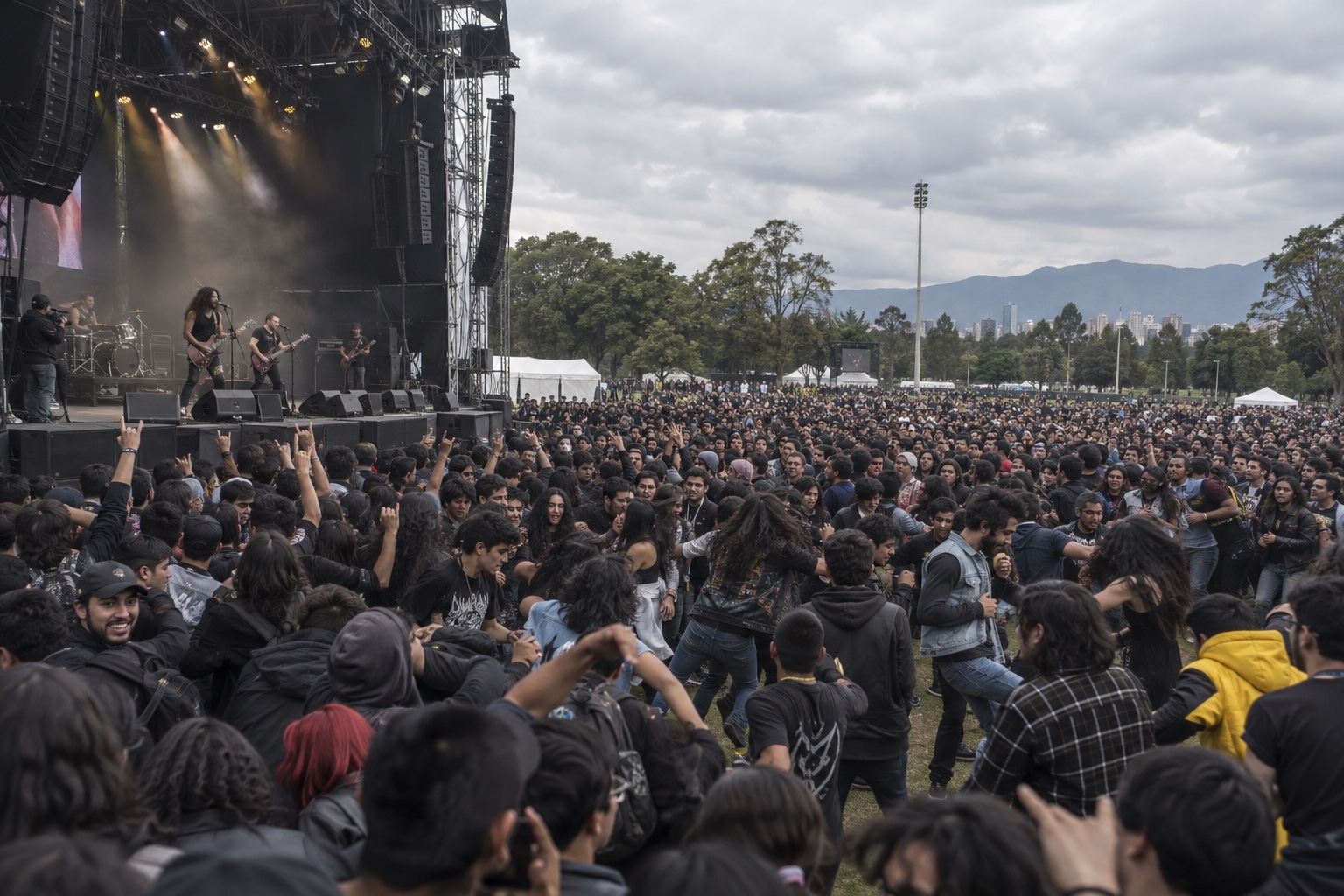
Its greatest image is not a celebrity close-up. It is the public field itself: mountains obscured by cloud, thousands of bodies on municipal ground and a Colombian artist hearing the city answer. The audience completes the cultural project.

Festival Experience

What to Expect

Expect a disciplined public operation around a raw musical experience. Entry screening, age requirements and prohibited-item rules are enforced, while inside the park mosh pits, rain, genre loyalties and stage migration create a less polished rhythm. Free admission encourages large attendance, so early decisions about stages and exits matter.

The audience is musically diverse and often deeply knowledgeable. Metal fans, ska dancers, punk communities, families and curious listeners can occupy the same grounds without wanting the same day. Read crowd behavior before entering a dense area. The edge of a pit can deliver intensity with more control than its center.

The program usually mixes established international acts, Latin American circulation and artists from Bogotá’s district scene. That local presence is not filler. It is one of the festival’s purposes. Arrive ready to listen before the names you recognize, and the day becomes an education in how Colombia’s rock ecosystem renews itself.

Festival Highlights

  • The First Local Set – An early Bogotá band often performs with everything at stake. A smaller audience and visible ambition can reveal more about the festival’s purpose than an effortless headline triumph.
  • Stage Migration – Walking between musical communities is part of the experience. Notice how clothing, movement and crowd density change as one sound gives way to another.
  • The Colombian Veteran – Artists connected to the festival’s history turn a concert into shared memory. Listen to the audience before the song begins; recognition may arrive as loudly as the chorus.
  • Latin American Exchange – Bands from across the region place Colombian rock inside a wider conversation. Give unfamiliar Spanish-language acts enough time to establish their own logic.
  • The Rain Set – Bogotá weather can force discomfort and create solidarity. With proper clothing and safe conditions, a wet performance can become the day’s defining communal image.
  • The Heavy Stage – Metal and hardcore audiences bring intense physical participation. Watch from the edge first, then decide how much proximity fits your comfort and experience.
  • The Public Field – Step back during one major performance and look across the entire park. The scale of free cultural access is itself one of Rock al Parque’s most important works.

Getting There & Around

Where It Happens

Parque Metropolitano Simón Bolívar is Bogotá’s great urban event landscape, a wide green space surrounded by major avenues in the geographic body of the city. Rock al Parque uses multiple outdoor stages, controlled entrances, food and service zones, turning the park into a temporary map of overlapping music communities. Distances are meaningful, especially when rain softens the ground or a popular set releases a large audience. Study the current entrance plan and stage names, because annual layouts can change. Choose one clear reunion point beyond the most obvious central landmark, which may become crowded precisely when the group needs it.

The park’s openness is essential to the festival’s identity. This is public land carrying a public cultural policy, not a fenced entertainment compound detached from Bogotá. When clouds descend over the mountains and a local band faces a huge field, the relationship between music, city and citizenship becomes visible.

Getting Around

Public transport is usually the most dependable approach to the park. TransMilenio routes and city buses serve the surrounding corridors, but station or road arrangements may change for crowd control. Consult current festival and Bogotá mobility guidance, then save the route offline before leaving the hotel.

Allow time for the final walk. Security perimeters can place entrances away from the side that looks closest on a map, and avenue crossings add friction. After the last acts, buses fill quickly and ride-hailing pickup points may shift beyond closures. Follow official signs to an active, well-lit transport area.

Cycling can be practical in Bogotá, and organizers have previously provided nearby bicycle parking, but bicycles and similar equipment are generally restricted inside. Use only current authorized facilities and bring weather protection. Groups should select a single return corridor before the music starts; splitting up to chase separate vehicles creates unnecessary confusion.

Visitor Guide

Festival Food & Drink

Eat before the first essential run of performances. Food areas can become congested during natural breaks, and crossing the park for a meal may cost the beginning of a set. Bogotá’s cool air can disguise dehydration, so drink water throughout the afternoon even when the body does not feel hot.

Inside, expect practical festival meals, snacks and nonalcoholic drinks subject to current vendors and regulations. The surrounding city offers the fuller culinary reward. A warm breakfast, late soup or neighborhood dinner can frame the outdoor hours and restore energy after rain.

**Must Try**
• Ajiaco – Bogotá’s potato and chicken soup, finished with local herbs and suited to a cold festival morning.
• Empanadas – Crisp corn pastries with savory fillings, best eaten hot with a measured spoonful of ají.
• Arepa – A versatile corn cake that may arrive grilled, filled or served beside breakfast.
• Tamal bogotano – Corn dough, meats and vegetables wrapped in leaves, substantial enough for a long outdoor day.
• Chocolate con queso – Hot chocolate served with cheese, a Bogotá combination that makes more sense in the mountain chill.
• Oblea – Thin wafers layered with arequipe and other sweets, ideal away from the densest crowd.

Budget & Costs

Admission has historically been free, but a free gate does not create a costless trip. Accommodation around a major weekend, transport, food, rain gear and post-festival rides all require planning. International visitors should carry a realistic Bogotá daily budget even when the central cultural experience asks for no ticket.

Book lodging with the return route in mind. A cheaper room reached only through an expensive late ride can reverse the apparent saving. Keep small purchases controlled inside the grounds and reserve money for a proper meal before or after the event, when food quality and choice improve.

The best use of the saved ticket cost is deeper time in the city: another night, a local venue, a museum or a guided experience that places the music within Bogotá. Set aside emergency transport funds separately. Rain, fatigue or a changed exit can make the planned low-cost route unreasonable.

Tips for First-Time Visitors

Wear broken-in waterproof shoes and carry a compact rain layer that meets current entry rules. Umbrellas may be restricted and are awkward in crowds. Add sunscreen, a hat and a warm layer because altitude weather can reverse itself quickly. Keep identification accessible, especially where age controls apply. Download the daily schedule and circle one priority per stage, then remove at least one conflict. Racing continuously across wet ground produces a long list of partial sets and little musical memory. Meet the local program early, eat before evening density and keep hearing protection in place near powerful systems.

Learn basic crowd language. If a pit opens, move outward unless you actively want it. Help anyone who falls and follow staff direction without argument. The festival’s culture depends on shared conduct, and a visitor participates in that culture through small decisions long before posting a photograph.

Safety

Crowd movement requires active attention near stage fronts, pits, entrances and the release after a major act. Watch from the edge before entering an intense area, secure glasses and loose belongings, and leave when pressure stops feeling voluntary. Staff instructions should override personal plans. Prepare for altitude, cold rain and sun. Hydrate, eat, use sunscreen and keep a dry layer protected inside the bag. Mud and uneven grass increase fall risk, especially after dark. Current rules may prohibit alcohol, large bags, professional equipment, pets and wheeled devices; verify every item before travel.

Use front-facing storage for valuables and avoid displaying a phone during compressed movement. Establish a meeting point and a final departure time with companions. On exit, remain with the official crowd flow toward lit transport corridors. A shortcut through a quiet street is not an improvement simply because the main route is slow.

Cultural Significance

Rock al Parque emerged when Bogotá’s rock scenes needed public visibility, infrastructure and a place to coexist. Over decades it became a flagship of the city’s Festivales al Parque policy, demonstrating that municipal cultural investment could build audiences, circulate artists and turn public space into a site of collective expression.

Its survival matters because rock in Colombia has never been only imported style. Local musicians have used it to speak about violence, urban life, class, identity and political frustration, while ska, metal, punk and alternative traditions developed distinct communities. The festival gives those histories a field large enough to meet one another.

Free entry remains central. It creates pressure and logistical difficulty, but it also prevents price from becoming the main cultural filter. Every vast crowd at Simón Bolívar is an argument that ambitious music programming can be treated as civic life, not a luxury product.

Plan Your Journey

When to Go

Rock al Parque is commonly held across a long weekend, though its position in Bogotá’s calendar can change. Confirm the official dates and daily lineup before arranging travel. Each day usually has a different musical balance, and genre preferences may matter more than the identity of the closing act. Bogotá’s high-altitude weather is the real scheduling partner. Sun, cold wind and hard rain can pass through the park in one afternoon. Earlier arrival gives time to clear security, understand the stage layout and claim a reasonable position before the major audience surge. It also exposes the visitor to local bands that often provide the day’s strongest sense of place.

Do not build a flight connection tightly around the final night. Wet exits, road controls and mass public transport can slow the return, while the festival itself may adjust operations for weather or safety. Give Bogotá at least one additional day so the city is more than accommodation around a concert.

Where to Stay

Chapinero offers restaurants, music venues and broad transport options, making it a strong base for travelers who want to connect the festival with Bogotá’s contemporary cultural life. Areas near Parque de la Noventa y Tres provide comfort and dining at a higher price, while La Candelaria gives historical atmosphere but involves a longer post-festival journey.

Staying near Parque Simón Bolívar can reduce distance, yet the immediate zone is dominated by major roads, event grounds and large facilities. Check the pedestrian route and nighttime transport before booking. A hotel that appears close on a map may sit across a difficult avenue or offer little to do during a rain-delayed morning.

The best base serves both the park and the rest of the visit. Access to TransMilenio or straightforward authorized transport matters after the crowd disperses. Ask the property how guests usually return from major events; a practical answer is more useful than a vague claim of central location.

Bottom Line & Key Days

Bottom Line

When the final sound decays, Parque Simón Bolívar does not feel emptied of meaning. Mud marks the paths, strangers repeat fragments of songs and the public begins negotiating its way back into Bogotá. The infrastructure disappears quickly; the sense of collective ownership remains. Rock al Parque deserves more than a headliner-led visit. Its value lies in the relationship between access, local artistic development and a crowd willing to inhabit difficult weather together. A traveler who spends the afternoon only waiting for one famous band has attended a concert. A traveler who listens across the program begins to understand the institution.

Leave with one Colombian name you did not know on arrival. Follow that artist into the city’s venues, recordings and history. The festival’s finest outcome is not that Bogotá hosted the world. It is that the world left paying closer attention to Bogotá.

Key Days

• Opening Day – The first program establishes the edition’s musical range and gives local artists an audience not yet worn by weather. Enter early and learn the grounds.
• Heavy Music Day – Metal, hardcore or punk programming can intensify crowd behavior. Observe from a safe edge before moving closer.
• Colombian Focus – District and national artists reveal the ecosystem the festival exists to support. Give them complete sets, not transitional minutes.
• International Exchange – Visiting Latin American and global bands widen the conversation. Compare how the Bogotá audience receives familiar and unfamiliar sounds.
• Rain-Affected Period – Weather can alter movement, footing and comfort. Slow the schedule, keep dry layers secured and follow operational guidance.
• Closing Night – Shared history and fatigue give final performances added emotion. Keep enough energy for the mass exit and one final local act whose name can travel home with you.

Ready to Experience Rock al Parque?

You've explored what makes this festival special. Now it's time to plan your trip. Compare flights, book your hotel, arrange transportation, and take care of your travel essentials—all in one place.

✈ Find Flights

Loading booking widget...

Booking is completed on Expedia in a new tab.

🏨 Find Hotels

Search places to stay

Powered by Booking.com

Booking is completed on Booking.com in a new tab.

Rail & Bus Travel

Compare train and coach routes for the journey.

Compare Routes

Things to Do

Discover tours and attractions before or after the festival.

Explore Experiences

eSIM Mobile Data

Stay connected abroad without traditional roaming charges.

Get an Airalo eSIM

Travel bookings are provided by our trusted partners. We may earn a commission when you book through these links, at no additional cost to you.

Independent Editorial Standards

Every Follow the Festivals guide is independently researched and regularly reviewed using official festival information, destination resources, and trusted travel references. We also welcome verified updates from festival organizers, destination marketing organizations, tourism partners, and local experts to help keep our guides accurate, current, and useful for travelers.

Represent this festival or have a verified update to share? We'd love to hear from you through our contact page.