
Follow the Festivals

Singapore Art Week

Singapore Art Week

Singapore, Singapore

2027-01-21 - 2027-01-31

The Story

Festival Overview

A museum opens late, a warehouse becomes an exhibition, and an artwork appears in the passage of an MRT station where commuters did not expect to become viewers. Singapore Art Week is not one fair or district. It is a temporary intensification of the island’s visual-arts ecosystem, linking national institutions, commercial galleries, independent spaces, public sites and artists’ projects.

The abundance can look frictionless because Singapore moves efficiently, but meaningful viewing still requires selection. A major museum, an art fair, a gallery enclave and a small artist-run project each ask for a different kind of attention. Moving too quickly turns those differences into branding.

Build the week around contrasts that reveal the local ecology. Pair civic scale with independent risk, international commerce with Southeast Asian practice, and polished precincts with work embedded in everyday neighborhoods. The strongest itinerary does not prove that art is everywhere. It learns why particular art needed to appear in that particular place.

Why This Festival Is Special

Singapore Art Week makes an entire visual ecosystem briefly visible at once. A national museum, global fair, independent room and artwork in everyday infrastructure can be experienced within one day, allowing the traveler to compare not only objects but the systems that present them.

The city’s compactness sharpens those comparisons. Institutional polish sits close to experimental scarcity; regional knowledge meets international capital; public art enters spaces governed by strong ideas of order and use. The contradictions are not distractions from the week. They are its most revealing material.

The event becomes special when movement produces understanding. A work seen in a gallery changes after a neighborhood visit; a public installation alters how the MRT is perceived; a talk gives language to a tension felt earlier. Singapore does not merely host the program. Its spatial and political conditions become part of the medium.

Festival Experience

What to Expect

Expect exhibitions, art fairs, installations, performances, screenings, studio visits, guided walks, talks and workshops produced by organizations of radically different size. Some events serve collectors and international visitors; others are grounded in local research, community practice or experimental exchange. The week becomes intelligible only when both are included. Singapore’s visual culture is regional as well as national. Work from Southeast Asia often addresses migration, land, memory, ecology, technology, colonial histories and rapid development through materials that may not fit familiar Western categories. Read labels, attend one curatorial talk and resist reducing unfamiliar references to general ideas of “Asia.”

Access systems vary. Museums may require timed tickets, fairs have paid entry, galleries are often free and small programs may need registration despite limited publicity. Save confirmations and addresses offline. Precise logistics create the freedom to slow down once a work deserves it.

Festival Highlights

  • National Gallery Singapore – Large exhibitions and regional art histories provide institutional scale. Give one collection or focused show enough time to establish context before visiting temporary spectacles.
  • Gillman Barracks – Galleries, project spaces and tropical architecture form a concentrated precinct. Walk the full circuit slowly and speak with staff about artists who recur across the week.
  • Singapore Art Museum Programs – Contemporary commissions often connect local and regional practices. Check the current venue, since programming can extend beyond a single museum building.
  • Art Fair Encounter – Commercial presentations reveal market priorities and international circulation. Select a few booths by geography or theme; visual speed is the enemy of useful looking.
  • Independent Space – A small exhibition, residency or artist-run project can expose questions absent from larger institutions. Conversation is often the key interpretive tool, so arrive with time and humility.
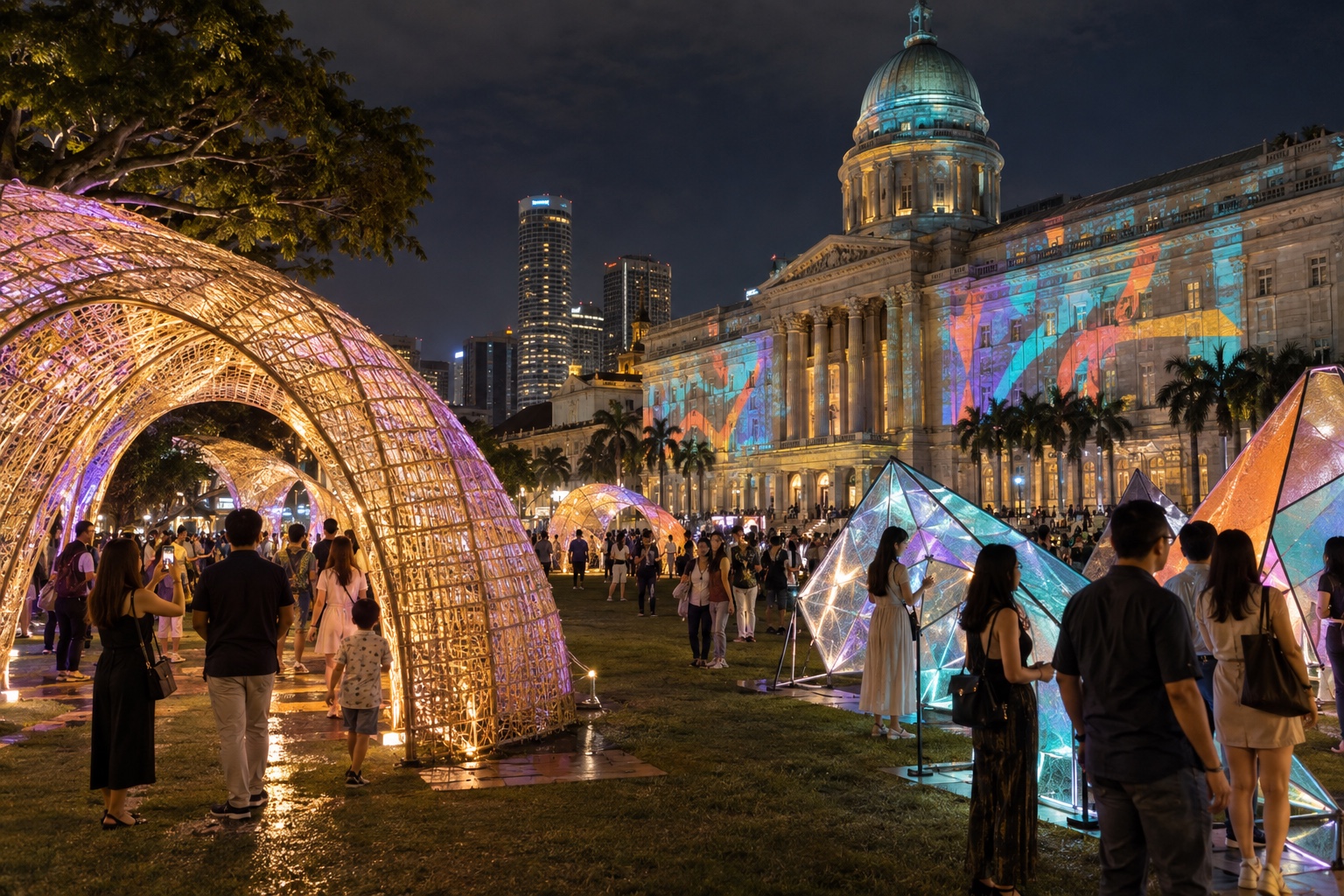
  • Public Art After Dark – Light, projection or outdoor installation changes familiar civic architecture. View once from the event center and again from the edge where commuters encounter it.
  • Guided Precinct Walk – A curator or artist can connect buildings, histories and works that appear unrelated on a map. Use the tour as orientation, then return independently to one site.
  • Artist Talk or Forum – Discussion reveals how practice is shaped by land, policy, funding and regional exchange. Choose a subject connected to works already seen so ideas remain grounded.
  • Neighborhood Intervention – Art in a housing estate, mall or everyday public space tests who the audience is. Pay attention to residents’ use of the site, not only to the installed object.

Getting There & Around

Where It Happens

Art Week’s defining venue is Singapore itself. The Civic District gathers major institutions and public commissions; Gillman Barracks concentrates galleries in former military buildings amid tropical greenery; Bras Basah and Bugis connect museums, schools and independent initiatives; Tanjong Pagar and other central districts add commercial and project spaces. Neighborhood venues and public infrastructure extend the map further.

These precincts should receive different treatment. National Gallery rewards sustained historical and curatorial attention. Gillman Barracks works as a walkable gallery circuit but requires transport planning and weather awareness. An independent space may occupy a modest room where conversation with the organizer is more important than the exhibition’s physical scale.

Do not turn the islandwide claim into a checklist. Select one precinct per half day and learn its internal relationships. Notice where art sits within colonial architecture, public housing, transit, retail or repurposed state land. Singapore’s spatial order is not a neutral background; artists and institutions continually negotiate with it.

Getting Around

The MRT makes an islandwide arts program possible, but it does not eliminate the last mile. Save each venue’s nearest exit, building level and walking route. Malls, civic complexes and repurposed sites can place an exhibition several minutes beyond the station even when the map pin looks exact.

Plan by precinct and avoid crossing the island for a single brief event unless it is truly essential. The Civic District and Bras Basah can support walking clusters; Gillman Barracks requires a more deliberate arrival and internal route; neighborhood projects should be paired with nearby food or architecture so the journey becomes part of the day.

Buses fill many gaps, while taxis and ride-hailing help during storms or after late programs. Covered walkways are extensive but not universal. A sudden downpour can delay a short outdoor transfer, so keep one indoor alternative nearby.

Do not schedule art at the speed of the transit system. Singapore may deliver the viewer efficiently, yet attention still needs recovery after a dense exhibition. One quiet MRT ride can be the interval that prevents the next venue from becoming visual noise.

Visitor Guide

Festival Food & Drink

Singapore’s food culture can shape the route without becoming another exhausting checklist. Use hawker centers near art precincts for efficient, specific meals, and schedule one longer dinner after the final venue. Heat makes hydration essential even when most exhibitions are air-conditioned.

The best pairing respects place: a Civic District day can reach nearby downtown food centers; Bugis opens toward Malay and Indian culinary traditions; gallery circuits may require eating before entering a less serviced zone. Clear trays and follow local etiquette.

**Must Try**
• Hainanese chicken rice – Poached or roasted chicken with fragrant rice, chili and ginger, simple enough to reveal every detail.
• Laksa – Coconut-rich noodle soup with spice and seafood, especially satisfying after a rainstorm.
• Roti prata – Crisp layered flatbread with curry, suited to breakfast before the first venue.
• Satay – Grilled skewers served with peanut sauce, cucumber and rice cakes, best shared.
• Kaya toast – Toast with coconut jam and butter, paired with eggs and coffee for a classic morning ritual.
• Ice kacang – Shaved ice with syrups and varied toppings, a cooling finish after an outdoor art walk.

Budget & Costs

Many galleries and public installations are free, while museums, fairs, tours and workshops may charge admission or require registration. Build the budget around two paid priorities, then use free precincts and institutional programs to widen the week. A pass is valuable only if its included events match the actual route.

Accommodation is likely to exceed art-entry costs. Staying beside a strong MRT interchange can reduce taxis and make islandwide movement easier. Food ranges from excellent low-cost hawker meals to expensive dining near major hotels and fairs; mixing both is natural in Singapore.

Set aside funds for publications or artist editions only after shipping and luggage are considered. Collectors should ask about taxes, provenance and delivery without turning every conversation into a transaction. Another night in the city often brings more cultural value than one impulsive object purchased under fair pressure.

Tips for First-Time Visitors

Begin with one institutional anchor and one independent counterpoint. Add a precinct walk, an evening public program and a regional conversation. This framework gives the week shape while leaving room for recommendations. Register for limited events as soon as priorities are clear, but avoid filling every hour. Carry water, an umbrella and a light layer for strong indoor air-conditioning. Wear shoes suited to gallery floors and humid outdoor walks. Save confirmations, addresses and MRT exits offline. Ask permission before photographing sensitive work or people, and do not assume every free space welcomes casual documentation.

Read enough context to recognize local references. A short history of the site or artist can transform the viewing, especially in public housing or repurposed military architecture. After each precinct, record one work and one unanswered question. Art Week becomes individual when memory selects more firmly than the official program.

Safety

Singapore is generally easy to navigate, but heat, dehydration, heavy rain and repeated walking are practical risks. Carry water, use shaded or covered routes and slow down when moving between intense air-conditioning and outdoor humidity. During lightning or severe rain, follow official shelter guidance and postpone exposed installations.

Crowded openings and fairs require ordinary care with phones, bags and drinks near artwork. Respect barriers and follow staff instructions. Temporary venues may have uneven floors, limited exits or unfamiliar access; notice the route on entry and ask before using equipment or participating in interactive work.

Public art does not suspend public rules. Stay aware of cyclists, traffic, residences and commuters while photographing. Late-night transport is reliable, yet a confirmed pickup or known MRT route remains preferable to distracted wandering. Protecting the site and other viewers is part of safe art-week behavior.

Cultural Significance

Singapore Art Week brings together a visual-arts ecology shaped by public institutions, commercial ambition, independent practice and the city-state’s position within Southeast Asia. Its national visibility gives artists and organizations a concentrated period for new commissions, regional exchange and public conversation. The event also exposes productive tensions. Singapore can present art through highly managed civic spaces while artists investigate control, migration, land scarcity, memory and rapid urban transformation. Independent initiatives may work within limited space and resources, yet they often generate the most direct debate about how culture is organized.

Regional orientation is essential. Singapore functions as a market and transport hub, but the week is culturally persuasive when that connectivity serves sustained engagement with Southeast Asian practices and resists generic international style. The festival’s value lies in making the local, regional and global visible at once, including the friction among them.

Plan Your Journey

When to Go

Singapore Art Week takes place in January, during warm, humid weather with possible heavy rain. The official period is compact, but openings, previews and satellite activity can cluster unevenly. Wait for the full program before assigning days, because some talks, tours and performances occur once while exhibitions remain accessible throughout.

Opening weekend brings launches, visiting professionals and the greatest social energy. Midweek can offer quieter museum and gallery viewing, allowing difficult work more time. The final weekend often concentrates public programs and last chances. A balanced visit uses one high-intensity evening and one slower daytime route.

Rain is not a minor inconvenience when the itinerary includes outdoor installations or walks between buildings. Group indoor venues as a weather reserve and keep an umbrella that respects gallery entrances and crowded paths. The climate also creates visual fatigue; air-conditioning, heat and repeated transitions make fewer, longer visits more rewarding than constant motion.

Where to Stay

The Civic District places National Gallery Singapore, museums, riverfront spaces and major public programs within easy reach. It offers the clearest first-time relationship to the institutional center of Art Week, though hotel prices can be high and the experience may overrepresent the city’s most polished cultural face. Bugis and Bras Basah connect museums, design schools, Kampong Glam and multiple MRT lines. They work especially well for visitors mixing visual art with architecture and everyday city life. Tanjong Pagar provides dining and access toward central galleries, while accommodation near HarbourFront can help with Gillman Barracks at the cost of other journeys.

No base eliminates travel because the event is islandwide. Prioritize MRT connectivity and a comfortable return after late openings. Plot the three precincts carrying the most personal interest, then choose a station that simplifies two. Singapore’s transit makes distance manageable, but repeated transfers still consume the attention needed for art.

Bottom Line & Key Days

Bottom Line

At the end of Art Week, Singapore looks slightly less seamless. A former barracks carries the memory of a gallery conversation, a museum façade recalls a projection, and a familiar station contains the trace of an unexpected artwork. The city has not changed shape, but attention has changed its map.

That is the reason to resist coverage. The festival’s islandwide scale can encourage restless collection, yet its real achievement lies in relationships: institution and independent space, market and research, civic order and artistic interruption, Singapore and the wider region.

Leave with one artist to follow and one precinct understood beyond its event branding. If the week has worked, visual art will no longer appear as a layer placed on top of the city. It will feel like one of the ways Singapore argues with itself about memory, space and the future.

Key Days

• Opening Weekend – Launches and visiting audiences create maximum energy across institutions and fairs. Commit to one precinct so social momentum does not erase the art.
• Civic District Night – Museums, projections and public programs can transform central architecture after dark. Walk a complete route with weather flexibility.
• Gillman Barracks Day – Concentrated galleries reward slow looking and conversation. Eat beforehand, dress for humidity and allow time between buildings.
• Independent-Spaces Focus – Small venues reveal local questions and resourcefulness. Confirm hours directly because temporary programs may be limited.
• Art Fair Day – Commercial scale and regional circulation become visible together. Select booths by theme or geography and schedule a recovery period afterward.
• Neighborhood Program – Work embedded in everyday space tests the boundary between event and community. Observe local use before deciding where to stand or photograph.
• Closing Weekend – Last tours and public programs complete unfinished threads. Return to the precinct that raised the strongest question; every final opening does not need to be chased.

Ready to Experience Singapore Art Week?

You've explored what makes this festival special. Now it's time to plan your trip. Compare flights, book your hotel, arrange transportation, and take care of your travel essentials—all in one place.

✈ Find Flights

Loading booking widget...

Booking is completed on Expedia in a new tab.

🏨 Find Hotels

Search places to stay

Powered by Booking.com

Booking is completed on Booking.com in a new tab.

Rail & Bus Travel

Compare train and coach routes for the journey.

Compare Routes

Things to Do

Discover tours and attractions before or after the festival.

Explore Experiences

eSIM Mobile Data

Stay connected abroad without traditional roaming charges.

Get an Airalo eSIM

Travel bookings are provided by our trusted partners. We may earn a commission when you book through these links, at no additional cost to you.

Independent Editorial Standards

Every Follow the Festivals guide is independently researched and regularly reviewed using official festival information, destination resources, and trusted travel references. We also welcome verified updates from festival organizers, destination marketing organizations, tourism partners, and local experts to help keep our guides accurate, current, and useful for travelers.

Represent this festival or have a verified update to share? We'd love to hear from you through our contact page.