
Follow the Festivals

Toronto Fringe Festival

Toronto Fringe Festival

Toronto, Canada

2027-06-09 - 2027-06-13

The Story

Festival Overview

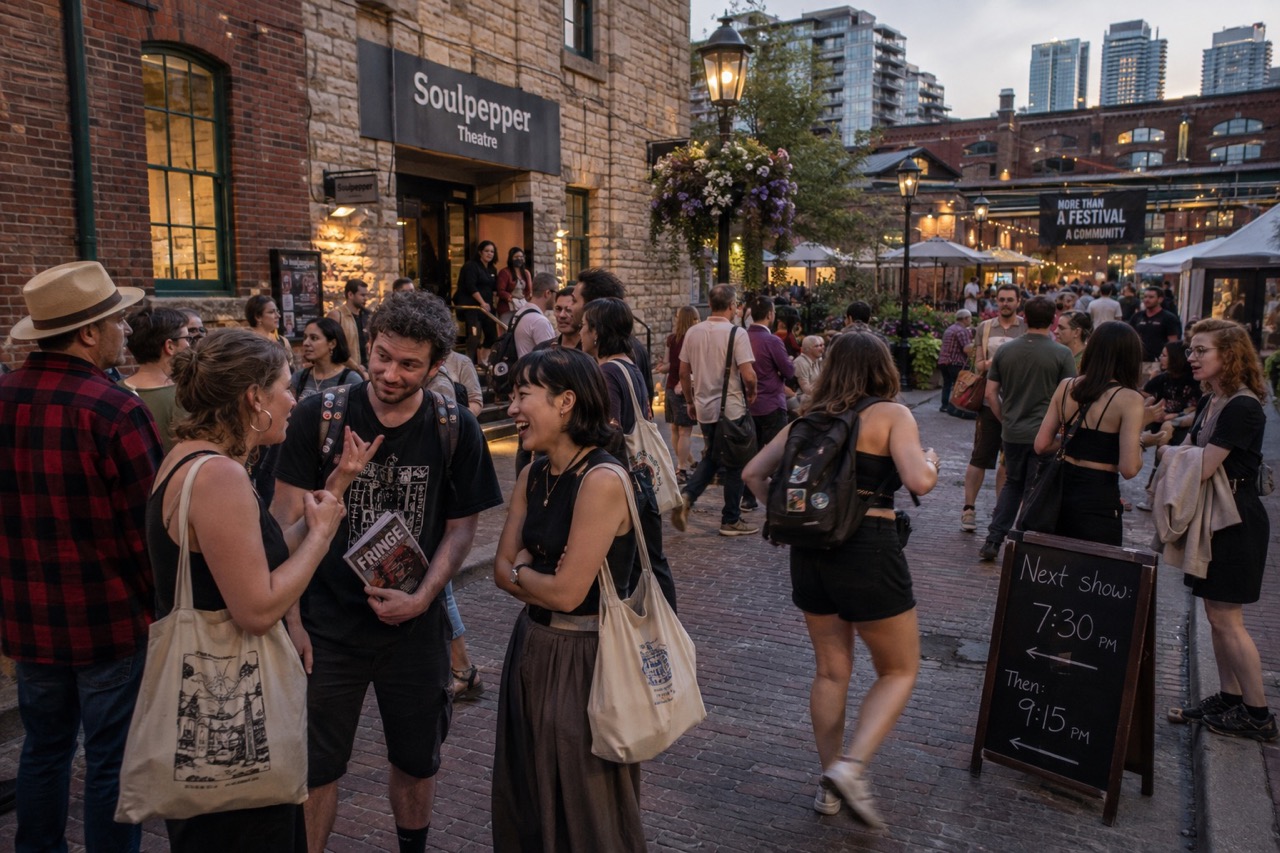
Toronto Fringe Festival turns the city into a theatre route of black boxes, studios, halls, community rooms, and unconventional spaces. Productions are selected through lottery and open processes, allowing new companies, established experimenters, solo performers, musicals, dance, comedy, and difficult-to-classify work to share the programme without a central curator deciding artistic worth.

The audience becomes part of the infrastructure. Reviews travel by conversation, line chatter changes ticket choices, and a show with little advance profile can build momentum across its run. Toronto’s neighborhoods supply the distances, food stops, and cultural contrasts between performances.

Why This Festival Is Special

No artistic director can explain Toronto Fringe as a unified taste. The lottery creates a field of possibilities, and audiences build meaning through the routes they choose, the risks they reward, and the recommendations they pass along.

The city becomes a critical instrument. Neighborhood distance limits the schedule, transit shapes combinations, and food or sidewalk conversation changes the mood between shows.

Its character emerges socially: reputation forming in real time around artists who began the run without institutional certainty.

Festival Experience

What to Expect

Shows are compact, turnovers are quick, and production resources vary dramatically. One hour may bring polished ensemble theater; the next may offer a solo experiment in a converted room with little more than performer and audience.

Lottery selection keeps discovery open but does not guarantee quality. That uncertainty is the point: audiences develop their own critical routes through conversation and accumulated experience.

Between performances, sidewalks, cafés, transit platforms, and the hub become an informal review network.

Festival Highlights

  • See one show before reviews shape demand
  • Take a recommendation from another audience member
  • Attend an unconventional-venue production
  • Pair an established company with a first-time artist
  • Use the hub as a conversation stop
  • Return to a performer whose risk deserves support

Getting There & Around

Where It Happens

Main and satellite venues spread across Toronto through established theaters, studios, community spaces, and artist-arranged unconventional locations. A central hub provides tickets, food, social activity, and the conversation that links dispersed shows.

Every room has its own accessibility, seating, queue, and latecomer policy. Save the exact venue guide before setting out.

Getting Around

The subway, streetcars, buses, walking, and bicycles connect venue clusters, but construction and service changes can disrupt a schedule built too tightly. Driving creates parking uncertainty around small theaters.

Group shows by neighborhood, allow at least one full transit buffer, and verify accessible routes because the nearest station entrance may not have an elevator.

Visitor Guide

Festival Food & Drink

Toronto Fringe food culture grows from the spaces between shows. Independent theaters, storefront rooms, church halls, bars, and neighborhood venues place audiences beside bakeries, cafés, pubs, and family-run kitchens that already belong to each district. Eating becomes part of the route: a dumpling after an experimental matinee, a Jamaican patty carried toward the next queue, or a late plate shared while performers and audiences compare discoveries.

Plan one proper meal inside the day’s theater cluster and let shorter intervals belong to portable local favorites. Choose businesses close enough to respect curtain times, but do not reduce the city to convenience; a neighborhood-specific stop can give two shows a memorable hinge and return some festival spending to the streets supporting its venues.

• Must Try: Toronto-style peameal bacon sandwich
• Must Try: Jamaican beef patty
• Must Try: Tibetan momo dumplings
• Must Try: Portuguese custard tart
• Must Try: Late-night shawarma

Budget & Costs

Budget: use discount passes, rush or lower-cost shows, public transport, hostel lodging, and neighborhood takeout.

Mid-Range: add central accommodation, several daily performances, hub spending, and full meals near venue clusters.

Higher Spend: many tickets, artist support, private rides, premium hotels, and a longer Toronto theater trip can lift costs despite affordable individual shows.

Tips for First-Time Visitors

Buy a few anchors, then let word of mouth fill one opening. Arrive early because latecomers may not be seated and small rooms can have complex check-in lines.

Read content notes and access guides, carry a portable charger, and keep criticism specific and humane. Fringe artists often receive audience response directly and immediately.

Safety

Urban traffic, summer heat, late transit, crowded queues, and unfamiliar unconventional venues require routine attention. Keep valuables secure, cross streetcar tracks carefully, and travel with others after late performances when possible.

Consult venue-specific access and content information. Follow front-of-house direction, keep exits clear, and do not photograph performers without permission.

Cultural Significance

Toronto Fringe belongs to an international movement built around open access, artist control, affordable production, and resistance to gatekeeping. Its lottery-based structure shifts some authority away from artistic institutions and gives emerging or unconventional work a public test.

Openness alone does not erase inequity. Application costs, rehearsal space, disability access, cultural networks, unpaid labor, and the city’s high cost of living shape who can participate. Toronto Fringe has developed accessibility and equity initiatives in response to those barriers.

Its cultural importance rests on redistributing opportunity while remaining accountable for who still struggles to enter the room.

Plan Your Journey

When to Go

The Fringe unfolds across an early-summer run long enough for word of mouth to change the programme’s internal map. Opening days favor risk before reviews settle; the middle stretch offers the widest conversation; final weekend brings sellouts and award attention.

Schedule two or three shows per day, not a citywide sprint, and keep one slot open for a recommendation.

Where to Stay

Downtown, the Annex, Queen West, and neighborhoods near major subway lines simplify access to changing venue clusters. East-side lodging can suit offices or hubs depending on the edition, while outer accommodation saves money at the cost of late transfers.

Choose a transit intersection over proximity to one theatre. The next day’s route may point across the city.

Bottom Line & Key Days

Bottom Line

Choose one unknown production before reviews arrive, listen carefully to other audiences, and leave enough time for the city between shows. Fringe discovery depends on attention more than volume.

Toronto becomes a temporary republic of small rooms, where artistic opportunity and public judgment meet face to face.

Key Days

Opening Days — Take risks before consensus forms.

Midweek — Build a neighborhood pair around word of mouth.

Final Friday — Revisit the hub as demand tightens.

Closing Weekend — Support one artist beyond the obvious hits.

Ready to Experience Toronto Fringe Festival?

You've explored what makes this festival special. Now it's time to plan your trip. Compare flights, book your hotel, arrange transportation, and take care of your travel essentials—all in one place.

✈ Find Flights

Loading booking widget...

Booking is completed on Expedia in a new tab.

🏨 Find Hotels

Search places to stay

Powered by Booking.com

Booking is completed on Booking.com in a new tab.

Rail & Bus Travel

Compare train and coach routes for the journey.

Compare Routes

Things to Do

Discover tours and attractions before or after the festival.

Explore Experiences

eSIM Mobile Data

Stay connected abroad without traditional roaming charges.

Get an Airalo eSIM

Travel bookings are provided by our trusted partners. We may earn a commission when you book through these links, at no additional cost to you.

Independent Editorial Standards

Every Follow the Festivals guide is independently researched and regularly reviewed using official festival information, destination resources, and trusted travel references. We also welcome verified updates from festival organizers, destination marketing organizations, tourism partners, and local experts to help keep our guides accurate, current, and useful for travelers.

Represent this festival or have a verified update to share? We'd love to hear from you through our contact page.

Photo Credits